Proposals for national content in battery auctions aim to ensure local industry development throughout contract terms.
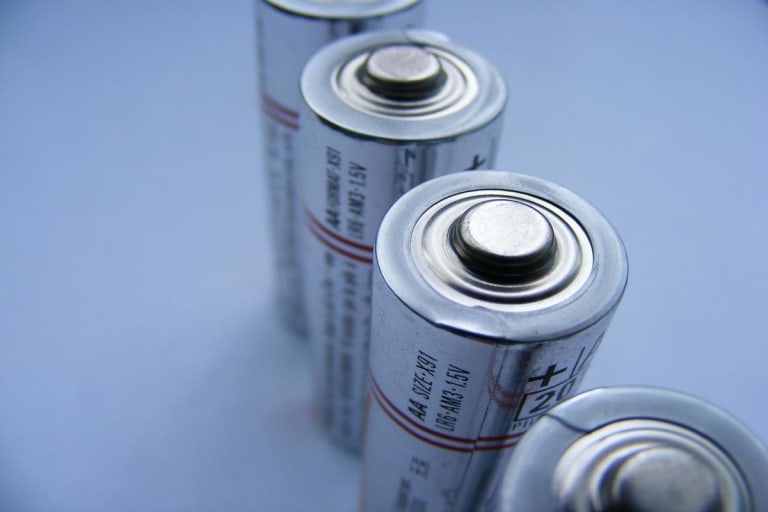
Brazil’s energy storage sector is under the spotlight, with major industry players seeking to ensure that upcoming capacity reserve auctions, particularly the one scheduled for December, incorporate national content requirements not only for initial deployment but also for future maintenance and replacements. Renowned manufacturers such as Moura and WEG, along with Abimaq (Brazilian Association of Machinery and Equipment Industries), have presented their demands to the National Electric Energy Agency (Aneel) during the public consultations for these auctions.
The core of the issue lies in extending the validity of nationalization requirements. Companies argue that the 15-year contract period, planned for storage systems, should cover component replacements and capacity expansions due to natural equipment degradation. The proposal aims to prevent the use of imported components over the operational period, which would disadvantage the national production chain and create a “regulatory asymmetry.”
The draft of the national auction’s public notice already includes proof of local content submission to BNDES for storage systems.
However, WEG and Abimaq detailed the necessity for this obligation to extend to all subsequently incorporated equipment, such as modules and systems, for maintenance or restoration of contracted capacity. Moura supported this view, requesting that the rule apply to replacements due to degradation, failures, or reinvestment needs.
Debate on Efficiency and Penalties Also Marks Discussions
Parallel to national content issues, the measurement of energy storage system efficiency, known as round-trip efficiency (RTE), has also sparked debate.
Associations like Absae and Apine suggested that financial impacts related to efficiency should be calculated annually, rather than monthly as proposed in the draft contract. The argument is that monthly performance can be distorted by factors such as usage frequency, temperature, and auxiliary consumption, thus not reflecting true long-term performance. Companies like Huawei and Sungrow also submitted suggestions for the efficiency calculation methodology.
Rules for unavailability and non-compliance with dispatch orders from the National Electric System Operator (ONS) were another point of attention.
Apine and Abiape requested that a single operational event not result in multiple penalties. Absae, in turn, questioned the application of penalties for an entire month in cases of isolated unavailability, advocating that sanctions be limited to the exact time the system was inoperative and that additional tests be conducted after the problem is resolved. The Electric Energy Commercialization Chamber (CCEE) also proposed adjustments to penalty formulas, such as considering injection of power above the limit as non-compliance with dispatch orders.
These discussions, ongoing in public consultations, will shape the next steps for expanding energy storage capacity in Brazil, an increasingly crucial component for the stability and flexibility of the national electric system, especially with the growth of renewable generation. Aneel’s final decision on these matters will have a significant impact on the development of the local production chain and the competitiveness of energy storage projects.