
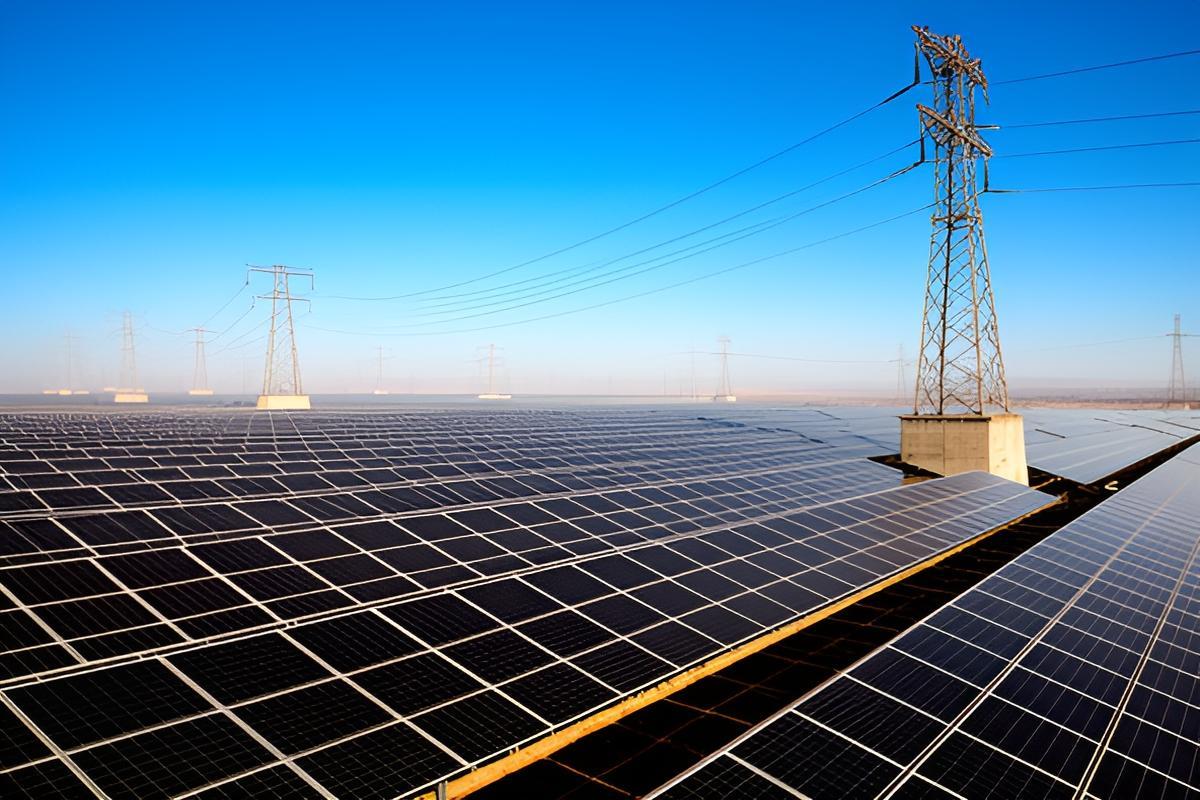
The International Energy Agency (IEA) warns that renewable energy waste, known as curtailment, could quadruple by 2031 due to a lack of infrastructure and power grids.
The global energy transition faces a critical bottleneck that threatens the economic viability of new clean sources.
According to the latest IEA report, curtailment—the term used to describe the deliberate shutdown of renewable generation because of transport or absorption limitations—is on a concerning trajectory.
If urgent measures such as investments in transmission networks, storage, and system flexibility are not implemented, the volume of wasted energy could exceed 850 TWh by 2031.
The current scenario already reflects a system strained by the pace of the transition.
After recording a doubling in 2024 and showing similar behavior in 2025, cuts reached nearly 200 TWh.
The agency points out that the major challenge lies in the disconnect between the rapid installation of solar and wind parks and the slow modernization of connection infrastructure, resulting in a global project backlog that already exceeds 4,500 GW.
Infrastructure bottlenecks and the Brazilian case
In Brazil, the situation mirrors this global tension.
Although the country remains a magnet for investment, the slowdown in auction pace and constant transmission network restrictions have weighed on the expansion of large wind and solar plants.
The viability of these large-scale projects is called into question as the cost of curtailed energy undermines profitability.
Despite the obstacles, the country maintains a robust growth pace, with a forecast to add about 90 GW of clean capacity by 2031.
However, the engine of this progress has shifted axes: distributed photovoltaic generation is expected to account for 86% of all national expansion during the period, establishing itself as the main growth pillar not only in Brazil but across all of Latin America.
Fatih Birol, Executive Director of the IEA, stated:
“Previously, environmental concerns were the priority behind renewable growth policies, but today it is mainly energy security that drives their expansion.”
Projections and the Path to Sustainability
Despite the rapid expansion, the IEA notes that at the current pace the world will fail to meet the goal set at COP28 to triple renewable capacity by 2030.
The agency believes the target will only be achieved around 2032.
To mitigate these risks, the report stresses the need to integrate digital technologies and artificial intelligence to optimize energy flow and make consumption more flexible during periods of high renewable availability.
Looking ahead, sector stability will depend on a deep reform of interconnection guidelines and the strengthening of transmission networks.
While the world seeks to balance supply security with decarbonization, Brazil remains a standout not only in electricity generation but as a global leader in biofuel expansion, with ethanol and biodiesel being key pieces for the energy transition goals that extend to COP30 in Belém.