The Ibovespa ended the day in decline, reflecting volatility in both global and domestic markets permeated by political and geopolitical uncertainties. Energy sectors are feeling the impact.
The Brazilian stock exchange, represented by the Ibovespa, recorded a session of intense fluctuations this Wednesday, driven by a complex combination of factors ranging from domestic politics to international tensions.
Although it attempted a recovery early in the trading session, the country’s main stock index ended the day down 0.86%, closing at 185,814.09 points.
This volatility underscores the need for stability across all economic sectors, a call that resonates particularly strongly in the clean and sustainable energy segment.
Amid a scenario of unpredictability, the pursuit of safer energy sources that are less susceptible to external shocks becomes even more relevant for investors and for national energy security itself.
A Boiling Political and Economic Landscape
Election uncertainties in Brazil played a crucial role in the Ibovespa‘s performance. A recent poll by AtlasIntel/Bloomberg, focused on the 2026 presidential election, indicated a tight race between President Lula da Silva (PT) and Senator Flávio Bolsonaro (PL), with narrow margins in a potential runoff.
Such political indecision contributes to investor caution, directly impacting the business environment.
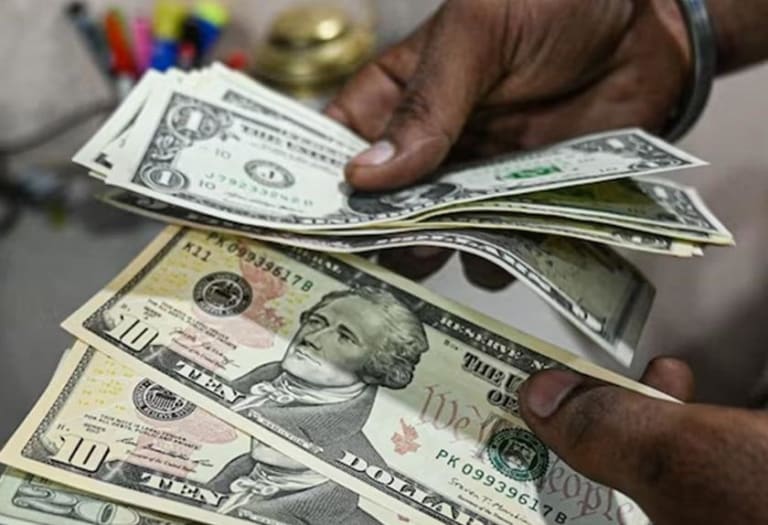
At the same time, the appreciation of the U.S. dollar against the Brazilian real, which closed up 1.28% at R$ 5.1682, and the rise in global interest rates influenced the dynamics of the financial market.
The expectation of a more restrictive stance from the Federal Reserve (Fed) in the United States also added pressure, making the macroeconomic scenario even more challenging for emerging economies.
Geopolitical Impacts and the Commodities Market
The session was also marked by geopolitical tensions, especially between the United States and Iran, which reverberated in commodities markets. Gold and silver, traditionally seen as safe havens during times of crisis, recorded significant drops of 1.33% and 2.35%, respectively.
This devaluation occurred in a context of a strengthened dollar and rising interest rates.
Experts point out that the devaluation of assets such as gold and silver reflects the search for safety in a strong dollar and the expectation of more restrictive monetary policies—a scenario that increases the complexity of investments in new energy infrastructure.
In the oil segment, after five consecutive days of decline, futures contracts reversed the trend. Brent crude, the international benchmark, rose 2.84% to close at $98.12, while WTI advanced 1.81% to $92.16.
This recovery is directly linked to the escalation of tensions in the Middle East and uncertainty regarding the opening of the Strait of Hormuz, a crucial route for the transport of fossil fuels.
This instability in oil prices reinforces the urgency and strategic value of investments in renewable sources, offering a more predictable and ecologically responsible alternative.
The current situation of sharp fluctuations in the global financial market and the persistence of political and geopolitical uncertainties highlight the importance of a robust and accelerated energy transition.
For readers interested in clean and sustainable energy, this scenario of market volatility not only serves as a reminder of the risks associated with dependence on fossil fuels but also illuminates the path toward the consolidation of renewable energies as pillars of a more resilient and green economy.
Investments in clean technologies and sustainable infrastructure gain even more relevance, positioning themselves as a strategic response to present complexities and a foundation for the future.