
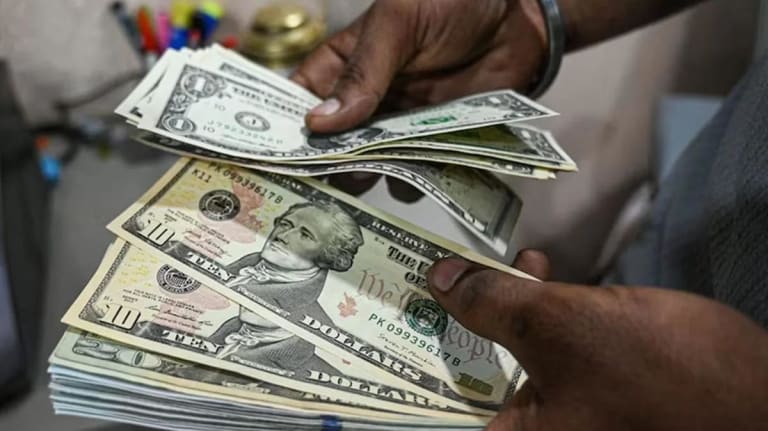
The Ibovespa showed strength on Wednesday, driven by the financial sector, while the dollar fell against the real and other global currencies.
The Brazilian stock exchange, represented by the Ibovespa, managed to reverse a streak of declines and closed Wednesday’s trading session with a notable gain of 1.06%.
The index reached 167,293 points, mainly propelled by the positive performance of the banking sector.
Shares of major financial institutions, such as Itaú Unibanco, posted significant gains, contributing to the day’s positive balance.
Other sectors that displayed vigor were retail and logistics, with stocks of companies like Vamos also recording considerable appreciation on B3.
Oil Sector Weighs on the Main Index
In contrast to the positive performance, the oil sector felt the impact of the decline in international oil prices.
Shares of Petrobras, in particular, experienced notable selling pressure, acting as a brake on an even larger advance of the main index.
Dollar in Global and Local Decline
The international scenario also influenced the foreign exchange market.
The U.S. dollar closed the day down in Brazil, quoted at R$ 5.4518, a depreciation of 0.65%.
This movement followed the dollar’s performance against a basket of global currencies, such as the euro and the pound.
The DXY index, which measures the dollar’s strength against six major currencies, was down late in the afternoon, reflecting a risk‑aversion sentiment toward the U.S. currency.
U.S. Elections Shape the Foreign Exchange Market
The main news that set the pace for the foreign exchange market was the fallout from the midterm elections in the United States.
The so‑called “blue sweep,” with decisive victories for the Democrats, generated uncertainty about U.S. domestic policy and the future of the global economy.
The Democratic victory raises questions about the direction of U.S. domestic policy, directly impacting capital flows and risk perception in emerging markets such as Brazil.
This global apprehension contributed to the dollar’s depreciation and spurred the search for assets considered safer in other economies.
Next Steps in the Market
The performance this Wednesday demonstrates the market’s characteristic volatility, where international political and economic news can have a significant impact.
Investors and analysts will be watching the developments of the U.S. elections and their influence on global economic indicators.
The banking sector and consumer‑related companies showed resilience, while the commodities sector—especially oil—remains a point of focus.
Tracking the evolution of these factors will be crucial to understanding the next moves of the Ibovespa and the dollar in upcoming sessions.