
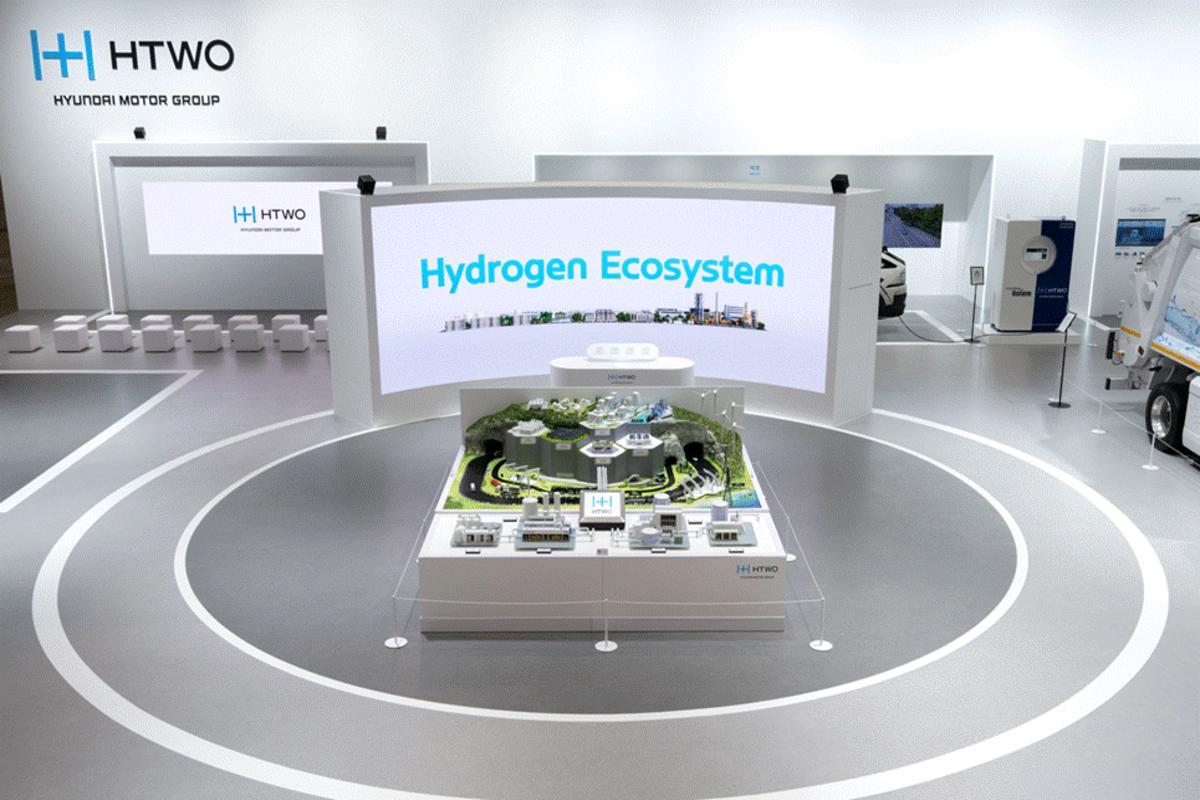
Hyundai Motor Group shines at World Hydrogen Expo 2026 with integrated hydrogen innovations, covering everything from sustainable production and waste management to advanced mobility solutions and self‑sustaining urban ecosystems for the global future.
The World Hydrogen Expo 2026, held in Goyang, South Korea, became the epicenter of discussions about the future of the energy mix.
From November 4 to 6, the Hyundai Motor Group reaffirmed its leadership by presenting a robust portfolio of technologies focused on the green hydrogen economy.
Under the motto of enabling bankable projects, the company demonstrated how integration between production, infrastructure, and mobility is essential for the global energy transition.
The group’s presence at the fair, coordinated through the HTWO brand, went beyond simply showcasing vehicles.
The focus was on connectivity between the pillars of production and practical applications, highlighting how sustainable fuel can serve everything from large industrial hubs to complex urban transport systems.
Innovation in clean energy production
To scale hydrogen use, the Hyundai Motor Group is betting on two technological fronts.
The first is modular PEM electrolysis (polymer electrolyte membrane), which offers high efficiency and scalability, allowing 5‑MW systems to produce 700 tonnes annually.
The second path is the W2H (Waste‑to‑Hydrogen) solution, a circular economy model that turns organic waste into energy, with projects already active in countries such as South Korea and Indonesia.
Next‑generation sustainable mobility
The mobility booth showcased significant advances, featuring the NEXO 2027 SUV and clean‑fuel trucks powered by fuel cells.
One of the major differentiators presented was the Automatic Hydrogen Refueling Robot (ACR‑H), which eliminates the need for human intervention in repetitive refueling operations, raising convenience for the logistics sector.
Additionally, the new generation of fuel cells, with improved durability, promises to revolutionize long‑haul freight transport, ensuring operational reliability.
Hyundai representatives stated:
Through its presentation at WHE 2026, the Group aims to show how hydrogen production, mobility, and end‑use applications can work together as an integrated ecosystem, tailored to the needs of different regions and industries.
Integrated ecosystems and the future of cities
Hyundai’s vision goes beyond the individual vehicle, designing complete ecosystems such as the Saemangeum AI Valley.
This concept integrates solar power, hydrogen production, artificial‑intelligence data centers, and robotics, creating smart, self‑sustaining cities.
These infrastructures demonstrate that clean energy can be optimized for ports, manufacturing hubs, and urban centers.
With expansion investments and international partnerships, the Korean group is solidifying its role in enabling the energy transition.
The strategy of linking local hydrogen production with transportation and industrial demand points toward a future where mobility will truly be carbon‑neutral, powered by cutting‑edge infrastructure.