

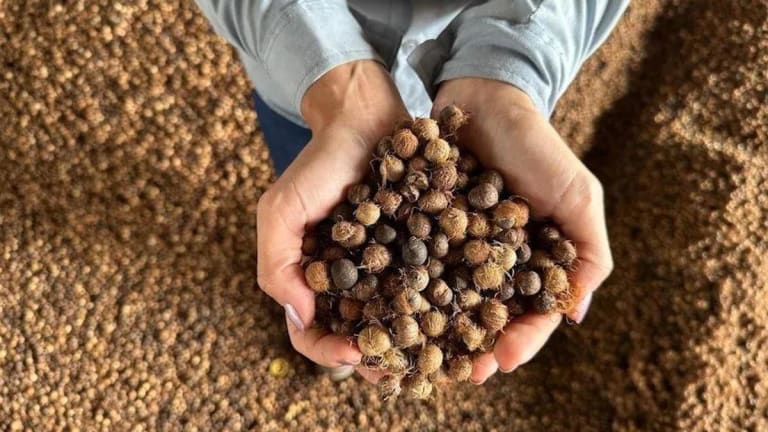
Hydro repurposed 279,000 tons of açaí pits in Barcarena, blending industrial innovation and bioeconomy to replace the use of mineral coal in Pará.
The partnership between traditional agricultural production and large industry is redefining environmental standards in the state of Pará. The multinational Hydro turned açaí waste into renewable fuel at the Alunorte refinery.
Located in the municipality of Barcarena, the facility has processed about 279,000 tons of açaí pits since the initiative launched in 2023. The volume used from January to September 2026 tripled compared to the project’s first year.
The strategy directly cuts the company’s carbon footprint by reducing mineral coal consumption. Additionally, the practice solves a long‑standing logistical and environmental problem faced by producers in the Amazon region.
Economic impact and agricultural waste management
The state of Pará leads the national market for the fruit with impressive figures. IBGE data show that cultivated production reached 1.87 million tons in 2025, generating R$ 8.3 billion.
Despite its economic strength, processing creates a significant volumetric challenge. The extracted pulp accounts for only 20% of the fruit, while the remaining 80% consists of discarded seeds.
Using the material as an energy input for alumina production opens the door to an efficient circular economy model in the Amazon.
Applied scientific research supported by UFPA
The technical feasibility of the project began to take shape in 2022 through a partnership with UFPA (Federal University of Pará). The work was conducted by the Faculty of Mechanical Engineering.
The study brought together 11 specialized researchers and received an estimated investment of R$ 500,000. The main goal was to assess the calorific value and supply logistics of the biomass.
One of the major breakthroughs occurred in feedstock treatment. The drying process reduced the moisture content of açaí pits from 35% to less than 25% over the past two years, improving their efficiency in boilers.
Strengthening the Regional Production Chain
The continuous industrial demand from Alunorte has created a new supplier market in the interior of Pará. Today, two large regional groups organize the collection and preparation of the fuel.
The material, once considered worthless waste, now generates direct and indirect jobs. The chain spans from collection at the mills to the final beneficiation of the product.
This dynamic reinforces the industry’s role as a driver of sustainable development in local communities.
Energy Transition and the Future of Boilers
The success of the operations has prompted Hydro to plan bolder steps in the energy transition. The company is studying the conversion of units to operate entirely on renewable fuel.
The goal is to implement equipment designed to burn exclusively açaí biomass, eliminating coal from specific stages of alumina production.
“We have developed the engineering needed to enable this profound change in our boilers, aligning industrial operations with the unique potential of Amazonian bioeconomy.”
According to Carlos Neves, senior vice president of Operations at Hydro Bauxite and Alumina, the studies are continuing to validate full substitution in the manufacturing units.
The initiative by Hydro with UFPA demonstrates how regional solutions can meet global decarbonization goals. By turning waste into energy, the refinery solidifies a sustainable industrial milestone in Pará.
The progress of this model signals a promising future where the Amazon’s natural wealth drives technological innovation without compromising environmental preservation.