Henkel is revolutionizing logistics in Brazil with a 100% renewable fleet, reducing emissions and driving sustainability in the sector.
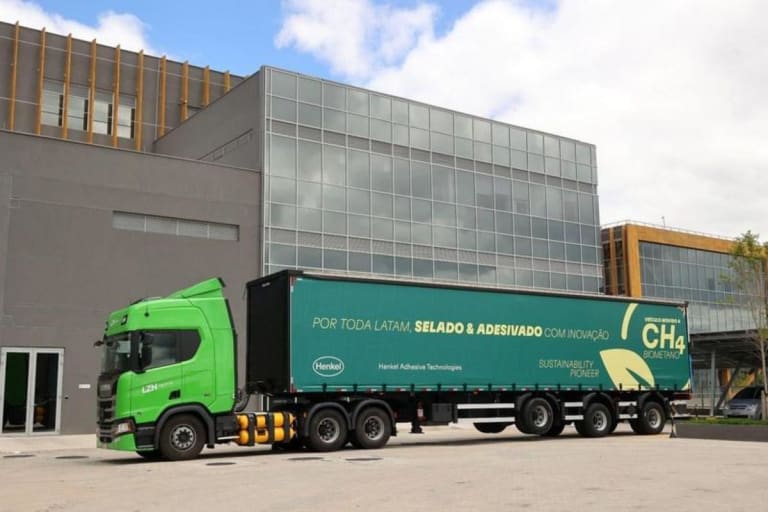
Chemical industry giant Henkel is taking a bold step toward a greener future. With the introduction of three biomethane-powered trucks into its logistics fleet in Brazil, the company is not only reinforcing its commitment to decarbonization but also setting a new standard for efficiency and environmental responsibility. The new addition has the capacity to transport 75 tons of products daily without generating carbon emissions, aligning its logistics operations with the strictest sustainability goals.
This innovative initiative is part of a global strategy by Henkel, which is celebrating 150 years of history and more than seven decades of operations in Brazil. The use of biomethane, a fuel derived from a 100% renewable energy source, exemplifies how the company seeks to integrate ESG (Environmental, Social, and Governance) practices into its operations, demonstrating leadership and forward-thinking in the green logistics landscape.
Green Logistics in Operation
The new biomethane trucks, each with a range of up to 600 km, are operating primarily in the state of São Paulo. Departing five times a week from the Henkel logistics unit in Jundiaí, the vehicles perform their deliveries efficiently. Refueling takes only 15 minutes and is carried out at a dedicated station at the company’s own plant in Jundiaí, optimizing both time and infrastructure.
Daniel Rocha, Logistics and Dangerous Goods Manager for Henkel in Latin America, highlights the importance of the initiative:
“Adopting cutting-edge technology in logistics is another demonstration of Henkel’s commitment to the pillars of efficiency and sustainability, in line with best ESG practices. The initiative not only reinforces the company’s role as a benchmark in sustainable innovation but also demonstrates its leadership in the transition toward green logistics in the country.”
Expanding the Sustainable Fleet
With the arrival of the three biomethane trucks, Henkel‘s sustainable fleet in Brazil now consists of five clean-energy vehicles. They join an electric truck, in operation since 2024, and a utility cargo vehicle. Together, these vehicles are capable of performing a daily delivery of 33 tons using clean energy. The electric chargers, powered by solar energy, ensure full recharges in just one hour, guaranteeing 100% sustainable operations.
The positive environmental impact is significant: with this clean energy fleet, Henkel avoids emitting approximately 192 tons of CO2 annually compared to diesel-powered vehicles. This reduction is equivalent to planting 2,940 trees per year, a notable gain for the environment.
Biomethane in Industrial Plants
Henkel‘s commitment to biomethane extends beyond its logistics fleet. The company’s factories in Brazil are already utilizing this clean fuel supply. In 2025, the Jundiaí plant was the first among the company’s 161 global production units to receive biomethane. This measure aims to avoid the emission of approximately 3,096 tons of polluting gases in industrial operations alone. In Itapevi, the supply of clean energy was implemented in the first half of 2026, reinforcing the decarbonization strategy across all fronts.
Ambitious Climate Goals
Henkel has clear and ambitious goals for reducing greenhouse gas (GHG) emissions, aligned with the criteria of the SBTi (Science Based Targets initiative). By 2030, the company plans to reduce absolute scope 1 and 2 emissions by 42%, and scope 3 emissions by 30%, using 2021 as a base year. The long-term goal is a 90% reduction in absolute emissions across all scopes by 2045.
These goals cover all of the company’s operations, from production processes and offices to warehousing, research, and the logistics fleet. The expansion of biomethane use, as seen in Itapevi, contributes directly to scope 1, which focuses on direct emissions. Scope 3, which includes impacts from the supply chain, transport, and raw materials, is also under constant analysis and improvement. Henkel’s plan exemplifies the integration of sustainability and innovation, seeking to transform its value chain and lead by example.