Electrifying 35% of the global economy by 2035 will require $1 trillion in annual investments in power grids, which are essential for expanding clean energy, reveals Irena.
The ambitious goal of electrifying one-third of the global economy by 2035 will require a monumental financial effort, estimated at around $1 trillion per year in power grids. This projection, released by the International Renewable Energy Agency (Irena), highlights the urgency of strengthening global energy infrastructure to support the growing demand for clean energy sources.
The upcoming United Nations Climate Change Conference (COP31) has already pointed to global electrification as a central priority, emphasizing that the success of this transition will directly depend on the capacity to expand and modernize power grids, energy storage, and system flexibility.
Massive Investments for the Energy Transition
A recent report by Irena, launched during UN meetings in New York, estimates that the pursuit of a decarbonized economy, reducing the use of fossil fuels, will demand a cumulative total of $29 trillion in transmission and distribution infrastructure by 2050. This aims to support an exponential increase in renewable energy capacity, projected to reach 18.4 TW by 2035 and an impressive 38.2 TW by 2050.
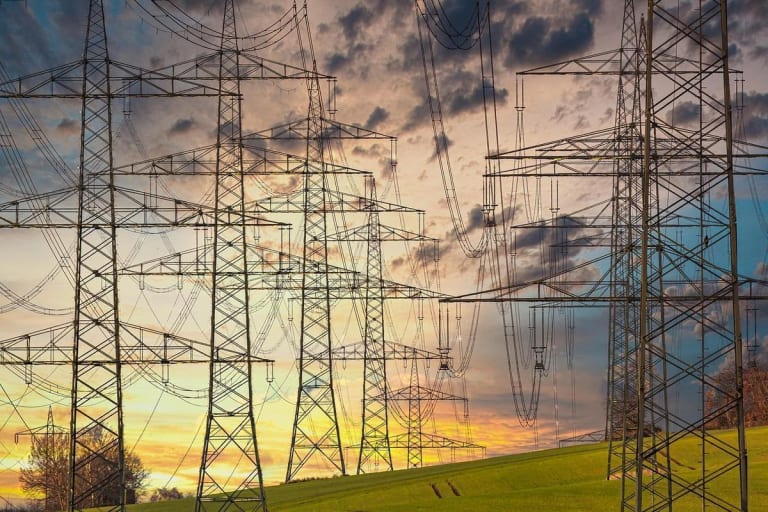
Investments in power grids between now and 2035 must double compared to 2025 levels, highlighting the scale of the challenge. Beyond generation, the agency highlights the need for equally accelerated growth in energy storage capacity, rising from 416 GW in 2025 to 2,530 GW in 2035 and 6,859 GW by mid-century.
Demand flexibility will also need to jump from 7% in 2019 to 13% by 2035, reaching 30% by 2050.
Challenges and Urgent Actions
The race for electrification goes far beyond battery production and electric vehicles. It encompasses renewable energy generation capacity, energy efficiency, and, crucially, robust transmission and distribution grids. Growing demand from sectors such as data centers, for example, adds significant pressure to global energy systems.
Electricity demand is growing faster than expected, and grid infrastructure has not kept pace with the deployment of renewable energy.
Notes Francesco La Camera, Director-General of Irena.
Another clear bottleneck is the concentration of investments in developed nations. Irena points out that emerging and developing economies have a vast list of infrastructure projects, especially in transmission, that lack attention.
To achieve the COP28 goal of tripling renewable energy to 11.2 TW by 2030, global installed capacity must more than double, requiring an average annual growth of 1,200 GW between 2026 and 2030.
The Ongoing Transition in Emerging Economies
Despite the challenges, the energy transition is already gaining momentum in several regions, driven in part by geopolitical instability and recent increases in fossil fuel prices. This scenario has altered consumer preferences, breaking down skepticism regarding electric vehicles.
In emerging markets in Asia, for example, the adoption of electrified vehicles in total sales already surpasses traditional regions. Vietnam, at 38%, surpassed the European Union (EU), which registered 26%.
Thailand (21%) and Indonesia (15%) outperformed the US (10%), while Brazil (9%) and India (4%) showed higher market shares than Japan (3%).
China, which in 2025 achieved over 50% electric vehicle sales share, is already saving more than $28 billion annually on petroleum product imports.
Global electrification represents the backbone of a more sustainable and resilient energy future. Substantial investments in power grids, combined with the massive expansion of renewable energy and storage systems, are unavoidable steps to achieve climate goals and decarbonize the world economy.
International collaboration and the directing of resources to emerging countries will be crucial to make this energy transition truly comprehensive and equitable, shaping a cleaner energy landscape for generations to come.