New Law Stiffens Penalties Against Fuel Theft and Robbery in Brazil
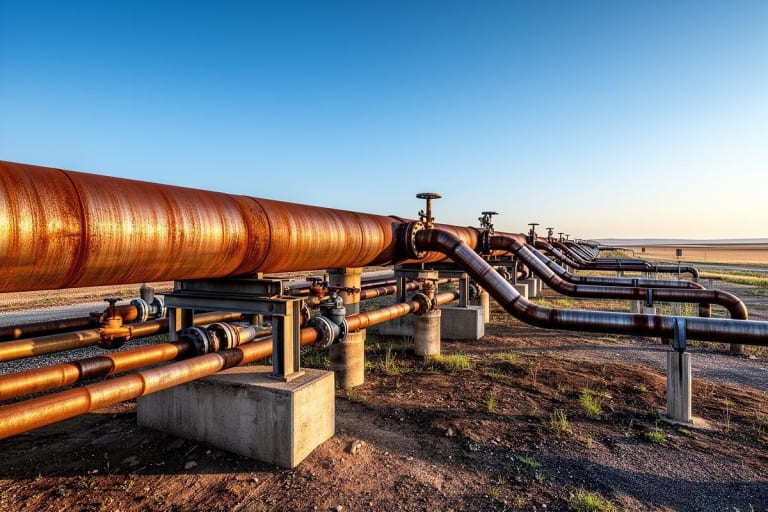
Brazil’s energy security landscape is entering a new chapter with the sanctioning of Law 15.517, enacted by Vice President Geraldo Alckmin, who is currently acting as President. Published in the Official Gazette of the Union (Diário Oficial da União), the legislation significantly increases penalties for crimes involving the theft of petroleum, natural gas, biofuels, and lubricating oils across the entire supply chain, from pipelines and terminals to refineries and various modes of transport.
The initiative, which originated from Bill 1482/2019, reflects a long-standing demand from the fuel sector, which has been grappling with an increase in criminal incidents, as evidenced by Operation Carbono Oculto. The new law aims to more effectively curb diversions and robberies that impact the country’s energy infrastructure.
Increased Criminal Penalties
Fuel theft, previously categorized under the general rules of the Penal Code, now carries imprisonment sentences of 4 to 10 years, in addition to a fine. The severity increases in specific scenarios: the penalty is raised by one-third if the crime involves forced entry, is committed by more than one person, involves a breach of trust, or if the perpetrator has ties to the victimized company. The situation becomes even more severe, with a two-thirds increase, if the theft results in business paralysis, supply shortages, fire, severe environmental pollution, or severe bodily injury.
In the case of aggravated robbery involving violence or serious threat, the illicit removal of fuels will also carry increased penalties, potentially reaching an increase of up to two-thirds if the crime results in consequences such as business paralysis, supply shortages, or environmental damage.
Specific Veto and Crimes Against the Economic Order
A notable point in the new legislation is the presidential veto of a section that established an increased penalty for fuel robbery resulting in death. The justification for this decision was to avoid creating a penalty lesser than that already stipulated for robbery resulting in death (latrocínio) in the Penal Code, thus maintaining consistency in the toughening of punishments.
Furthermore, the law innovates by classifying new behaviors as crimes against the economic order. The receiving, transportation, storage, and sale of fuels of criminal origin, when carried out as part of a commercial or industrial activity, carry sentences of 3 to 8 years imprisonment. This measure aims to combat illegal trade and dismantle the chain of receivers. Irregular trade, even if conducted in residences, will be equated to commercial activity, with the establishment being interdicted for double the duration of the sentence.
The text also covers the acquisition of fuels when circumstances (disproportionate value, suspicious origin) indicate a criminal origin, with a penalty of 1 to 4 years. In both cases, the law provides for punishments even if the perpetrator of the theft or robbery is unknown, and convicted public servants will face additional sanctions, such as the loss of their position. The legislation also provides for the early sale of seized assets to preserve their value.
The approval and sanctioning of this law represent a significant advance in the protection of Brazil’s energy infrastructure, seeking to deter criminal actions that cause considerable economic and environmental damage. The productive sector, which had been calling for more rigorous measures, now has a more robust legal framework to combat these offenses.