
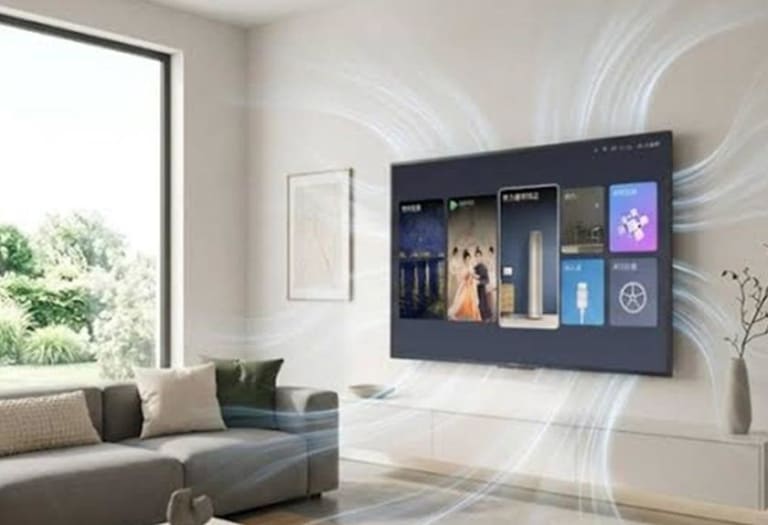
São Paulo is hosting the Sino-Brazilian International Festival, showcasing an innovative TV that also conditions environments, celebrating the fusion of Chinese art and technology.
The capital city of São Paulo is becoming the stage for an unprecedented cultural and technological experience with the realization of Brasinês: Sino-Brazilian International Festival. The event, which extends its program until November 22 at the São Paulo Energy Museum, marks the celebration of the Brazil-China Cultural Year, presenting a fascinating confluence between age-old artistic tradition and the latest trends in technological innovation.
The main attraction capturing visitors’ attention is undoubtedly a home appliance that redefines the domestic experience: a 65-inch television that integrates the functions of a complete air conditioner. This piece of advanced technology arrives in Latin America for the first time, promising a new vision of the future of the smart home and energy efficiency.
Integrated Technology and Sustainability
Developed by the renowned company Gree, this revolutionary device is currently only available for commercialization in the Chinese market. Its presence in Brazil as a demonstration item aims to illustrate how innovation can intertwine with artistic expression and daily life, offering more integrated solutions for the home.
In addition to its dual capabilities of entertainment and climate control, the TV operates as a personalized digital gallery, displaying high-definition artwork, and serves as a control center for other smart devices in the residence.
The technical details of this novelty are impressive. The dynamic air systems ensure that cold air is expelled from the top and warm air from the bottom, maintaining the environment’s temperature variation within a minimum of 0.5 °C.
Connectivity and Artificial Intelligence at Home
Equipped with a voice-connected hub, the device allows users to manage multiple smart devices and create automated scenarios. The screen, which transforms into a digital gallery, displays artistic reproductions when the TV function is not in use, integrating seamlessly with the decor.
An embedded AI assistant provides information such as weather forecasts and creates reminders, responding to commands, although it is currently configured for Mandarin. This advancement points towards a future where home appliances become true interactive partners.
“The convergence of art and sustainable technology presented at this festival not only celebrates cultural ties between Brazil and China but also illuminates the path toward a future of more connected and environmentally conscious homes, where energy efficiency is allied with comfort and culture,” highlights one of the event organizers.
Parallel to the technological exhibition, the festival features the show “The Horse in Sino-Brazilian Art,” a rich collection of over 100 works. The exhibition spans from the Han Dynasty to contemporary creations, including new works by the acclaimed Chinese artist Hua Tunan, evidencing the profound shared cultural richness.
The Brasinês: Sino-Brazilian International Festival reaffirms the commitment to cultural promotion and technological vanguard. The television with air conditioning functions is more than a prototype; it is a tangible glimpse of what the future of the smart home and clean energy holds, where comfort, entertainment, and sustainability coexist harmoniously. Events like this are crucial for fostering dialogue and the adoption of innovations that will shape the next generations of conscious consumers and art lovers.