
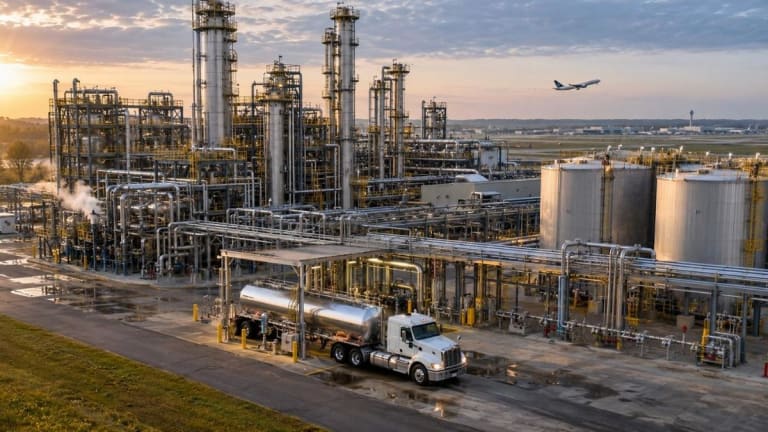
With a US$ 20 million investment in the United States, LanzaJet boosts sustainable aviation fuel production and opens doors for Brazilian ethanol in the global supply chain.
The sustainable fuels sector gains new international momentum with increased investment in biofuels for commercial aviation. The U.S. manufacturer LanzaJet secured a significant financial injection to expand its industrial operations in Georgia.
The investment of at least US$ 20 million aims to accelerate commercial-scale production at the Freedom Pines Fuels plant. The facility is a pioneer in converting biofuels into renewable aviation kerosene.
Within this international expansion strategy, Brazilian ethanol emerges as one of the feedstock options being evaluated to power the company’s innovative technology in the United States.
Financial restructuring and plant expansion
The capital raise is part of a corporate reorganization and recapitalization plan. The process is supported directly by LanzaTech Global, investor Vinod Khosla, and the company’s board.
The first phase of the transaction secured the issuance of senior debt securities. The contractual agreement allows for a total raise of up to US$ 25 million as each milestone is completed.
With a nominal capacity of 10 million gallons per year (about 37.9 million liters), the plant in Soperton aims to establish a steady supply of SAF to the aviation market.
The strategic role of national biofuel
The technology developed by the company stands out for its versatility in selecting industrial inputs. This flexibility allows it to process alcohol derived from corn, sugarcane, or even gaseous waste.
In this context, the Brazilian production market emerges as a potential supplier to meet the operational demands of the U.S. plant in its upcoming phases.
Despite this strong commercial potential, the board has not yet formalized specific purchase or import contracts for the national feedstock for the manufacturing unit.
Chemical transformation and international certification
The plant uses the Alcohol-to-Jet (ATJ) route, which dehydrates alcohol to form ethylene and chains specific hydrocarbons for commercial jets.
The resulting fuel strictly meets the international standards set by ASTM. According to the guidelines of ICAO, the product can be blended with up to 50% fossil jet fuel.
Regarding the capacity guidelines set by the U.S. government for the facility:
The management stated:
The project was designed to produce approximately 9 million gallons of SAF and 1 million gallons of renewable diesel per year.
Leadership Changes and Global Investors
With the corporate restructuring, LanzaTech has significantly increased its stake in the company’s control. Executive Jennifer Holmgren is temporarily taking the executive command of the business.
The new management will oversee the consolidation of the plant in Georgia and the global expansion plan. The consortium includes names such as Airbus, Shell, British Airways, Southwest Airlines, and Microsoft.
The company’s immediate challenge is to maintain continuous production at commercially viable conditions. The completion of the financing cycle is expected by December.
The progress solidifies the ATJ route in the global low‑carbon aviation landscape. This development opens new opportunities for the worldwide renewable fuel supply chain.