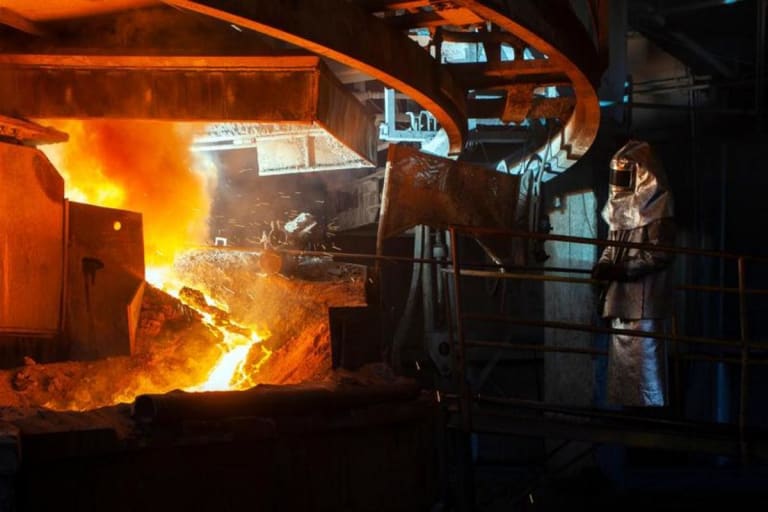
During ABM Week 10, an expert presented 45 years of data on the evolution of energy sources in the Brazilian steel industry, highlighting significant advancements in clean energy, operational efficiency, and the challenges toward the sector’s total decarbonization.
Brazil has taken firm and consistent steps regarding the use of clean energy in the steel industry and the enhancement of energy efficiency. This evolution was the central theme of the presentation delivered by André Frias, energy planning and utilities specialist at Ternium, during the Special Session of the 45th Energy and Energy Transition Seminar, held at the 10th edition of ABM Week.
Based on thorough research into historical archives from the former state-owned company Siderbrás, the executive compiled four and a half decades of indicators regarding the energy sources used in the country’s main steel plants. The survey reveals how the sector not only kept pace with global economic and technological transformations, but also achieved remarkable levels of efficiency and self-sufficiency in electricity generation.
The Legacy of the Research and the State of National Steelmaking
The analysis of historical documents provided a detailed overview of steel production in Brazil since the 1980s, covering strategic plants located in states such as Rio de Janeiro, São Paulo, and Minas Gerais. According to the data presented by André Frias, domestic production registered continuous growth, accompanied by an overall utilization rate reaching an impressive 92%.
Another milestone celebrated by the specialist is the recent energy balance:
between 2020 and 2024 we have generated more energy than we consumed
he points out. This autonomy reflects the maturity of a sector that has overcome historical crises, such as the Collor Plan, the 2001 electricity rationing, and the pandemic, adjusting processes to ensure greater resilience and operational sustainability.
The Strategic Role of the Energy Transition
The discussion on the energy transition in the national steel industry highlighted the role of transition fuels, with a strong emphasis on natural gas. The use of this resource allowed for the gradual replacement of fuel oil over the past four decades, resulting in a 22% reduction in pollutant gas emissions per plant.
To illustrate the positive environmental impact of this change, André Frias recalled the case of Cubatão:
Cubatão went from being the most polluted city in the world to an example of environmental recovery precisely by replacing oil with natural gas as an iron ore reducer
For leaders like Marina Muradas, EHS coordinator at Tecnosulfur,
the energy transition is not an agenda for the future, it is for today. Investment decisions, capex, technology, and efficiency are focused on it
reinforcing that decarbonization is essential for industrial competitiveness.
Looking to the future, the sector faces the challenge of defining the next technological steps to consolidate long-term sustainability. As highlighted by Eder Quental de Araújo, coordinator of the ABM Energy and Utilities Technical Commission, the strategic sharing of data consolidates an essential legacy for future generations of professionals.
However, this advancement requires strategic planning and industry unity.
We have a lot of potential, but we are in a phase of reflection: until when do we want to have blast furnaces? We have several possible investments, but even decarbonization targets are delayed. The segment needs unity and must understand how it will direct investment
concludes André Frias, pointing out that the success of the next phase will depend on coordinated decisions in favor of green innovation.