
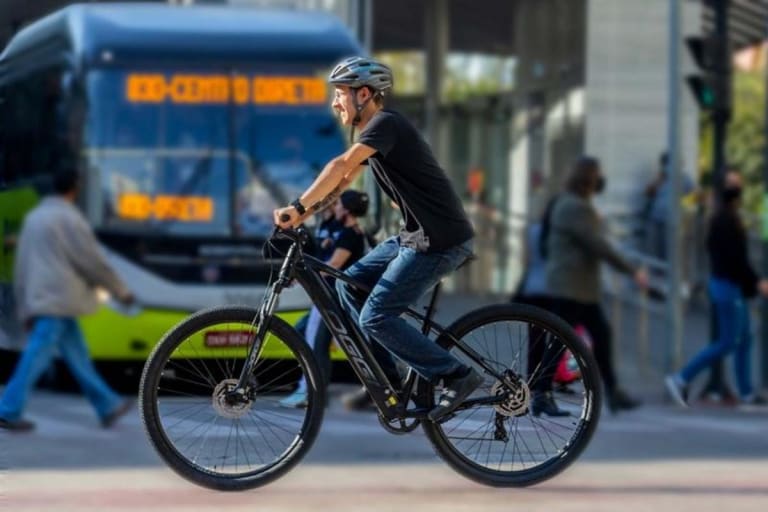
With an 85.7% leap in domestic production, electric bicycles are transforming urban mobility and attracting beginners with the promise of more accessible and sustainable commutes powered by clean transport energy.
Starting to ride a bicycle can feel like an intimidating challenge for anyone who has been away from physical activity for a long time, struggles with steep hills, or feels they lack sufficient physical conditioning.
It is precisely in this scenario that the electric bicycle takes center stage as a viable alternative to make those first trips more accessible, promoting a more active lifestyle aligned with the principles of sustainability.
Equipped with an assistance system that engages while the cyclist pedals, these options reduce the effort required on challenging stretches without eliminating essential physical exercise.
This balance between convenience and health has driven the adoption of two-wheeled electric vehicles as a transitional tool toward a more dynamic and eco-conscious routine.
The impact of this trend is directly reflected in the clean energy and light transport industry.
Data from Abraciclo indicate that 61,885 units were produced at the Manaus Industrial Hub between January and September 2026, representing a significant 85.7% growth compared to the same period in 2025.
Accounting for a 22.8% total market share, the category has established itself as the second most manufactured in the region, driving the energy transition applied to daily life.
The role of technology in sports inclusion
For industry leaders, the success of the segment lies in breaking down traditional barriers associated with urban cycling.
The ease of commuting appeals to everyone from sedentary individuals to enthusiasts looking to resume the habit of cycling gradually and safely.
David Peterle, CEO of Oggi Bikes, stated:
For many people, the biggest challenge isn’t liking bicycles, but taking the first step. There is a fear of not being able to climb a hill, getting too tired, or keeping up with other people. Electric assistance helps lower some of these barriers and allows cyclists to discover the pleasure of riding at their own pace.
Unlike conventional motorcycles or mopeds, e-bikes require continuous human action.
Recent studies published in the Journal of Physical Activity and Health confirm that while they require lower physiological effort, these models maintain moderate intensity, encouraging daily exercise among diverse demographics.
Outlook for the future of mobility
The significant expansion in electric bicycle manufacturing demonstrates that the public is seeking efficient alternatives for daily commutes and leisure time.
By integrating technological innovation and health, the market strengthens the clean energy ecosystem and points toward cities that are less dependent on fossil fuels.
The consolidation of this market paves the way for an urban infrastructure that is increasingly prepared for micromobility.
As more enthusiasts incorporate this equipment into their routines, the sector projects a future where active and sustainable transport will be accessible to all age groups and fitness levels.