

The impact of the global climate phenomenon on Brazil’s electric sector highlights new operational and financial challenges for power generators, transmitters, and distributors through 2027.
Global climate change continues to reshape the trajectory of the country’s major infrastructure companies. With intense activity projected through early 2027, the Super El Niño prompted a deep review of corporate strategic plans. The meteorological event, widely debated in earnings conference calls throughout 2026 according to a survey by Alphasense, produced entirely different scenarios depending on each link in the national electric chain.
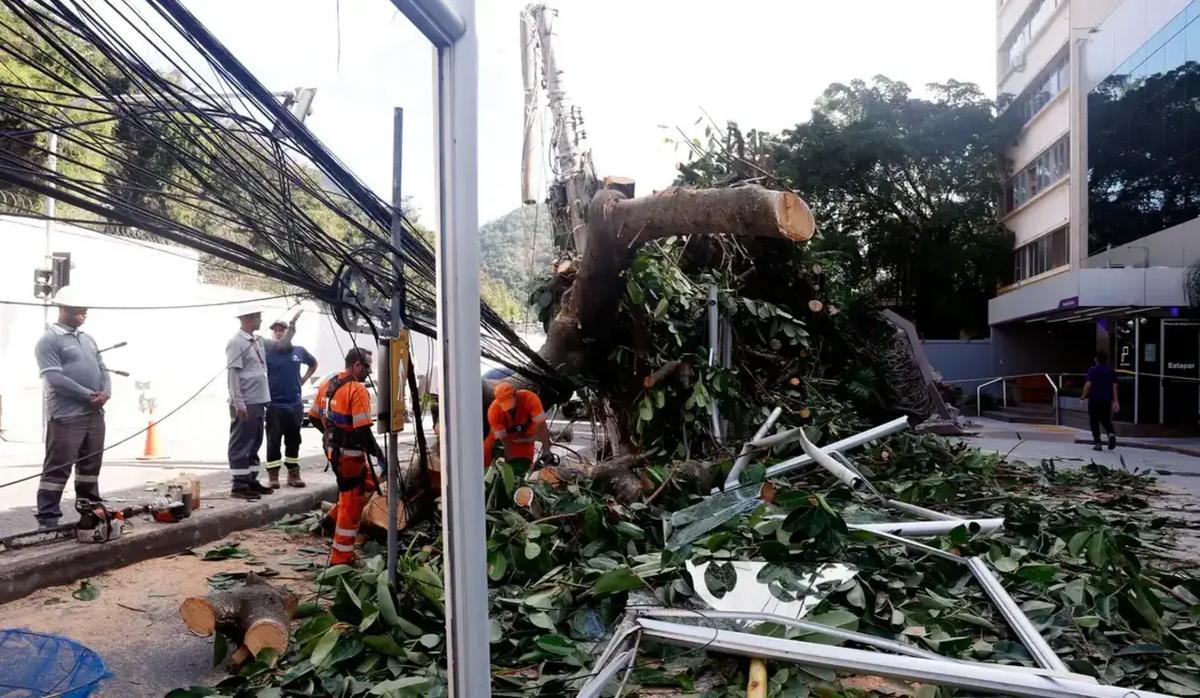
While excess rainfall raised reservoir levels and lowered the cost of the megawatt-hour, creating revenue challenges for energy producers, the force of the storms caused severe damage to infrastructure. High‑voltage towers were brought down and distribution networks were damaged, requiring billions in preventive and corrective maintenance, testing the operational resilience of companies regulated by Aneel.
Abundant rains and falling energy prices
The hydrological dynamics underwent significant reversals. Generating companies initially projected a dry scenario in strategic zones, but the spread of rains in the Southeast and South ensured abundant water for hydroelectric plants. The reservoirs of Axia ended September above 60% of total capacity, demonstrating water abundance.
As a direct reflection of this abundance, the PLD (Difference Settlement Price) fell almost 50% in the third quarter in markets such as the Southeast and the Midwest, according to data from CPFL. With hydroelectric plants meeting demand with surplus, the need to activate thermal plants—whose production mix is more expensive—dropped sharply, affecting the cash flow of players focused on that segment, such as Eneva.
On the other hand, corporations that pre‑sold their energy before the commodity’s devaluation were able to shield their balance sheets. Copel, for example, contracted a large portion of its 2027 portfolio in advance at solid financial terms. In addition, high water productivity allowed generators to cut costs on short‑term market purchases to honor existing contracts.
Strong winds, fallen towers and distribution challenges
While generation dealt with price volatility, the transmission segment and the distribution edge faced the most destructive side of severe weather. Extreme wind gusts, tornadoes and storms knocked down more than 290 transmission towers nationwide between late July and mid‑October, according to data from ONS (National System Operator).
Abrate estimated significant losses for seven transmission companies in the quarter, reigniting regulatory debates for authorities to review remuneration discounts when lines become inoperable due to extreme weather events. Companies such as Taesa reinforced field monitoring with new proprietary weather stations to mitigate logistical risks.
In distribution, intense heat spurred residential and commercial demand, setting records for utilities such as Energisa and Equatorial. However, the urgency to prevent outages led to an unprecedented logistical effort. Tree‑pruning crews, replacement of thousands of poles, and strengthened field teams increased operating expenses, aiming to ensure supply quality amid the weather events recorded in Paraná and Rio de Janeiro.
The Brazilian electric sector is now moving to consolidate increasingly resilient structures. As the extreme weather cycle progresses, regulatory and operational adaptability will be the decisive factor for protecting financial margins and ensuring energy supply stability across the entire country.