
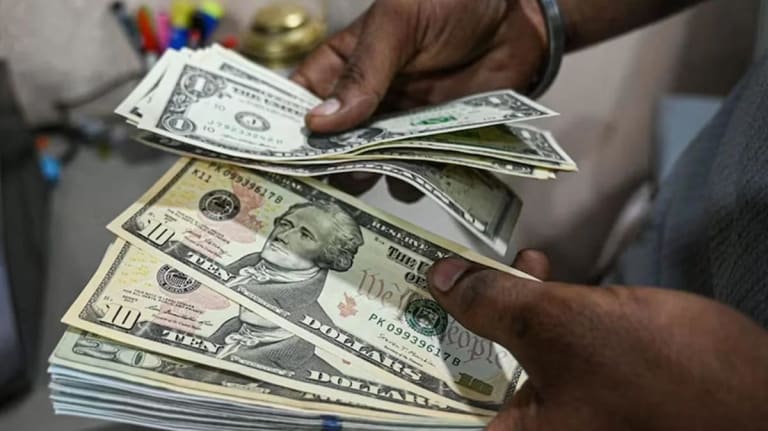
The US dollar closed higher at R$ 5.64 on Tuesday, driven by domestic fiscal noise and the currency’s strength in the international arena.
The Brazilian financial market experienced a session of sharp volatility on Tuesday (3), reflecting a risk‑averse environment both externally and domestically.
The American currency saw a significant appreciation in the spot market, following the global rise of the dollar against a basket of major international currencies.
At the same time, the Brazilian exchange faced strong selling pressure. The country’s main equity index, the Ibovespa, finished the session down 1.35%, standing at 165,647 points after trading near the day’s lows amid macroeconomic revisions and investor caution ahead of the next Copom decision.
Political and Fiscal Stress Factors
The acceleration of the exchange rate was closely linked to a worsening perception of domestic risk. The market reacted negatively to political speculation involving economic proposals tied to the federal government, creating uncertainty about the country’s fiscal direction.
Experts note that the sensitive political environment raises the risk premium demanded by financial actors.
Emerson Junior, head of foreign exchange and international accounts at Convexa Investimentos, highlighted:
Investors reacted negatively to rumors of a supposed interest by President Lula in economist André Lara Resende’s proposal to peg the Selic.
Stock Market Performance and Future Expectations
Market pessimism weighed on the largest constituents of the Ibovespa. Shares of Petrobras (PETR4 and PETR3) saw sharp declines, pressured by oil price swings abroad and institutional fear.
Similarly, major banks and Vale assets (VALE3) traded in the red, penalized by fiscal uncertainties.
While caution prevailed, the session also marked the debut of B3’s new extended trading hours, which now close at 6 p.m.
In the coming days, market focus remains on the direction of monetary policy and the stability of public finances, factors that will continue to dictate the pace of local assets.