
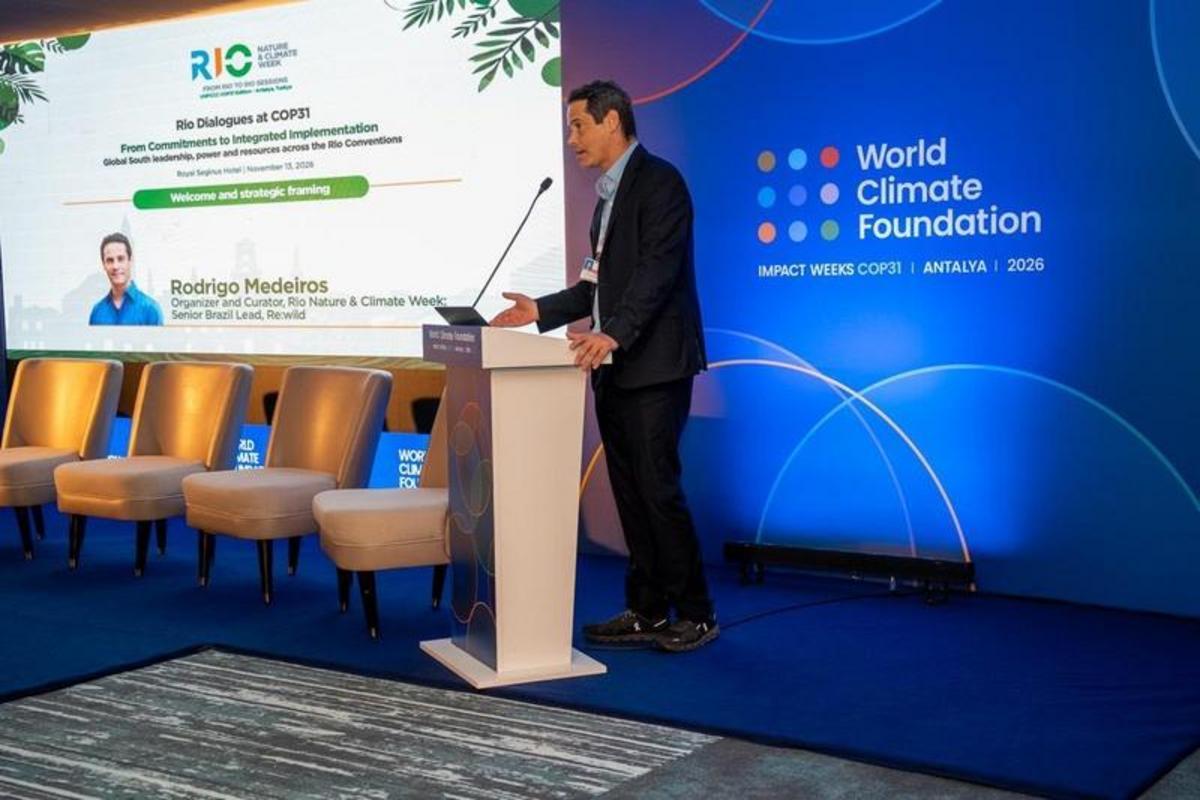
The Rio Dialogues at COP31 highlighted the urgency of integrating climate change, biodiversity, and territorial rights, strengthening the leadership of the Global South in financing and environmental decision‑making.
Protecting biodiversity, maintaining ecosystem integrity, and safeguarding peoples’ rights to their territories must take a central role in decisions on addressing the climate crisis. That was the tone of the Rio Dialogues at COP31, a meeting organized by the Rio Nature & Climate Week (RNCW) in Antalya, Turkey.
With participation from government leaders, representatives of multilateral organizations, and indigenous groups, the initiative discussed ways to turn international commitments into practical actions. The event aimed to secure adequate climate financing and the effective participation of those already implementing solutions on the ground.
Held in a closed format for about 50 guests, the meeting articulated the strategic role of traditional communities in the post‑COP30 landscape, consolidating the Global South’s prominence in international negotiations on sustainability and clean energy.
The Challenge of Integrated Implementation
With the theme “From Commitments to Integrated Implementation,” the program debated the necessary transformations in public policy and institutional mechanisms. The central goal is to bring global targets closer to the lived reality of each biome.
Experts noted that bureaucratic barriers still prevent resources from reaching those who truly protect forests. Integration of climate, biodiversity, and desertification combat was identified as the only viable path to achieving global goals for energy transition and preservation.
Power and Resources in Territories
The second panel focused on financial autonomy and the recognition of solutions developed by the communities themselves. The discussion highlighted that sovereignty over resources is essential for the effectiveness of environmental policies.
Nonette Royo emphasized:
“Indigenous organizations are not a risk. They are part of the necessary infrastructure to ensure that financing reaches territories and produces lasting results.”
Cécile Ndjebet said:
“Women are already protecting, restoring, and passing on knowledge in their territories. What is missing is ensuring rights, resources, and decision‑making power to expand these solutions.”
Juan Carlos Jintiach stated:
“Our peoples do not arrive in these spaces with just demands. They come with proposals, knowledge, and governance systems capable of guiding solutions for the world.”
During the event, federal deputy Sonia Guajajara presented the Indigenous Path Map proposal. The tool systematizes territorial contributions to mitigate environmental impacts and reinforces the need for decision‑making autonomy.
Sonia Guajajara emphasized:
“Recognizing indigenous leadership is not enough. We must turn that recognition into policies, financing, and decision‑making power, built with the peoples and from the territories.”
The Rio Dialogues are part of the preparatory cycle that will culminate in Rio Nature & Climate Week 2027, scheduled to take place in Rio de Janeiro. The event will celebrate the 35th anniversary of the historic Rio‑92 Conference.
For Rodrigo Medeiros, organizer and curator of the initiative, the moment calls for going beyond diplomatic promises:
“RNCW was born to connect agendas, institutions, and solutions that still move separately. In 2027, on the 35th anniversary of Rio‑92, we want to bring the world back to Rio to go beyond renewing commitments and build a new ambition for the integrated implementation of the Rio Conventions.”
Strengthening this agenda reaffirms Brazil’s and developing countries’ role in building a more resilient, just, and collaborative green future.