
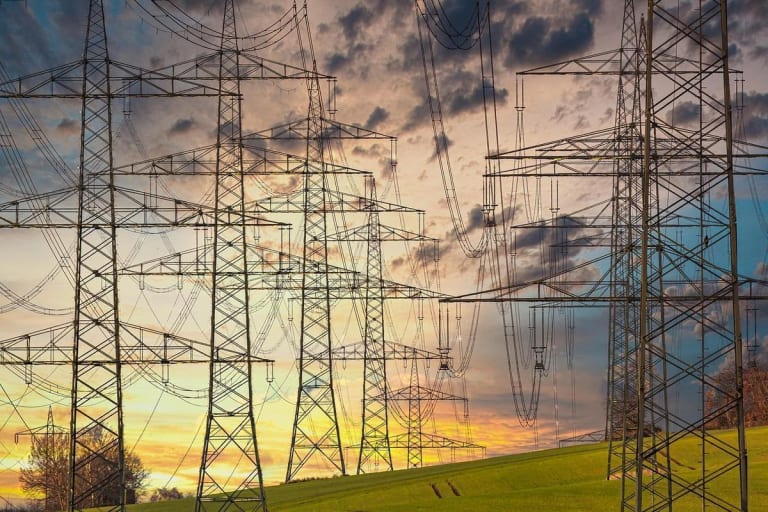
The expansion of data centers in Brazil is emerging as a strategic solution for Taesa, promising to balance the power grid and boost the integration of renewable energy, particularly in regions with high generation potential.
Taesa (Transmissora Aliança de Energia Elétrica) views the growing demand for data center infrastructure in Brazil as a critical factor for energy sustainability and the improvement of the national power grid. The company believes that installing these data processing centers can mitigate the imbalance between the abundant supply of clean energy—derived from sources like wind and solar—and consumption hubs, which are often located far from generation sites.
This perspective is especially relevant in a landscape where the Brazilian energy matrix is rapidly shifting toward renewable generation in more remote regions. The arrival of large consumers, such as data centers, represents a unique opportunity to optimize energy flow and ensure greater stability for the power transmission system by connecting supply to demand more efficiently.
Strategy for Energy Balance
Brazil faces a balancing challenge where electric power generation often exceeds or fails to align with consumption in specific locations. For Maurício Dall’Agnese, Director of Business and Asset Management at Taesa, the addition of new loads, such as those from data centers, is extremely beneficial.
Today, there is an imbalance between the energy being generated and the energy being consumed. Therefore, adding new consumers and new loads tends to be very positive. It is a way to bring consumption closer to where generation exists, thereby improving the system’s balance.
Stated Dall’Agnese during an event in Assis, in the interior of São Paulo.
Data Centers and the Potential of the Northeast
The expansion of these data processing centers offers a viable alternative to bring consumption closer to areas with greater availability of renewable generation. Taesa highlights, in particular, the immense potential of the North and Northeast regions, which are major hubs for wind energy and solar energy. This alignment could be a game-changer for data center infrastructure in the country.
This could lead to the installation of data centers, for example, in the Northeast region, where we have wind and solar generation, and perhaps contribute to reducing this imbalance between generation and load. So, we view this possibility favorably.
Added Dall’Agnese, emphasizing the alignment with the energy transition.
Tax Incentives and the Redata Bill
The synergy between data centers and clean energy received a significant boost with the recent approval of the bill establishing Redata (Special Tax Regime for Data Center Services) by the Federal Senate, now awaiting presidential sanction. This regime provides tax incentives for companies that invest in the installation or expansion of these facilities in Brazil.
One of the fundamental requirements of Redata is that 100% of the electrical demand of the benefited projects must be supplied by renewable or low-emission sources. This measure not only fosters digitalization but also solidifies the commitment of the data center infrastructure sector to sustainability and decarbonization.
Flexibility for Artificial Intelligence
Taesa observes that data centers dedicated to artificial intelligence have greater location flexibility than those focused on cloud services or data storage, which usually require proximity to large urban centers. This characteristic opens doors for artificial intelligence data centers to be installed in more remote areas, rich in wind and solar generation.
Artificial intelligence data centers can be decentralized. Unlike a cloud or storage data center, which is typically located near major hubs, you can place an AI data center in the Northeast, where there is wind and solar generation, and perhaps help reduce this imbalance between generation and load.
Explained Maurício Dall’Agnese, highlighting the importance of green technology for the power grid.
Taesa’s Transmission Reach
Taesa, with its extensive network of 16,600 km of power transmission lines distributed across 19 states, ranging from the South (Paraná, Santa Catarina, and Rio Grande do Sul) to the Northeast (Bahia, Pernambuco, Ceará, and Rio Grande do Norte), is strategically positioned to support this new demand. Its capillarity is fundamental to integrating future data centers into the Brazilian energy matrix.
The convergence between the expansion of data center infrastructure and the advancement of renewable energy, bolstered by tax incentives and the technological flexibility of artificial intelligence, represents a milestone for the Brazilian electricity sector. Taesa plays a vital role in this transformation, facilitating power grid balance and solidifying Brazil as a clean energy hub.