
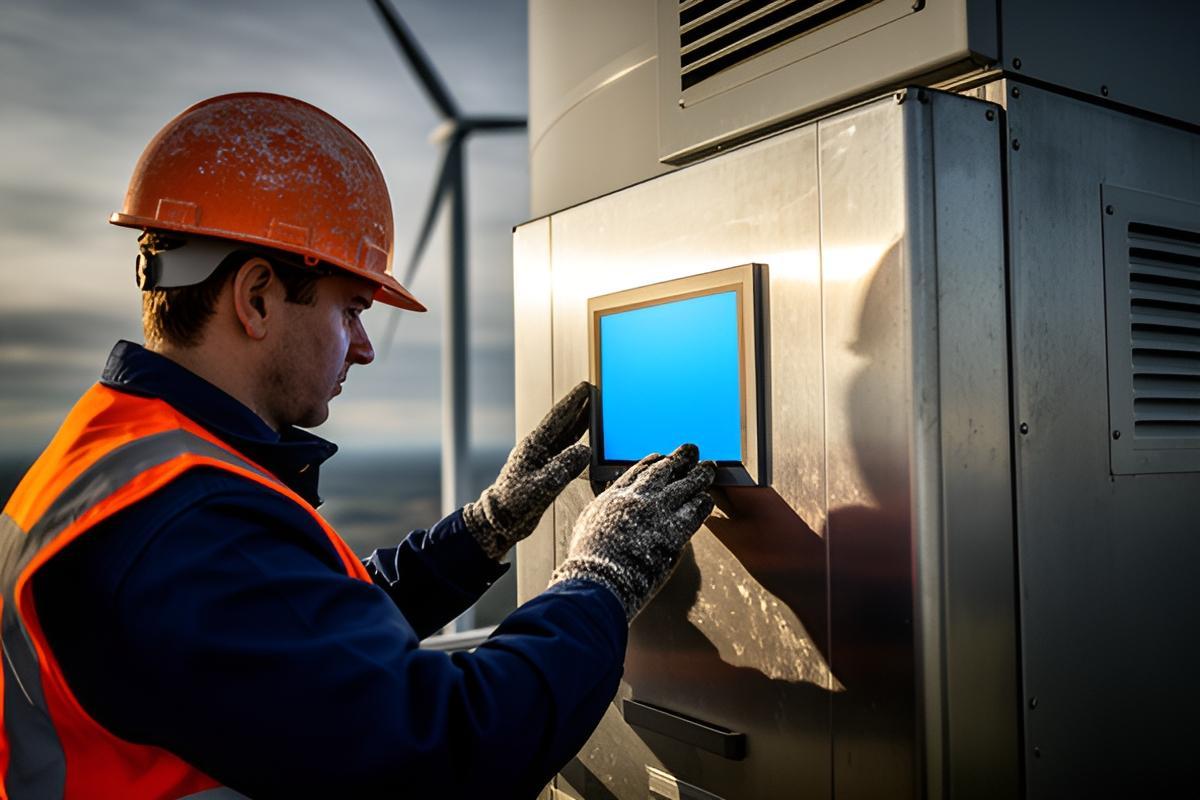
The growing digitalization of wind farms places cybersecurity on the top agenda of senior leadership, demanding robust defenses against the escalation of virtual attacks in the electric sector.
The digital transformation in wind energy has brought significant advances to operational efficiency, but it has also put plants on the radar of virtual threats. The reliance on connected networks and automated platforms has increased exposure to incidents capable of crippling electricity generation and compromising physical assets. In this scenario, data and system protection has moved beyond the exclusive remit of information technology departments, requiring direct involvement of executives and boards in risk management and resource allocation.
Technological progress in Latin America is occurring at a rapid pace, integrating sensors, monitoring centers, and control systems into a highly interdependent network. Consequently, any vulnerability in these virtual environments can spill over into the physical infrastructure of wind turbines. Recent industry reports underscore the severity of the issue: global surveys show that the financial impact of breaches in the energy sector exceeds the average of other markets, while digital rescue operations against industrial structures have seen significant jumps in recent years.
Real risks to industrial operations
The key distinction between protecting the corporate environment and defending operational technology lies in the practical consequences of an intrusion. While offices face leaks of administrative information, generation plants deal with the control of heavy machinery and turbines in full operation. Disrupting industrial systems without planning can cause irreversible physical damage and destabilize regional power supply.
Experts in the field point out that the sector has already understood the urgency of the problem, but the current challenge lies in the practical execution of defenses. The sector has already moved past the stage of debating whether OT should be protected. The question now is how quickly organizations can transform visibility, access governance, vulnerability management, monitoring, and incident response into an integrated operational capability, notes Eduardo Javier Zagal, a specialist at Vestas.
Strategies to Shield Wind Farms
To mitigate cyber risks without disrupting energy generation routines, experts suggest focusing on five fundamental pillars. The first step involves detailed mapping of all connected devices and their respective communication networks. Next, access governance takes center stage, rigorously controlling credentials for internal teams and third‑party service providers who perform remote maintenance.
The third focus area concerns the application of security patches, which in the industry requires extra caution to avoid shutting down critical systems mid‑operation. Continuous monitoring and the creation of agile response protocols form the fourth defensive axis. Finally, protection must accompany the entire lifecycle of the wind asset, from engineering and installation through eventual tower decommissioning.
Regulation and Future Outlook
While blocs such as the European Union and the United States already have stringent legal frameworks for protecting critical infrastructure, Latin American countries are progressing at varying speeds. Chile stands out as a regional benchmark by implementing specific legislation for essential services. However, experts emphasize that meeting legal requirements is only the starting point.
Resilience is not acquired as a one‑off solution. It is built with consistent decisions throughout the life of the park, stresses Vinicius Ribeiro Niedzwiecki, executive at Vestas. The trend for the coming years is an even greater synergy among engineering, business, and digital security teams, solidifying cybersecurity as an indispensable pillar for the global energy transition.