
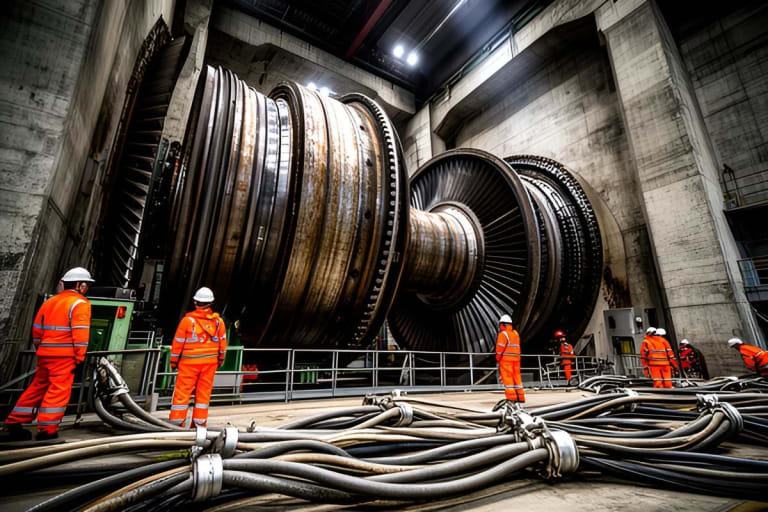
Copel has begun the electromechanical phase of the Foz do Areia Hydroelectric Plant expansion, investing R$ 1.3 billion to increase capacity by 860 MW by 2030.
Copel has reached a significant milestone in Paraná‘s energy development by receiving the first electromechanical components for the expansion of the Governador Bento Munhoz da Rocha Neto Hydroelectric Plant, known as Foz do Areia. This multibillion-real project aims to increase the generation capacity of the complex, located on the Iguaçu River, reinforcing the company’s strategic role in providing renewable electricity.
The arrival of the draft tube liners—55-ton structures manufactured locally in Assaí—signals the practical progress of the schedule. With the parts slated for installation in December, the initiative sets the stage for a 51% jump in the plant’s installed capacity, which will rise from the current 1,676 MW to 2,536 MW.
Efficiency and infrastructure utilization
The key differentiator of this expansion lies in the strategic foresight of the original project designers in the 1970s. The powerhouse construction already included shafts intended for future expansion, which now allows Copel to avoid complex new civil works and focus efforts on the assembly of electromechanical systems.
Utilizing existing shafts to install the new turbines and generators has significantly reduced the need for civil construction. Therefore, this project skips stages and focuses from the start on equipment assembly, lowering costs and total execution time.
This approach optimizes resource use and accelerates delivery timelines. Furthermore, connecting the new megawatts to the National Interconnected System (SIN) will be carried out with adjustments to the existing substation infrastructure, avoiding major additional transmission construction.
Sustainability and operational commitment
Beyond technical efficiency, the project stands out for its respect for the environment and land management. Copel has confirmed that the operation will not require increasing the flooded area, maintaining the reservoir within its current boundaries. The plan does not involve new expropriations, ensuring harmonious integration with the surrounding area.
Commercial operation for the two new generating units is scheduled for August 1, 2030, under the regulation of the National Electric Energy Agency (ANEEL). The project consolidates the company’s strategy of increasing its production capacity with low environmental impact, ensuring greater robustness and energy security for the national grid in the coming years.