
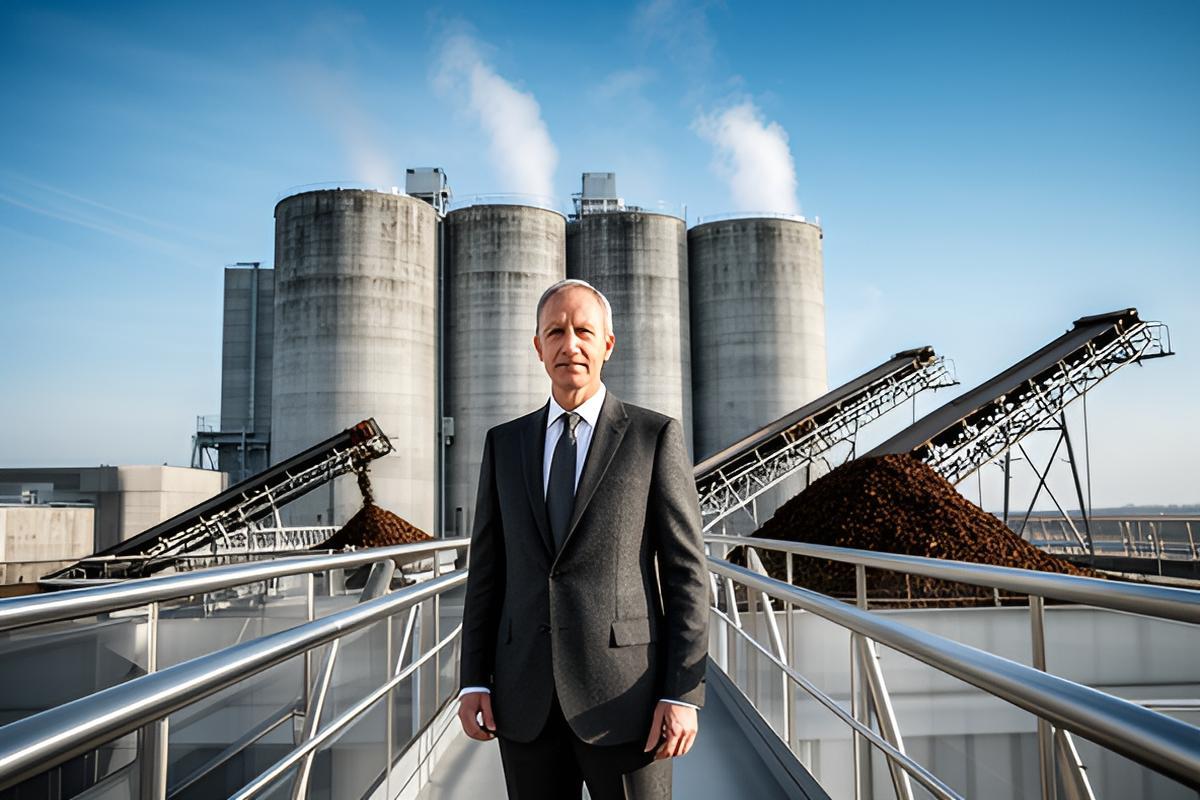
The ComBio has named Carlos Martins as its future CEO starting in 2027, focusing on billion‑level revenue and the strategic expansion of sustainable thermal energy projects.
The ComBio, a benchmark in the industrial thermal energy market, is preparing a significant transition in its top management. Beginning January 1, 2027, the current Chief Operating Officer, Carlos Martins, will take the CEO seat, succeeding founder Paulo Skaf Filho. The strategic move aims to position the company for a robust expansion phase, while Skaf Filho moves to the Board of Directors, where he will lead a new Growth and Transformation Committee.
The leadership change comes at a time of financial and operational optimism for the organization. With two major renewable thermal energy projects already underway, the company projects surpassing R$ 1 billion in revenue in the coming years. This trajectory reinforces ComBio‘s position as an essential player for industries seeking to decarbonize operations while maintaining competitiveness.
Legacy and Planned Succession
The succession process was designed to ensure continuity of organizational culture and business longevity. Martins, who has been with ComBio for two years, brings a solid track record of two decades at giants such as Cosan, Raízen, Tereos, and Aracruz Celulose.
“This move reflects the maturity we have achieved over the years, underpinned by the solidity of our business and, above all, by the talent and commitment of our team. Carlos was chosen in consensus with our shareholders and board members, convinced that he possesses the knowledge, experience, and leadership capacity needed to guide this new phase.”
Expansion and the Business Model
The ComBio business model, focused on “thermal energy as a service,” has proven to be a competitive differentiator. By taking on infrastructure investments and operating assets within customer plants, the company eliminates the need for large upfront capital from industries, easing the transition from fossil fuels to renewable sources.
“In this way, in a high capital cost environment, industries can advance the modernization and decarbonization of their production processes, replacing fossil fuels with renewable sources, without the need to directly invest in the initial generation assets,” emphasizes Martins.
Commitment to the Future and Sustainability
Beyond the numbers, ComBio maintains a strong commitment to the ESG agenda. To date, the company has avoided the emission of 4.6 million metric tons of CO₂ equivalent, an impact it aims to triple by 2030. With the strengthening of the biomass supply chain and ongoing investment in operational processes, Martins‘ management will face the challenge of balancing high financial performance with the delivery of increasingly sustainable solutions to the national market.