
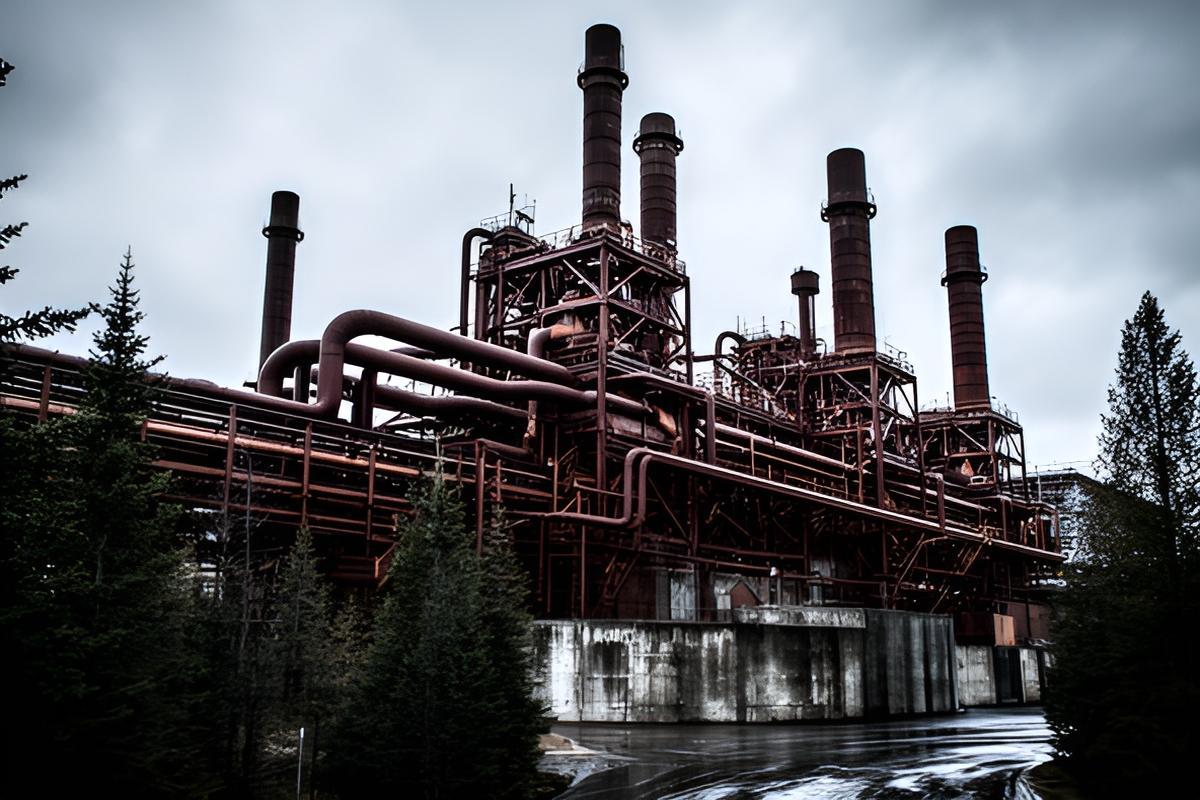
The Beccs Stockholm project is advancing in Sweden to capture 800,000 tons of CO₂ per year, highlighting the financial and regulatory challenges of global decarbonization.
The global race toward carbon neutrality has reached a significant practical milestone with the progress of the Beccs Stockholm project in Sweden. The initiative aims to capture and permanently store biologically sourced carbon dioxide emissions at an industrial scale.
Developed by Stockholm Exergi, the project plans to retain up to 800,000 tons of CO₂ annually. The liquefied compound will be transported by ships to permanent underground storage along the Norwegian coast.
Despite its pioneering nature, the venture exposes the financial, technological, and regulatory bottlenecks that still hinder large‑scale expansion of carbon capture and storage (CCS) technologies worldwide.
Economic challenges and the need for regulation
With estimated costs between €200 and €300 per ton captured, the carbon removal sector faces constraints in scaling its operations. Currently, commercial viability relies heavily on voluntary negotiations in the private market.
The project’s commercial leadership believes that the voluntary market lacks sufficient financial capacity to sustain the infrastructure required at the scale needed to combat climate change.
The project’s commercial leadership believes that the voluntary market lacks sufficient financial capacity to sustain the infrastructure required at the scale needed to combat climate change.
“We will be able to sell all of our product in the voluntary market, but we will not be able to develop this sector at the scale the climate requires through a voluntary market. We need regulated markets.”
The sector expects the European Union Emissions Trading System (ETS) to exceed €200 per ton in the coming years, making CCS solutions attractive and economically sustainable.
Financial structure and industrial innovation
Budgeted at €1.2 billion, the venture combines public contributions from the European Innovation Fund and Swedish government subsidies with resources from private contracts.
Technology giants such as Microsoft, Meta and Google have already secured the purchase of more than two‑thirds of the planned operational capacity for the first decade of activity.
The technology employed adapts the hot potassium carbonate process (HPC), traditionally used in the oil and gas sector. The development involved engineering studies by Petrofac and Saipem.
Regulatory bottlenecks and urban logistics
Installing the plant in a densely populated urban area of Stockholm required complex public‑safety guarantees. The licensing process involved direct negotiations with 27 regulatory bodies.
Beyond the urban challenges, an unprecedented diplomatic agreement had to be established between the governments of Sweden and Norway to authorize cross‑border gas transport to the Northern Lights project facilities.
Paths to the future of decarbonization
The construction of the infrastructure is progressing, with the operational testing phase slated to begin by the end of 2027. The first maritime shipments of CO₂ to Norwegian saline aquifers are expected to occur at the end of 2028.
The success of the Swedish model will serve as a decisive test to demonstrate the commercial viability of carbon removal, providing a benchmark for the global goals of the Paris Agreement.