
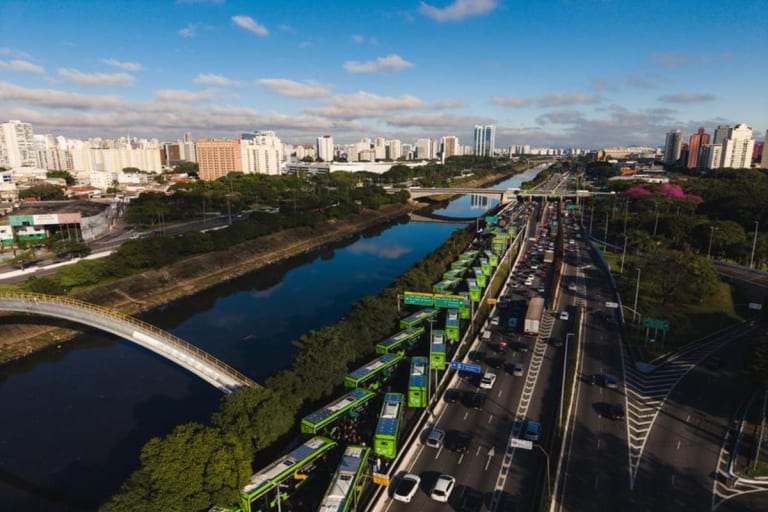
BYD has consolidated its hegemony in the electric mobility sector by registering more buses than its direct competitors combined. With a 49.61% market share in August, the manufacturer is leading the energy transition in Brazilian public transport.
The transition to more sustainable public transport in Brazil is reaching a decisive moment in 2026. BYD, a global giant in electric vehicles, reached a historic milestone in August by registering 126 units, representing half of the entire national market for the period. This performance reaffirms the company’s position at the forefront of decarbonizing urban fleets.
The company’s success is not an isolated event, but a reflection of a consolidated strategy that combines scale, technology, and local production. By outperforming the combined sales of the second and third-place players in the sector, the brand demonstrates technical and commercial dominance that sets the pace for electrification in the country.
Consolidated leadership with a focus on scale
In the year-to-date period from January to August 2026, BYD maintains absolute leadership with 301 electric buses registered, securing a 32.30% share of the Brazilian market. Growth has been significant: while the landscape in August 2025 was one of initial implementation, this year the volume of deliveries jumped from 89 to 254 units in just one month, consolidating electrification as a tangible reality in cities.
Alexandre Baldy, Senior Vice President of BYD Brazil, stated:
“Only those who lead electric mobility know the scale of the responsibility that comes with this position. Leadership is built by putting technology on the streets, gaining scale, and being prepared to support cities through this transformation. August shows a much stronger Brazilian market and also shows a BYD ready to grow alongside it.”
The role of technology and local production
The brand’s expansion is driven by the robustness of its operations on national soil. Recently, the factory in Campinas (SP) reached the emblematic milestone of 1,000 electric bus chassis produced, highlighting models such as the BC10LE, specifically designed for the complexities of Brazilian roads. This ability to adapt the product to local demands is one of the pillars of the trust earned among transport operators.
Marcello Schneider, Director of Commercial Vehicles and Solar at BYD Brazil, reinforces:
“There is no leadership without trust. This result is built every day by the operators who choose BYD and put our buses on the road in cities across different regions of Brazil, facing very different conditions and demands. That is what builds experience and allows us to continue evolving.”
Impact on urban decarbonization
The Brazilian electric bus market grew by 82.03% in the first eight months of 2026 compared to the same period the previous year. This progress reflects not just a fleet change, but a paradigm shift: the transition to zero emissions is moving from a future project to a daily commitment to the sustainability of major metropolises.
With the consolidation of infrastructure and increased production within the country, the trend is for electrification to continue accelerating. By investing in the integration of technology and regional development, BYD is setting the stage for electric public transport to become the backbone of smart cities, significantly reducing carbon footprints and promoting cleaner mobility for millions of Brazilians.