
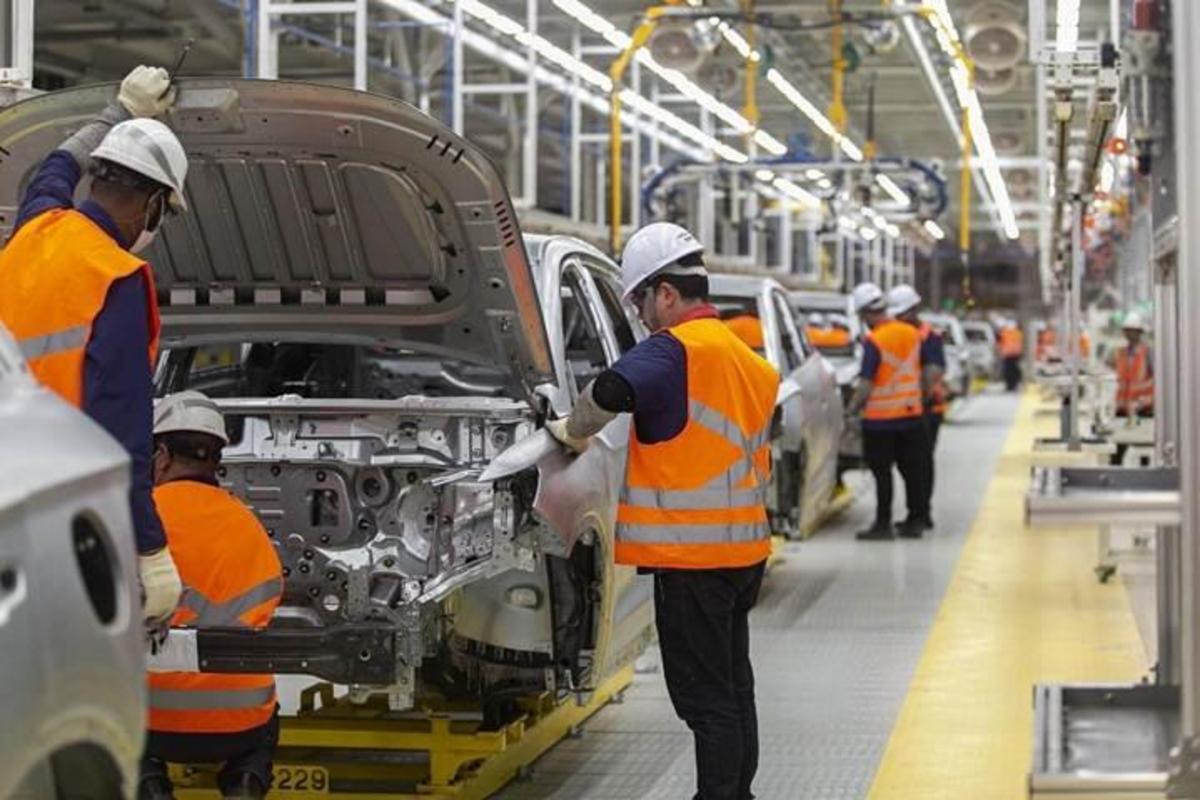
One year after opening its factory in Camaçari, BYD logged 24,114 registrations in October, reaching 9.7% of the Brazilian automotive market and accelerating the expansion of electric mobility in the country.
In October 2025, the inauguration of BYD’s industrial complex in Camaçari, Bahia, marked a decisive turning point for the clean energy sector and the national automotive industry.
At the time, greentech held the seventh spot in the overall ranking, with roughly 10,000 units sold that month.
Just twelve months later, the landscape changed dramatically.
The company closed October 2026 with an impressive 24,114 electrified vehicles registered.
This figure represents a remarkable 137.6% growth compared to the same period the previous year, more than doubling the brand’s sales volume in the country.
The expansion directly translated into greater reach for electric vehicles and plug‑in hybrid models among Brazilian consumers.
BYD’s share of the national market jumped from 4.2% to 9.7%, with over 193,000 units sold between January and October 2026—a rise of more than 120% compared to the same period in 2025.
Commercial strategy and growth in direct sales
To sustain this growth pace, the company diversified its commercial approach, reaching both the end consumer and the corporate market.
In retail, BYD achieved 14,487 registrations in October, securing second place nationwide with 12.7% market share in that channel.
The real highlight, however, came from direct sales, which recorded 9,627 units sold—a staggering increase of about 600% compared to the same month in 2025.
This performance placed the brand in fifth place in the segment.
Celebrating the production and commercial milestone, Alexandre Baldy, Senior Vice President of BYD Brazil and Head of Marketing and Commercial for BYD Auto, emphasized the company’s commitment to the country:
Many people doubted BYD’s strength and our ability to compete with Brazil’s more traditional manufacturers. Today, the results show we were right to believe in this market’s potential and invest in the country. It is especially symbolic to reach these numbers in October, when we celebrate a year of operation at our Camaçari plant. We are growing, producing in Brazil, creating jobs, and stimulating the economy of a region with a very important history in the national automotive industry. We are proud of what we have achieved so far, but our ambition is much greater. We want to lead the Brazilian automotive market by 2030, and the results show we have all the conditions to get there.
Sustainable models lead consumer preference
The BYD model portfolio continues to dominate strategic categories.
The electric compact BYD Dolphin Mini maintained its leadership as the best‑selling car in Brazil retail in October, with 5,841 registrations.
The model has topped the category’s sales for months, alternating leadership at times with another sustainable mobility icon, the BYD Dolphin.
In the sedan segment, the BYD King reinforced the advancement of clean propulsion technology.
For the second consecutive month, the plug‑in hybrid model led its category’s retail sales, reaching 1,343 units sold and a 32.2% market share in October.
This consolidated acceptance demonstrates the rapid shift in the Brazilian consumer profile, which now prioritizes energy efficiency, emission reduction, and cutting‑edge technology when buying a new vehicle.
Socioeconomic impact and local production in Camaçari
Beyond commercial impact on the streets, the greentech operation drives a profound industrial restructuring in the Camaçari hub.
The region, which endured a severe contraction period after the exit of legacy automakers, is now experiencing a new cycle focused on clean energy and green technology.
One year after operations began, the Bahia industrial complex has already surpassed 150,000 electrified vehicles produced and is responsible for creating more than 9,500 direct jobs.
The revival of the plant attracts investments, moves the local supplier chain, and strengthens the economy of Bahia.
Regarding the social relevance of the facility, Alexandre Baldy emphasizes the positive impact of the factory’s presence on the community:
Those who know Camaçari understand what the closure of the former automaker meant for the region. Thousands of people lost their jobs, families were affected, and a city that grew around the automotive industry saw that activity nearly disappear. When we decided to invest in Bahia, we knew how important this factory would be for the population. Today, we have thousands of Brazilians working, production is growing, and new opportunities are emerging. Seeing all of this happen in such a short time is a source of great pride. The sales figures show how much BYD has grown, but it is in Camaçari that we can see the impact of this investment on people’s lives. We want to keep growing and leave a legacy for the region and for the Brazilian industry.
The Future of Electric Mobility in Brazil
The recent trajectory of BYD reflects the consolidation of the energy transition in national transport.
By combining large-scale local production, the creation of skilled jobs, and a diverse range of electric and hybrid vehicles, the company positions Brazil on the global map of sustainable mobility.
With the bold goal of leading the automotive market in Brazil by 2030, the results achieved in this first year of production in Camaçari demonstrate that the acceleration toward a lower-carbon future is already a present reality in the country.