
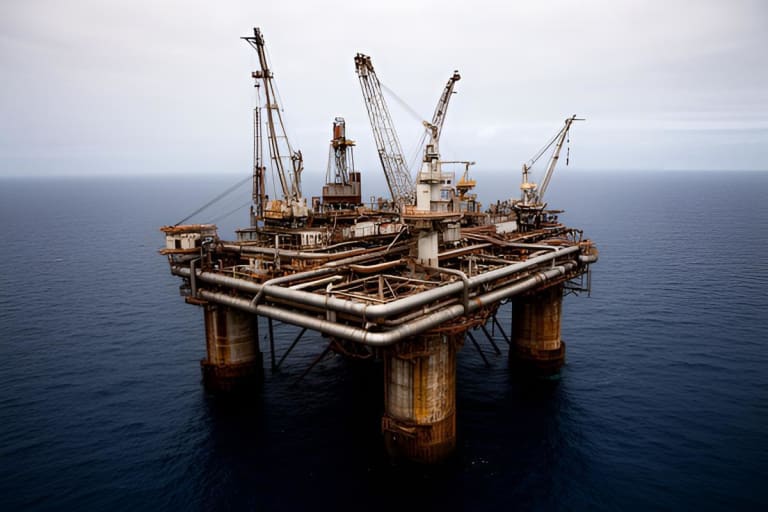
Brazil cemented its leadership in the global energy sector by recording, in September, its fourth consecutive record in oil production, reaching the historic milestone of 4.711 million barrels per day.
The national extraction industry is experiencing an unprecedented surge. Data released this Tuesday (Nov. 3, 2026) by the ANP (National Agency of Petroleum, Natural Gas and Biofuels) confirm that the country not only maintains but accelerates its production pace.
The 20.3% growth compared to the same period in 2025 reflects the maturation of projects in the pre-salt, solidifying Brazil as one of the largest players in the global market.
September’s performance was largely driven by the Santos Basin and the Campos Basin, where installed infrastructure has operated at maximum efficiency levels.
With a 2.1% increase over August, the sector shows that the upward curve still has room to grow, propelled by cutting‑edge deep‑water exploration technologies.
The pre-salt’s supremacy and the role of operators
The pre-salt complex remains the engine of this growth, accounting for an impressive 83.3% of all oil extracted in the country. The Búzios field, operated by Petrobras, remains at the top of the national ranking, serving as the main pillar of oil and gas production.
Petrobras’ leadership in the market is absolute, both in direct operations and in consortia. The Brazilian state company shares the spotlight with giants such as Shell and the state-owned PPSA (Pré‑Sal Petróleo S.A.), which manages the share‑holding contracts with the Union, underscoring the complexity and strength of Brazil’s productive arrangement.
Gas reinjection reached historic levels, surpassing for the first time the 58% mark of daily production, a strategic move to optimize reservoir pressure and overcome logistical flow challenges.
Strategic natural gas management
Beyond oil, natural gas production continued its upward trajectory, reaching 224 million cubic meters per day. The sector has prioritized reinjection, a crucial technique for boosting well productivity.
The record of 132.9 million cubic meters reinjected daily is not just a technical choice, but a pragmatic response to bottlenecks in the national pipeline network and the chemical composition of the feedstock, which often makes processing for the domestic market less attractive.
The future outlook points to a continuation of this trend. With maritime infrastructure operating 98.1% of the country’s total oil production, the industry’s focus is expected to remain on optimizing ongoing projects.
The market is now watching closely the coming months, waiting to see whether the export capacity and external demand will allow Brazil to maintain this uninterrupted record cycle through the end of 2026.