The expansion of Brazilian industry into Paraguay, driven by the Maquila Law and lower energy costs, is reshaping manufacturing competitiveness within Mercosur through integrated production chains.
The pursuit of greater operational efficiency is leading Brazilian companies to redesign their manufacturing strategies, using Paraguay as a strategic production base.
Far from representing a simple case of deindustrialization, this phenomenon reflects a productive integration where the neighboring country acts as a complementary arm to reduce fixed costs.
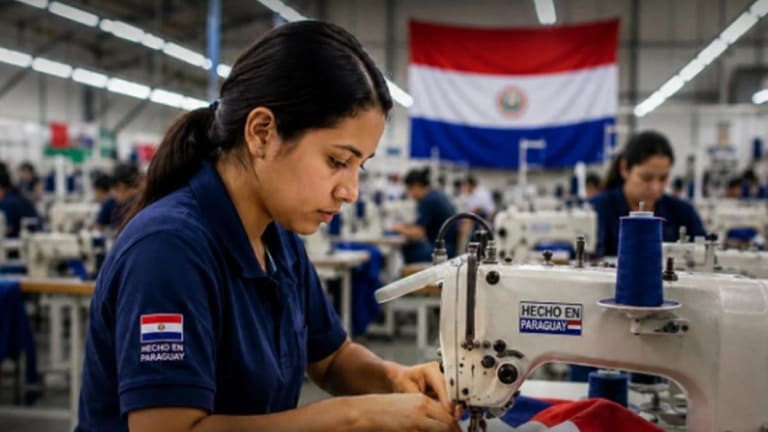
Data from Cemap (Paraguayan Chamber of Maquila Companies) reveals the scale of this shift: seven out of every ten companies operating under the maquila regime have Brazilian capital.
This sectoral migration, focused on textiles, plastics, and auto parts, seeks to leverage aggressive tax benefits and a cost-competitive energy matrix—factors that are crucial for survival in a globalized market.
The Impact of Economic Integration
The strategy has yielded significant macroeconomic effects.
While the World Bank projects modest growth for Brazil, Paraguay is expected to accelerate its expansion to 4.7% by 2026.
This differential is viewed as a boost to regional stability rather than predatory competition, as the most complex and technology-driven manufacturing stages remain under Brazilian control.
It is less a story of one country replacing another and more about the reorganization of production chains and industrial expansion. The greatest risk for Brazilian industry is not production in Paraguay; it is losing competitiveness and watching the market be taken over by imported products.
Efficiency and Future Logistics
The business model is supported by the Maquila Law, which offers a reduced tax rate of only 1% on the value added to exports and exemptions from dividend taxes.
Beyond fiscal incentives, logistics are set for a qualitative leap with the Bioceanic Corridor, scheduled for 2028.
The new infrastructure is expected to shorten the transport time of goods to the Pacific Ocean by nearly three weeks, drastically reducing logistical bottlenecks.
With this direct connection, companies expect to gain the agility needed to face Asian competition, consolidating the Southern Cone as a more robust and connected industrial hub.
The trend is for this process of productive decentralization to continue, regardless of political fluctuations.
The decision to internationalize production is based on technical pillars such as legal certainty and market access, ensuring that the Brazilian industrial sector remains relevant and capable of competing on a global scale.