
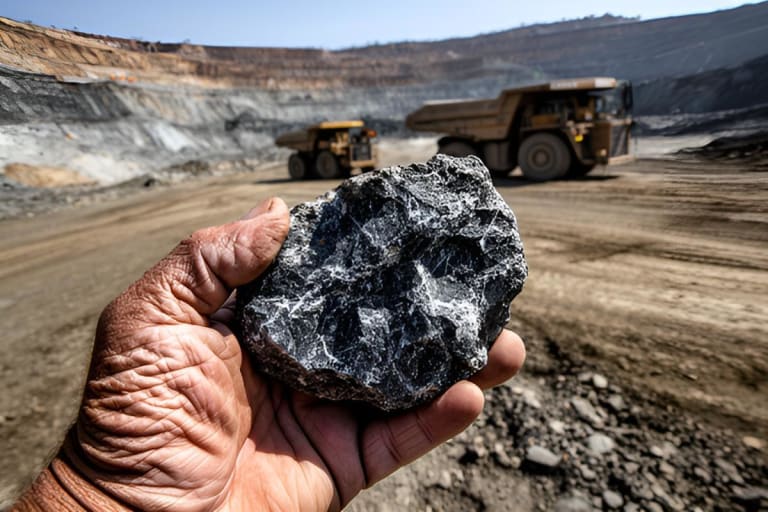
The government of President Luiz Inácio Lula da Silva has opened the doors to foreign capital in the critical minerals sector, but has imposed strict guidelines aimed at national industrialization and strategic sovereignty.
The federal administration signaled that the country is receptive to international investments for the exploration and transformation of strategic resources, provided that operations comply with the new sector policy regulations. The stance was solidified during the first meeting of the Cimce (National Council for the Industrialization of Critical and Strategic Minerals), held at the Palácio do Planalto. At the time, the council approved an official list of 27 priority mineral elements, establishing maximum control over nine of them.
The issue gains relevance amid the global race for essential inputs for the energy transition and advanced technologies. While foreign powers vie for influence over these raw materials, the Brazilian administration seeks to balance attracting external resources with internal technological development, avoiding the mere export of unprocessed raw material.
Clear rules to attract foreign investment
During the ministerial meeting, President Lula emphasized that the Brazilian state seeks global partnerships, but stressed that the arrival of foreign capital depends on macroeconomic stability. The head of the Executive highlighted that investors look for solid legal and fiscal security before investing in national territory.
The government strategy sparked debate among representatives of the mining industry, which is predominantly financed by foreign resources. To mitigate concerns about excessive intervention, the Minister of Development, Industry, Trade and Services, Márcio Elias Rosa, pointed out that the council will serve as a secure gateway to the market.
To attract investment, we must have a well‑run economy. No one will want to invest in a completely disordered economy.
Diversity of Partners and Geopolitical Independence
The stance of the Palácio do Planalto contrasts with international pressures, such as the proposals presented by the United States during trade negotiations, which sought to restrict the activity of global competitors in the South American mining sector. However, the Minister of Mines and Energy, Alexandre Silveira, emphasized that the country maintains an open dialogue with all nations, including Western and Asian powers.
The Brazilian priority is to ensure that any partnership results in innovation, job creation, and local technological capacity building. As a reference, the government evaluates successful international experiences in retaining productive stages, such as the models adopted by Indonesia and Malaysia in the metal and technology supply chain.
The next board meeting, scheduled for the end of November, should detail the screening mechanisms for equity transactions and asset contracts. The private sector, represented by entities such as the CNI (Confederação Nacional da Industria) and the Ibram (Instituto Brasileiro de Mineração), demands regulatory predictability and the strengthening of oversight bodies to ensure a conducive environment for long‑term business.