
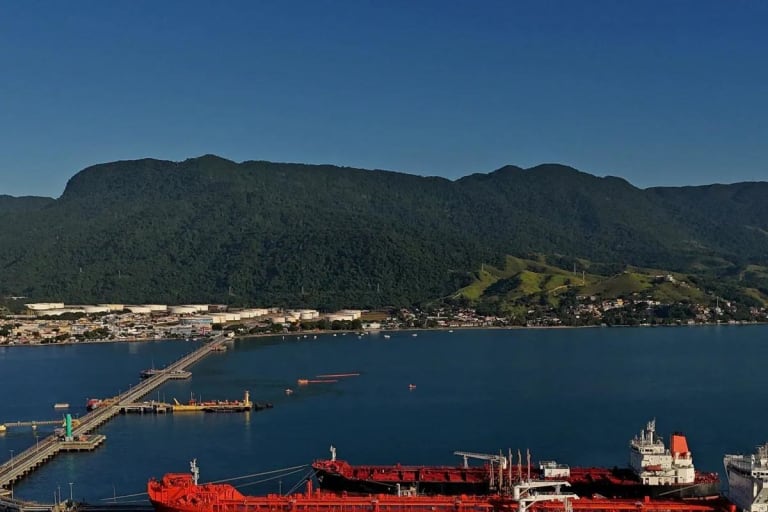
Brazil secured second place among oil suppliers to China, overtaking Saudi Arabia in the first nine months of 2026, driven by a strong surge in exports.
The global energy market witnessed a significant shift in Asia. Brazil consolidated its strategic position by surpassing Saudi Arabia to become the second-largest exporter of crude oil to China through the first three quarters of 2026, according to official customs statistics.
This advance reflects the growing competitiveness of Brazil’s offshore production and strong demand from Asian refineries for new supply sources. As the traditional energy market experiences geopolitical fluctuations, the South American nation cements its role as a pillar of security for Chinese industrial supply.
Consolidated Progress in the Asian Market
Between January and September, the volume of crude oil shipped to Chinese ports by Brazilian companies totaled 44.29 million metric tons. In contrast, Saudi shipments reached 43.12 million metric tons over the same period, losing the runner-up spot they historically held.
In September alone, Brazilian performance surprised with 5.15 million metric tons—equivalent to 1.25 million barrels per day (bpd). The result represented an 18% year-over-year increase, demonstrating the accelerated pace of the Brazilian oil industry.
Competitors’ Decline
In direct contrast to Brazil’s growth, Chinese imports from Saudi Arabia plummeted in September, totaling just 2.70 million metric tons (660,000 bpd). This represented a 62% drop compared to the same period last year.
The reshaping of foreign trade routes and the search for competitive prices by independent Chinese refineries redefined the global map of fuel suppliers throughout this year.
Meanwhile, Russia maintained its top spot as China’s leading supplier, recording 9.94 million metric tons in September. Russian volumes rose 20% year-over-year, despite a slight decline from the previous month.
Future Outlook for the Sector
The rise of Brazil as a fossil energy exporting powerhouse comes at a time of global transition, where demand for reliable sources still dictates the pace of international trade. The absence of shipments from sanctioned countries, such as Venezuela and Iran, has also created space for Brazilian oil to expand its share in the Asian import mix.
For the coming months, industry analysts are closely watching whether Petrobras and other oil companies operating in the Atlantic Basin can maintain this pace of deliveries. Securing this second-place position will depend on the logistical capacity of Brazilian ports and sustained preference from Chinese refineries for Brazilian crude.