
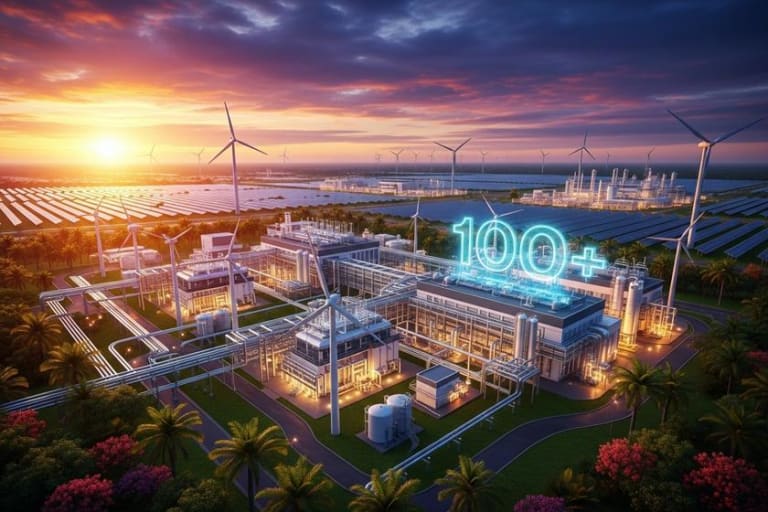
Industrial energy transition doesn’t solely depend on large investments. Experts argue that process optimization and operational efficiency are crucial, often overlooked, pathways to reduce consumption and promote real decarbonization.
The pursuit of a more sustainable energy matrix frequently places the spotlight on new technologies, such as green hydrogen or large solar farms. However, a fundamental principle of chemical engineering re-emerges as a key element for the energy transition: the cheapest and lowest-impact energy is the one the industry manages to avoid consuming.
The excessive focus on major CAPEX projects — capital expenditure — has overshadowed the vital role of operational efficiency. By prioritizing infrastructure expansion over optimizing what already exists, the industrial sector risks artificially inflating demand, ignoring short-term solutions that could drastically reduce consumption and emissions.
Efficiency: The Invisible Pillar of Decarbonization
Many organizations tend to value highly visible projects, like the installation of a new solar power plant or advanced electrification systems. However, more subtle interventions — such as heat recovery, pump and compressor adjustments, and steam network optimization — can yield significant results in a plant’s energy intensity.
The cheapest and lowest-impact energy is the one the industry avoids consuming.
This approach should not be seen merely as an operational cost reduction strategy (OPEX), but rather as an immediate pillar of sustainability. Every unit of energy saved reduces the need for generation, energy transmission, and storage, easing pressure on the electricity grid and decreasing the industrial operation’s total carbon footprint.
The Mistake of Electrification Without Optimization
One of the most frequent missteps in the electric sector is attempting to electrify inefficient thermal systems without first reducing their demand. The technical logic is clear: before expanding supply, it is imperative to assess how much of the current demand is truly necessary. Failure to perform this analysis can lead to increased inefficiency, where spot improvements are nullified by systemic bottlenecks.
To identify these wastages, the use of tools like mass balances, thermal integration studies, and exergy analysis is essential. Identifying losses requires a structured approach, where engineering acts as a filter to ensure that infrastructure expansion occurs only when consumption is at the minimum necessary level.
Competitiveness and Sustainable Future
The future of clean energy in Brazilian industry, which has already achieved high levels of renewability, depends on a balance between expansion and efficiency. The integration of new asset planning with the optimization of existing processes allows companies to achieve energy savings much faster than the implementation timeline of a large project would require.
Ultimately, true industrial energy transition combines technological innovation with operational discipline. Doing more with less is not just an efficiency directive, but the most consistent way to ensure competitiveness in a market that increasingly demands environmental responsibility and drastic emissions reduction.