
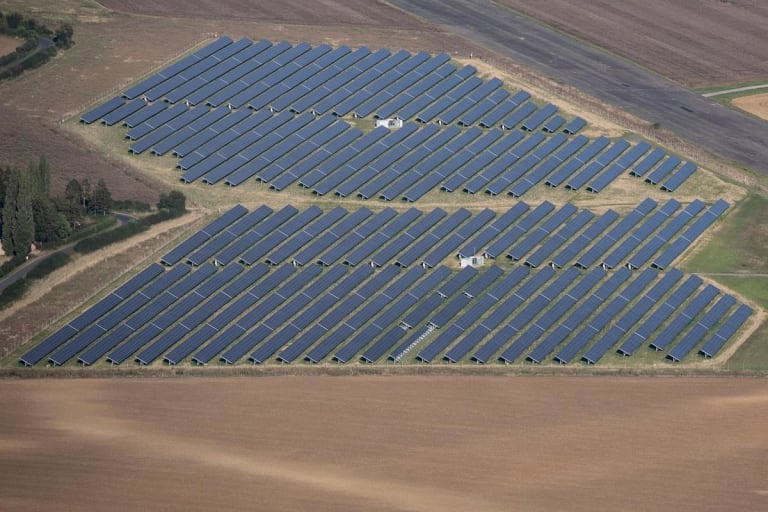
Aneel’s new regulatory initiative seeks to integrate sustainable technologies and public policies to deliver clean, reliable energy to remote regions of the Legal Amazon.
The National Electric Energy Agency (Aneel) officially announced the guidelines for the “Energias da Floresta” (Energy of the Forest) regulatory sandbox this Friday, September 18. The program aims to foster innovative solutions to mitigate energy shortages in isolated areas of the Amazon region, with the potential for expansion to other parts of the country facing similar challenges in accessing the conventional power grid.
The project stands out for its horizontal governance model. The plan involves a diverse network of stakeholders, including public authorities, distributors, academia, NGOs, and, crucially, the traditional communities that currently live without a guarantee of consistent electricity. The focus is to ensure that pilot projects are not only environmentally sustainable but also viable for large-scale replication.
Collective construction and a focus on sustainability
The design of this experimental environment was structured through a collaborative workshop held in August at the Tapajós-Arapiuns Extractive Reserve, in Pará. The initiative, led by Aneel in partnership with the Iema (Institute for Energy and Environment) and supported by the IDB (Inter-American Development Bank), sought to listen to the real needs of those who deal with energy poverty on a daily basis.
Data from Iema reveal the urgency of the measure: in the Legal Amazon, nearly 4,000 schools and close to 1,000 Basic Health Units (UBS) operate without regular support from the public utility.
Furthermore, extractive production suffers direct impacts from the lack of electricity, with more than 84,000 establishments operating without access to electrical infrastructure, which often forces these populations to use fossil fuels such as diesel, resulting in high costs and negative environmental impacts.
Solar photovoltaic energy was the common denominator in all the inclusion projects analyzed, with the vast majority of initiatives incorporating battery storage systems, consolidating a model that drastically reduces dependence on fossil fuels in isolated communities.
Impact and future outlook
The history of successful small-scale projects in the Pan-Amazon serves as a foundation for the new sandbox. The mapping conducted by Iema, which cataloged more than 300 initiatives in communities and households, demonstrates that the transition to renewable sources is not only possible but effective. In many cases, the adoption of solar systems has allowed entire communities to completely abandon the use of diesel-powered generators.
With the formalization of the guidelines, it is expected that Energias da Floresta will function as a practical laboratory to reduce dependence on fossil fuels and, above all, to promote energy security. The next step will be the implementation of pilots, which should align technical feasibility with social development and environmental conservation, creating a new paradigm for the expansion of energy access in Brazil.
RELATED NEWS
 Norway Accumulates $14 Billion in Investments in Brazil, With $1.8 Billion in Renewables
READ MORE
Norway Accumulates $14 Billion in Investments in Brazil, With $1.8 Billion in Renewables
READ MORE
 Climate Roadmaps for Presidential Candidates: Consensus on Forests, Impasse on Oil
READ MORE
Climate Roadmaps for Presidential Candidates: Consensus on Forests, Impasse on Oil
READ MORE
 New Guide on Communicating Decarbonization Offers Recommendations for Brands and Organizations to Avoid Greenwashing
READ MORE
New Guide on Communicating Decarbonization Offers Recommendations for Brands and Organizations to Avoid Greenwashing
READ MORE