

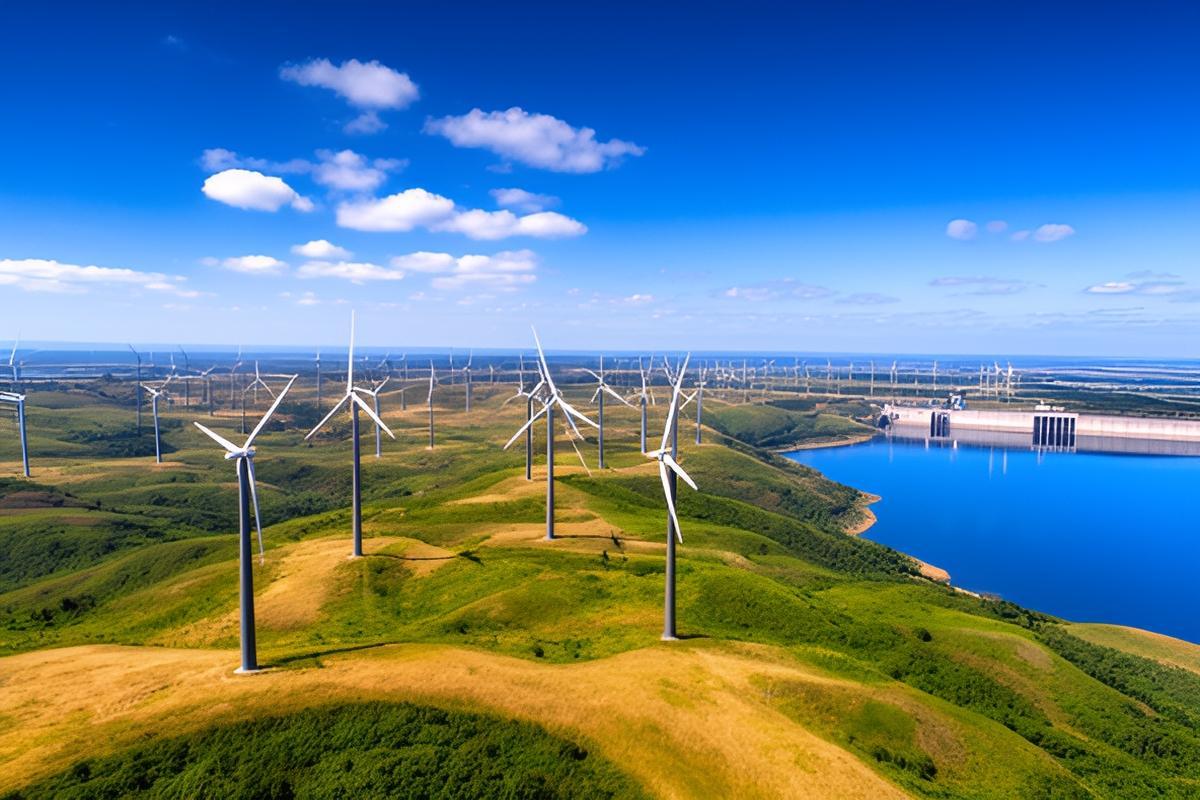
The National Electricity Agency authorized the operation of new wind and hydroelectric plants, strengthening Brazil’s renewable mix with projects from Spic and Atiaia Renováveis.
The expansion of installed capacity in Brazil gained new momentum with the recent decision of the National Electricity Agency (Aneel). The regulatory body granted the necessary approval for the start of operation of generating units in clean energy projects strategically located in Rio Grande do Norte, Espírito Santo, and Goiás.
Among the highlights, Spic Brasil is advancing the consolidation of its wind complex on Potiguar soil, while Atiaia Renováveis marks its arrival in the state of Goiás with a significant hydroelectric project.
These releases are essential to ensure energy security and meet the country’s sustainability goals, reinforcing the role of renewable generation in the National Interconnected System (SIN).
Spic Brasil expands operations in Rio Grande do Norte
Spic received the green light to bring essential turbines at the Paraíso Farol II and Paraíso Farol III wind parks into operation, located in the municipality of Touros. In total, 43.4 MW of installed power were released, a decisive step toward fully integrating the Paraíso Farol complex into the national transmission grid via the João Câmara II substation.
This set of assets is part of the company’s robust investment plan announced at the end of 2024. With a financial commitment of R$ 755 million, also covering the Pedra de Amolar project, the company projects a total capacity of 105.4 MW. This energy is destined for the free market, offering competitiveness to industrial consumers.
Regarding the relevance of these investments, industry experts highlight the efficiency in delivery:
The commercial operation of these parks within the scheduled timeline underscores Spic’s commitment to expanding Brazil’s wind mix, capable of supplying about 280,000 households annually with clean and predictable energy.
Atiaia Renewables Debuts in Goiás
While the Northeast expands its wind power, the Central-West celebrates a significant hydropower milestone. The PCH Taboca, developed by Atiaia Renewables in Jataí, received authorization to operate its first generating unit, totaling 14.9 MW initially.
The project, representing an investment of roughly R$ 350 million, is the company’s flagship in the state of Goiás. With a total capacity of 29.8 MW, the plant already has a clear production horizon: the energy will be directed to the Regulated Contracting Environment (ACR), ensuring stable supply to the national system.
Regulatory Context and Outlook
Beyond generation approvals, Aneel also moved the sector’s tariff landscape. The agency set the CDE (Energy Development Account) quotas for September 2026, with substantial amounts to be collected from transmission concessionaires such as Cemig and Axia Nordeste.
Additionally, the definitions regarding the financing of Proinfa for January 2027 reflect the complex financial machinery that underpins the expansion of alternative energies in the country. For the sector, these moves signal a mature market that balances the entry of new generating parks with the stability of tariffs that ensure universal access and incentives for clean sources.
The expectation for the coming months is an even greater acceleration, with the full operation of the remaining wind parks of Spic and the complete maturation of Atiaia projects, consolidating sustainable growth of Brazil’s electric infrastructure through 2027.