
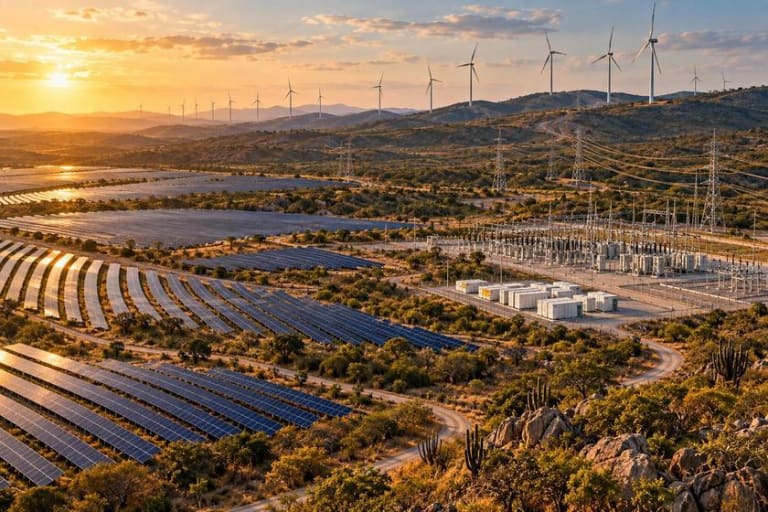
Amber Energia is investing R$59 million to transform the Codajás Thermal Power Plant into Amazonas’ first hybrid facility, combining natural gas and solar energy to supply the isolated system with greater efficiency and sustainability.
The energy transition marks a historic milestone in Brazil’s Northern region. Amber Energia, a business unit of the J&F S.A. group, is investing R$59 million to transform the Codajás Thermal Power Plant (UTE Codajás) in the state of Amazonas into the first hybrid facility to operate with natural gas and solar energy within an isolated system.
Scheduled for completion in December 2026, the project integrates 9.7 MWp of photovoltaic generation with the existing 5.4 MW thermal power plant. This initiative represents a fundamental technological advancement for municipalities that are not connected to the national electricity grid and rely entirely on local generation for their daily power supply.
How the Hybrid Power Plant in Codajás Works
The hybrid operating model optimizes the use of natural and fossil resources throughout the day. During periods of peak sunlight, the photovoltaic panels handle a significant portion of the demand, drastically reducing the burning of natural gas. At night or during periods of low light, the thermal plant takes over to ensure a stable supply to the municipality’s approximately 24,000 inhabitants.
In addition to operational efficiency, the project brings significant environmental benefits to the Amazon region. Clean energy is expected to prevent the emission of approximately 10,000 tons of CO₂ per year. This reduction is equivalent to the carbon absorption of about 590 hectares of forest restoration areas, which is the size of 825 football fields.
Fábio Tales Bindemann, operations director at Amber Energia, stated:
Codajás depends exclusively on energy generated within the city itself. With the sun and gas working together, the plant gains an extra layer of security. This is crucial in a place where any input takes hours by boat to arrive.
Innovation, Logistics, and Sustainability
The new configuration of UTE Codajás will also serve as an innovation hub. Amber Energia plans to use the facility as a laboratory for research and development projects, including the implementation of artificial intelligence to automate the transition and balance between solar and thermal generation, thereby reducing operational costs.
Overcoming the region’s logistical challenges required strategic planning. Since Codajás is about a 10-hour boat ride from Manaus, and river transport is vulnerable to dry seasons exacerbated by the El Niño phenomenon, the company expedited the shipment of materials. This strategy ensures that construction progresses without interruption, consolidating a resilient model for the future of the energy transition in the Amazon.