
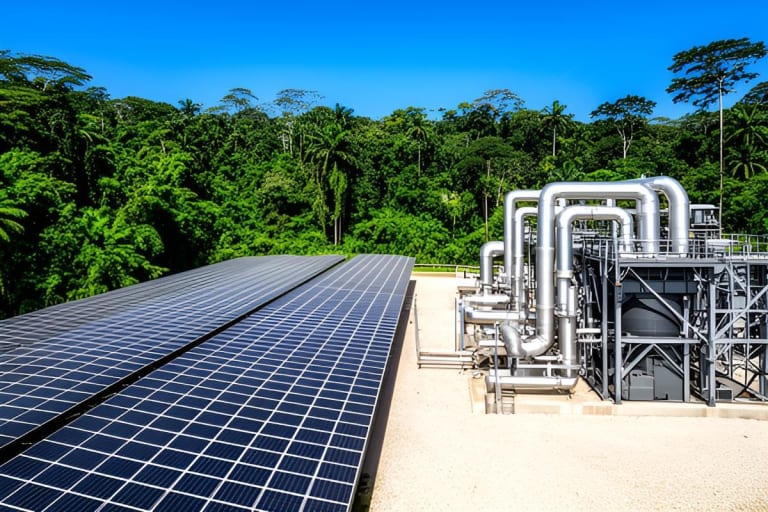
Âmbar Energia is investing R$ 59 million to build the first hybrid gas and solar power plant in Amazonas, promising increased energy security and lower emissions in Codajás.
The energy transition is reaching a new milestone in the Amazon region with a significant financial investment aimed at modernizing the local power sector.
Âmbar Energia has kicked off an innovative project that promises to transform the energy supply matrix in the municipality of Codajás, located in the interior of the state.
With an estimated investment of R$ 59 million, the initiative involves integrating a new photovoltaic plant into the locality’s existing thermoelectric generation infrastructure.
The official forecast expects construction to be completed and commercial operations to begin by December 2026.
Innovation in isolated systems
The project’s key differentiator is the creation of a hybrid power plant in an area that lacks connection to the National Interconnected System (SIN).
The new configuration will combine 9.7 MWp of solar panel capacity with the existing 5.4 MW provided by the natural gas plant.
During the day, solar energy will take the lead in meeting local demand, allowing the thermoelectric units to scale back.
At night or on cloudy days, natural gas will resume its central role to ensure a continuous power supply.
Fábio Tales Bindemann, Director of Operations at Âmbar Energia, notes:
Codajás depends entirely on energy generated within the city. By having solar and gas working together, the plant gains an extra layer of security. This is critical in a place where any supply takes hours by boat to arrive.
Challenging logistics and sustainability
Building large-scale infrastructure in the Amazon region requires strategic planning due to geographic and climatic challenges.
As the city is located about ten hours by boat from Manaus, the company had to expedite the shipment of heavy materials to avoid the impacts of severe droughts on local rivers.
Beyond the logistical benefits, the project provides a considerable environmental boost to the region.
The company expects to prevent the emission of approximately 10,000 tons of carbon dioxide annually, significantly reducing fossil fuel consumption.
Artificial intelligence in energy management
In addition to environmental and structural gains, the plant will serve as a laboratory for new technologies in the clean energy sector.
The company plans to implement artificial intelligence algorithms to optimize energy dispatch in real-time, anticipating weather fluctuations.
This advanced automation will help mitigate grid oscillations, extend the lifespan of the generators, and reduce costs related to corrective maintenance.
The success of this operation in an isolated system could pave the way for future expansions of sustainable hybrid models throughout the Amazon.