
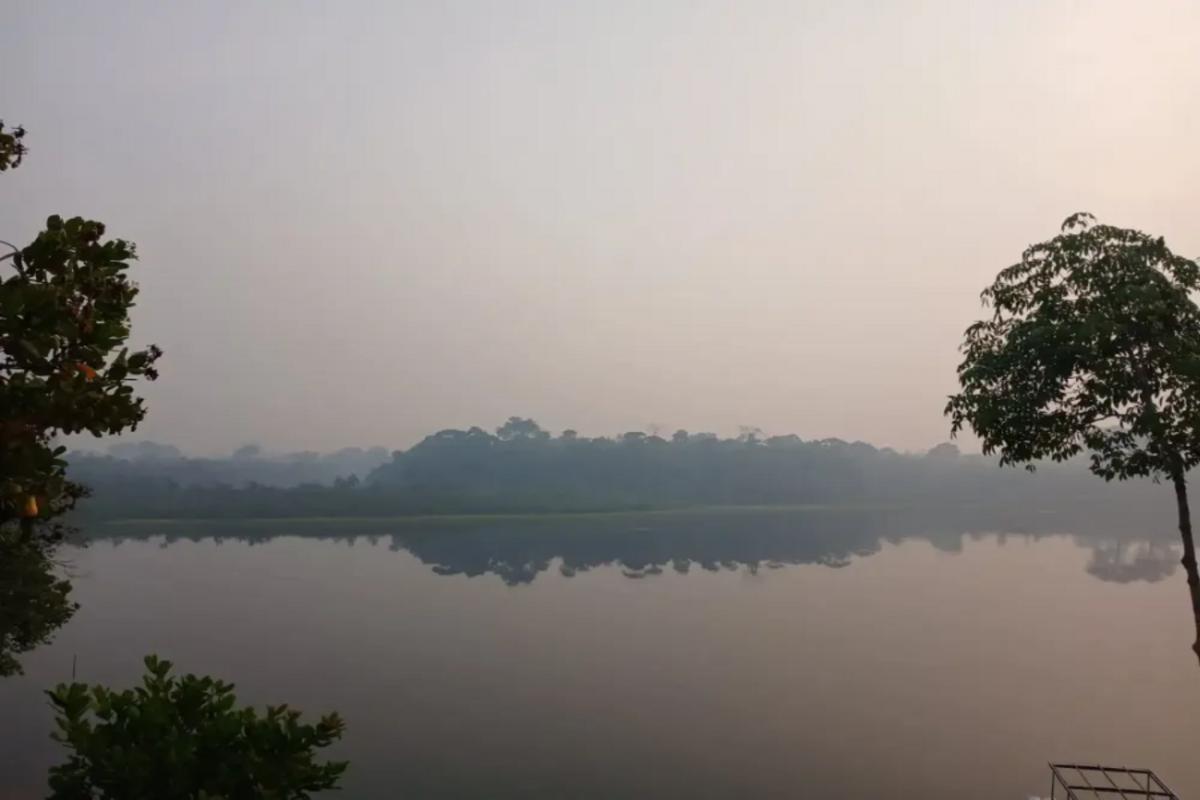
CONAQ has condemned the severe impact of burning and toxic smoke in the Amazonas, labeling the crisis as environmental racism. The organization demands health care, punishment for those responsible, and the urgent titling of territories.
A true public health emergency is relentlessly advancing across the state of Amazonas. Driven by a severe drought and the spread of criminal forest fires, a dense curtain of smoke has taken over the region. This alarming scenario is sickening entire populations and endangering the lives of traditional communities that face extreme socio‑environmental vulnerability.
Faced with this critical situation, the National Coordination of Articulation of Rural Black Quilombola Communities (CONAQ) issued a forceful public statement. In its position, the organization denounces the spread of fire as a direct manifestation of environmental racism, highlighting how ecological degradation disproportionately affects historically marginalized groups that are responsible for nature conservation.
“It is unacceptable that those who have historically preserved biodiversity are now the first to pay with their own breath for the consequences of ecological degradation and governmental omission.”
Direct threat to traditional territories
The advance of flames and dense smoke compromises the way of life in various regions of the state. According to CONAQ, in the Andirá River Basin and in Barreirinha, entire communities suffer from dry vegetation consumed by fire. Residents are practically stranded and cornered by accumulated air pollution over the rivers, which drastically worsens basic survival conditions.
In Itacoatiara, large‑scale fires destroy thousands of hectares, threatening both the Quilombo Sacred Heart of Jesus of Serpa Lake and neighboring reserves. The problem also affects urban centers, such as the Quilombo of Barranco de São Benedito in Manaus, where residents face involuntary confinement due to poor air quality.
The urgency of transition and climate justice
To address this crisis, CONAQ emphasizes that protecting clean energy, forests, and biodiversity goes hand in hand with land regularization. The lack of title creates dangerous loopholes for land grabbing and new environmental crimes. The organization stresses that true sustainability requires respect for indigenous peoples: “There is no climate justice without indigenous demarcation and without titled quilombos!”
While acknowledging federal efforts to combat fires, the entity demands decisive action from authorities, including emergency medical care, relentless enforcement, and punishment for criminals. The region’s future depends on environmental preservation and the guarantee of fundamental rights.
“To our quilombola, indigenous, riverine brothers and sisters, and all Amazonian residents, we offer our fraternal embrace, our ancestral strength, and our unwavering commitment to continue denouncing this tragedy and fighting for the elemental right to breathe and exist in our territories.”