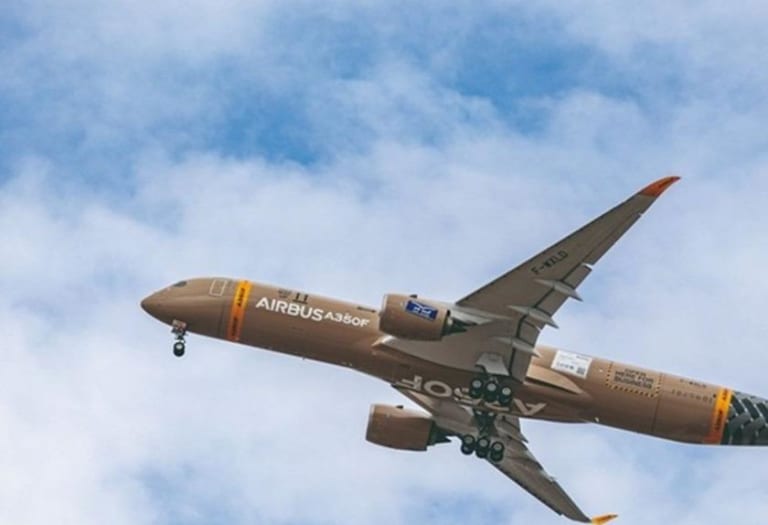
The A350F freighter has completed its first test flight, promising to revolutionize air cargo transportation with enhanced efficiency and a lower environmental impact.
The highly anticipated maiden flight of Airbus’s new cargo aircraft, the A350F, has officially taken to the skies.
The aircraft, bearing the model identification MSN 700, successfully completed its inaugural flight, demonstrating its capabilities during a mission that lasted 4 hours and 10 minutes and reached an altitude of 25,000 feet.
This milestone kicks off an extensive testing campaign aimed at validating all aspects of its airworthiness, a process expected to stretch over nine months.
The development of the A350F directly addresses the growing demands of the long-haul air freight market, a crucial sector for the global economy.
With an impressive range of up to 5,400 miles (8,700 kilometers) and the capacity to carry over 111 tons of payload, the aircraft positions itself as a major industry player.
Onboard technology is one of its standout differentials.
Innovation in Materials and Performance
The structure of the A350F is a testament to technological advancement, with more than 70% of its components manufactured from advanced materials.
This strategic choice results in a significant weight reduction, with a maximum takeoff weight up to 46 tons lighter compared to direct rivals in the same category.
This optimization directly contributes to operational efficiency.
Powered by efficient Rolls-Royce Trent XWB-97 engines, the A350F stands out for its commitment to sustainability.
The manufacturer estimates a reduction in fuel consumption and carbon emissions of up to 40% when compared to similar aircraft currently in operation.
This performance fully meets the stringent CO2 emission targets established by the International Civil Aviation Organization (ICAO), an important step toward greener aviation.
The second test unit, the MSN 701, is already in its final assembly phase, awaiting painting before joining the validation flights.
The A350F program has already demonstrated strong market interest, with 115 firm orders from 14 global customers registered through the end of August 2026.
This figure represents a considerable share—59%—of purchase intentions in the large freighter segment, signaling strong confidence in the potential of this new machine.
The success of the A350F inaugural flight is not only a triumph for Airbus, but also a promising advancement for the future of air cargo transportation.
The combination of capacity, range, and crucially, its reduced environmental footprint, positions this aircraft as a competitive advantage and a more sustainable solution for 21st-century logistics demands.