

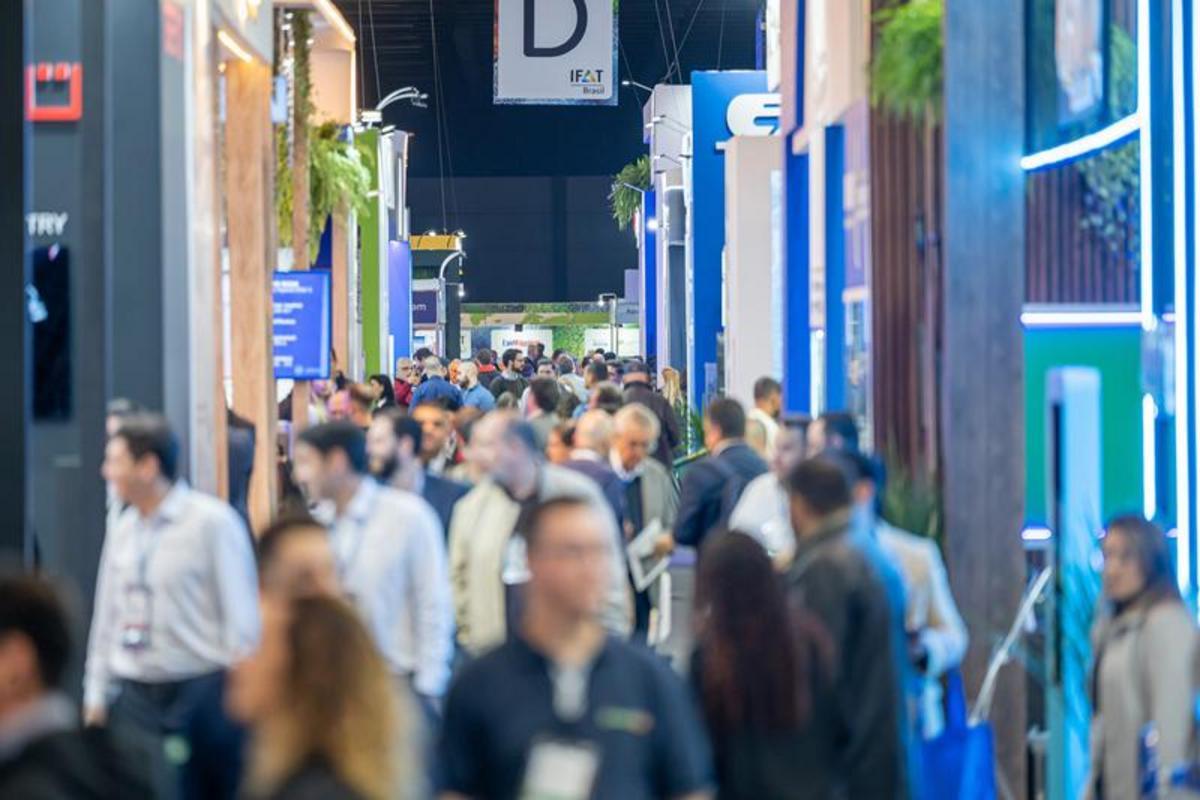
The advancement of energy recovery from waste opens new sustainable opportunities in Brazil. The topic gains prominence with new public policies and fuels strategic debates at IFAT Brazil 2027, linking innovation, biogas, and clean energy.
Proper disposal of urban waste remains one of the country’s biggest operational and environmental bottlenecks. According to IBGE data, 31.9% of Brazilian municipalities still dump their waste in open dumps. The indicator highlights the urgency of adopting more efficient, integrated waste management models that align with global sustainability demands.
Against this backdrop, modernizing collection, sorting, transport, and final disposal processes requires the integration of smart environmental technologies. Applying data‑driven and automated solutions not only optimizes operational costs but also drives the circular economy by turning environmental liabilities into economic assets.
The debate gained direct traction in government guidelines. With the approval of the creation of the Energy Recovery Working Group for Waste (GT-VER) by the CNPE, under the coordination of the MME (as announced by the federal government), Brazil is building legal and economic frameworks to accelerate the conversion of materials into renewable energy.
The push for energy recovery on the national agenda
The work of GT-VER focuses on the energy recovery of urban, agricultural, industrial, and basic sanitation waste. The strategy follows the priority order of the National Solid Waste Policy, directing materials that lack technical or economic viability for mechanical recycling toward energy recovery.
Advanced technological routes, such as the production of biogas, biomethane, electricity, and thermal steam generation (worldwide known as waste‑to‑energy), position the waste sector as a key driver for the transition to clean energy.
Marina Roque, project manager at IFAT Brazil 2027, highlights:
Innovation plays a crucial role in transforming solid waste management. Smart solutions can make processes more efficient, expand material reuse possibilities, and promote more sustainable practices in cities.
Chain Integration and Operational Bottlenecks
Ensuring energy efficiency requires a systemic view of national infrastructure. According to ABREMA’s 2025 Panorama, the country generated 81.6 million tons of urban solid waste in 2024, with more than 40% of that amount not receiving environmentally appropriate disposal after collection.
Pedro Maranhão, president of ABREMA, notes:
We need to look at the entire chain in an integrated way, ensuring conditions for materials to return to the production cycle and that only residues are directed to environmentally appropriate final disposal.
The need for modernization opens a promising market for equipment suppliers, consulting firms, and environmental engineering companies.
The Billion-Dollar Potential of Biogas and Biomethane
Reusing organic matter in landfills and industrial plants emerges as one of the most efficient alternatives for decarbonizing the national energy mix. Projections from EPE indicate a production potential of over 97 billion Nm³ of biogas per year by 2031, covering urban waste, agribusiness, and effluents.
Josiani Napolitano, executive president of ABiogás, explains:
In urban solid waste management, one of the main opportunities lies in utilizing the biogas generated by the decomposition of organic matter in sanitary landfills. This gas can be used to produce electricity and heat or undergo a purification process to produce biomethane.
According to the executive, biomethane production links proper waste disposal to the creation of new revenue streams and the generation of decentralized clean energy.
Innovation and Market at IFAT Brazil 2027
The alignment between regulatory guidelines, technological maturity, and private investment converges toward the consolidation of large-scale events in the sector. IFAT Brazil 2027 positions itself as the central hub of Latin America for showcasing environmental technologies applied to sanitation, waste management, and waste‑to‑energy.
Marina Roque notes:
Brazil faces significant challenges in waste management, yet it also offers substantial potential for the development and implementation of new solutions. In this context, IFAT Brazil connects companies, technologies, and experts, creating business opportunities and driving innovation and the development of increasingly efficient and sustainable waste management.
The Future of Waste Management and Renewable Energy
The advancement of energy recovery confirms that the answer to urban environmental problems is directly linked to clean energy solutions. The transition from landfills to technologically advanced treatment and energy generation plants creates skilled jobs, reduces greenhouse gas emissions, and attracts international capital.
With the strengthening of public policies and the hosting of international fairs such as IFAT Brazil 2027 (scheduled for June 2027 in São Paulo), Brazil solidifies its path to transform environmental challenges into profitable and sustainable models of regional development.