The Federal District Water, Energy and Basic Sanitation Regulatory Agency (Adasa) has doubled its rainfall monitoring network, expanding coverage to all 37 administrative regions and providing historical data since 2020.
The Federal District Water, Energy and Basic Sanitation Regulatory Agency (Adasa) has made a significant leap in its rainfall monitoring capacity, nearly doubling the reach of its system. The Urban Rainfall Monitoring System (Simcurb), which previously had 42 stations, now boasts 80 automated units strategically spread across all 37 administrative regions of the DF.
This expansion not only increases the network’s reach but also ensures that newly created areas such as Arapoanga, Água Quente, 26 de Setembro, and Ponte Alta are now under surveillance. Publicly available historical data on Adasa’s portal since 2020 now totals nearly five million records, offering a robust overview for analysis and planning.
Technology and Precision for a Safer DF
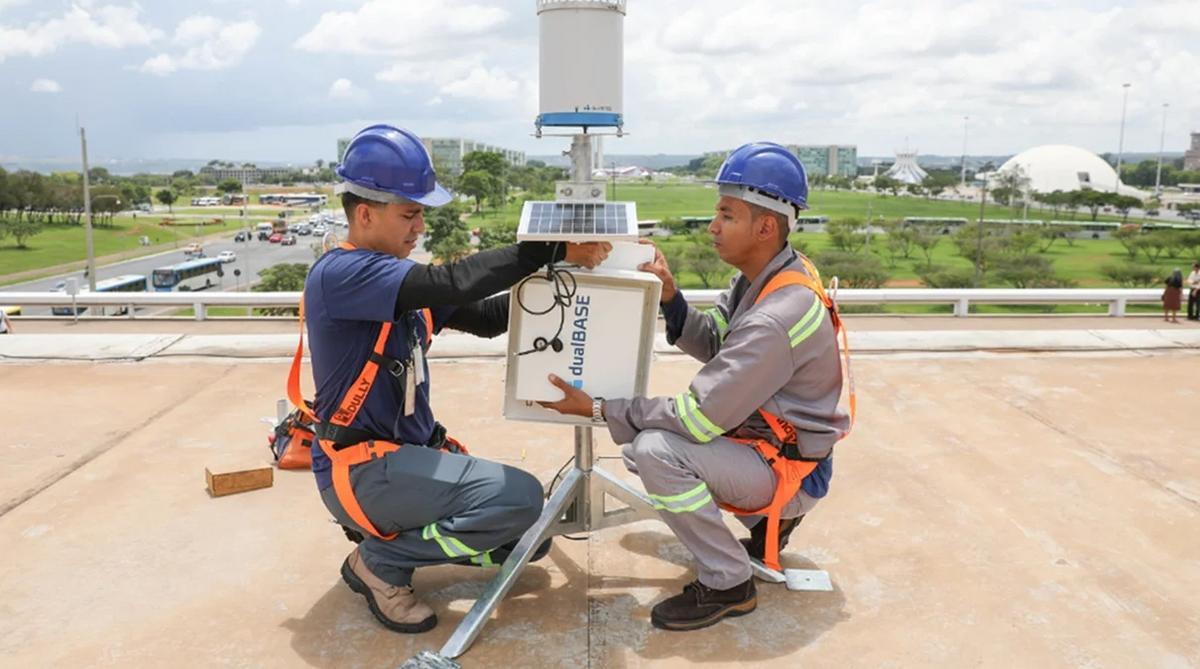
Each new rainfall station is equipped with cutting‑edge technology, recording precipitation with a precision of 0.2 millimeters.
Energy autonomy is ensured by solar panels, allowing continuous operation for up to four days without sunlight.
Data are transmitted in real time, every five minutes, via 4G. An unusual but effective measure is the use of naphthalene to repel insects from the equipment.
Preventive Maintenance and Rigorous Calibration
Before the rainy season, a team of technicians focuses on calibrating each device, aiming for an error margin below 2%.
Continuous monitoring of data transmission enables rapid action in case of any blockage or failure, ensuring the reliability of the information.
Urban Planning and Disaster Prevention
The expansion and refinement of Simcurb have a direct impact on urban planning and problem prevention. Raimundo Ribeiro, CEO of Adasa, highlighted the importance of the initiative.
Raimundo Ribeiro stated:
Expanding and improving a system like this means strengthening Adasa’s ability to keep pace with the reality of the Federal District, anticipate potential problems, and plan solutions based on increasingly qualified information.
Drainage Works and Resource Management
The data collected by the system are crucial for supporting efficient drainage projects and actions by agencies such as Novacap, the Works Department, and Civil Defense.
Luciano Leoi, Coordinator of Inspection and Monitoring at Adasa, explained how the data help public management.
The history allows us to “design tailored solutions and apply public resources with precision where the need is greatest.”
This helps distinguish between atypical rain events and isolated issues, such as clogged gutters, which often cause disruptions.
Impact on Mobility and Daily Life
Monitoring precision is also vital for air operations, with data shared with Cindacta (Air Traffic Control) at the runways of Brasília Airport.
Flood concerns are a constant. In Buraco do Tatu, for example, the installation of a monitoring station is viewed favorably by residents and merchants.
Merchant Valdison Santana expressed a common sentiment:
The biggest inconvenience of rain has always been Buraco do Tatu, which fills and blocks all traffic.
The new monitoring network is specifically designed to mitigate these problems.
The expansion of the rainfall monitoring network by Adasa marks a significant step forward for water management and urban planning in the Federal District. With more precise and comprehensive data, the ability to predict, prevent, and address rain-related issues is greatly enhanced, positively impacting citizen safety and mobility. The expectation is that the increased granularity of information will enable resource optimization and the implementation of more effective solutions to the capital’s water challenges.