Talesun is betting on high-power solar panels for Brazil, but the ideal choice for your small roof goes beyond just watts.
The arrival of high-output solar modules, such as 650W and 660W units, in the Brazilian market—driven by companies like Talesun—has sparked an important debate for property owners with limited space.
While the temptation to choose the panel with the highest wattage to maximize energy production is natural, the final decision requires a deeper analysis that goes beyond nominal power.
The Asian manufacturer is reinforcing its expansion strategy in the country by introducing these new units, which aim to meet the growing demand for solar energy.
However, simply choosing a high-power panel does not automatically guarantee the best performance.
Several technical and installation factors—such as exact module dimensions, shading, intrinsic panel efficiency, support structure suitability, and inverter compatibility—are crucial in determining how much energy a solar system will actually deliver at a specific location throughout the year.
Cutting-Edge Technology in Focus
Talesun recently showcased its 650W and 660W Back Contact modules during Intersolar South America 2026, a major event for the clean energy sector.
This technology, which modifies the design of solar cells to optimize light absorption and electrical conductivity, is a key differentiator that promises higher efficiency.
The company also announced the expansion of its distribution network in Brazil, establishing strategic partnerships with firms such as Sou Energy and PHB Solar, and negotiating with other distributors.
The company’s planned office and potential local inventory are slated for 2027, rather than being immediately available.
The company’s planned office and potential local inventory are slated for 2027, rather than being immediately available.
It is essential to understand that while back-contact technology has its advantages, it does not eliminate the need for an individualized assessment.
Not every 660W panel will perform better on a specific roof than a model with a lower nominal power rating.
The detailed technical data sheet for each product, including dimensions and electrical specifications, must be rigorously compared against the needs and characteristics of the installation site.
The Importance of Analysis per Square Meter
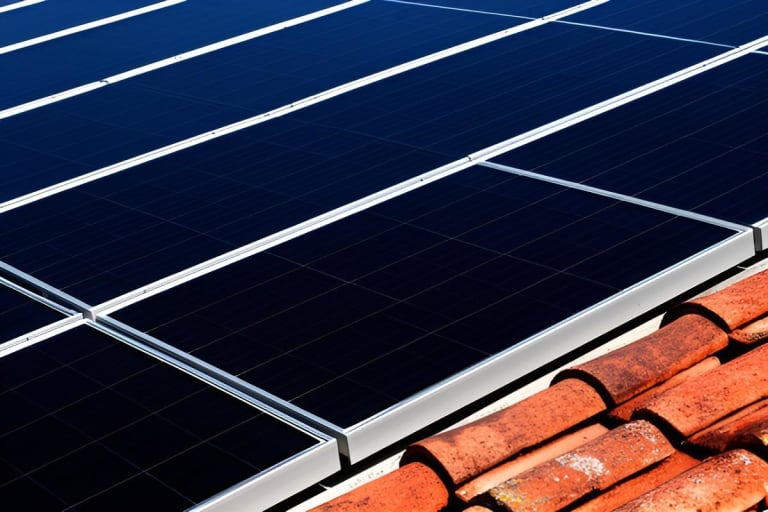
For a small roof, space utilization is a deciding factor.
Nominal power, often highlighted in marketing, can be misleading if not considered in relation to the area occupied by the panel.
A 660W module, for instance, may have larger dimensions than a 550W one, impacting the total number of panels that will actually fit on the roof.
Analyzing watts per square meter provides a more accurate metric for comparing the energy density that different modules can deliver in a limited space.
An efficient solar design takes into account not only panel power but also the optimal layout on the roof, considering mandatory setbacks, maintenance access, and potential shaded areas.
In some cases, installing more smaller modules can result in a higher total energy yield than fewer, larger ones, especially if the larger modules compromise usable space.
Compatibility and Safety: Pillars of Installation
Beyond generation capacity, other technical aspects require attention.
The voltage and current of each module must be compatible with the operating range of the inverter and the series configuration of the panels.
An inadequate combination can lead to efficiency losses or even limit the system’s generation potential.
The weight of the modules is also a critical factor, requiring an appropriate support structure and verification of the roof’s load-bearing capacity.
Electrical safety is another non-negotiable point.
A qualified professional must ensure that the installation complies with technical and safety standards, including proper electrical protections.
Before finalizing any purchase, it is essential to verify the equipment’s registration with Inmetro and request full warranty documentation, including details on technical support and response times for potential malfunctions.
Real Value: Beyond the Price per Panel
The promise of local inventory by 2027, while signaling the manufacturer’s commitment to the Brazilian market, should not be the deciding factor for an immediate installation.
Comparing complete proposals—considering the installed price, projected generation in kWh per year, the type of inverter, structure quality, warranty duration, and post-sales service reputation—is the safest way to make an informed decision.
A proposal that seems cheaper per panel may, in the long run, have a higher cost per useful kilowatt-hour.
The arrival of high-power panels, such as 660W units, is an excellent opportunity for consumers to demand more detailed analyses and accurate simulations for their roofs.
Without these concrete data points, any claim about which panel is “always better” lacks technical foundation.
The ideal choice lies in the ability to optimize available space, ensure component compatibility, and secure a sustainable energy and financial return over the system’s lifespan.