
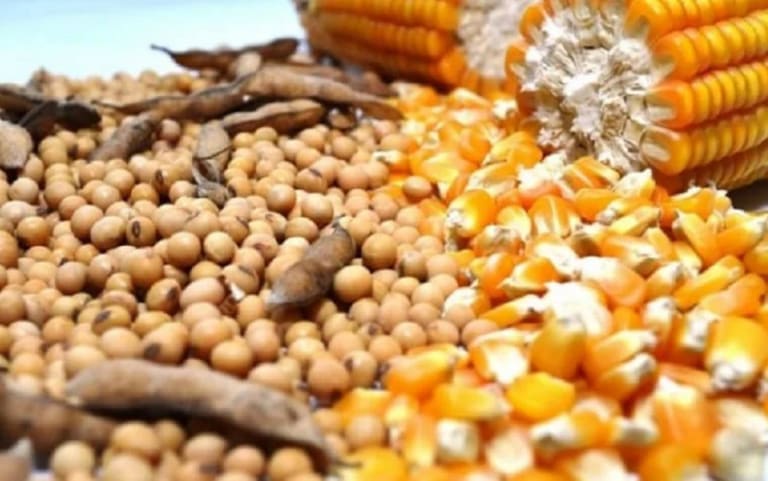
The 2026 grain crop estimate reaches a record level of 354.5 million tons, driven by the expansion of soybean, corn, and rice planting areas.
Brazil’s agribusiness projects a new horizon of productivity for the next cycle. According to the latest data from the Systematic Agricultural Production Survey (LSPA), published by the IBGE, the expectation is that the production of cereals, legumes, and oilseeds will reach 354.5 million tons in 2026.
This volume represents a leap of 2.4% compared to the 346.1 million tons recorded in 2025. The scenario, which points to a record in the institute’s historical series, reaffirms Brazil‘s leading role in global food security and the strengthening of the national economy.
Dominance of Key Commodities
The robustness of this crop is largely sustained by the performance of the Brazilian agricultural sector’s iron trio: soybeans, corn, and rice. Together, these products account for 93% of the entire production estimate, consolidating them as essential pillars for achieving these historical figures.
Technical analysis also reveals a significant geographical expansion. The area destined for harvest is expected to reach 83.2 million hectares, an increase of 2% compared to the previous crop. This growth reflects both increased productivity per hectare and the expansion of cultivated areas in the country.
The trend observed in the September survey shows resilience in the agricultural sector, which is stably adjusting its projections with an increase of about 1.5 million tons in just one month, consolidating the expectation of a robust 2026 crop.
Continuous Growth and Future Projections
Comparing the data from September with those from August, a positive stability is observed. The 0.4% increase in production, equivalent to over 1.5 million additional tons in just thirty days, suggests that cultivation conditions remain favorable.
The sector now turns its attention to the climate and logistical factors that will dictate the pace of the harvest in the coming months. With 83.2 million hectares mapped, Brazil reinforces its commitment to production efficiency, remaining at the center of the clean energy and biofuels agenda, which depend directly on the stability of this grain production chain.