The Brazilian electric sector faces a decisive week with battery auctions overseen by the courts, while the debate over fossil fuel subsidies reaches the TCU and climate alerts rise.
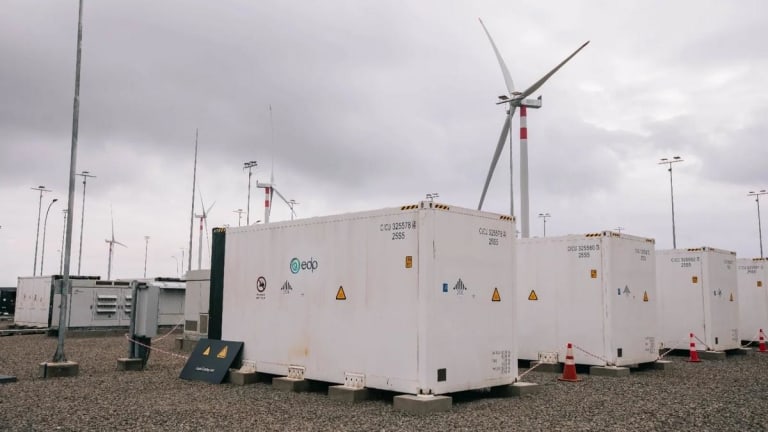
The week leading up to the energy storage system auctions in Brazil is marked by a climate of regulatory uncertainty and intense legal disputes. Although the sector had been awaiting a legislative definition on the allocation of storage costs — currently borne by generators — the judiciary has upheld the conduct of the auctions scheduled for December 2 and 4.
The 17th Federal Civil Court of the Federal District denied, on Wednesday (November 25), Abeeólica‘s request to suspend the auctions. The judge in charge of the case held that the decision to allocate costs to generators was a legislative choice, highlighting the risk of operational losses if the schedule were delayed. The association, however, has already signaled its intention to appeal the ruling.
The storage dilemma and pressure for rules
While the CCEE (Electric Energy Commercialization Chamber) and Aneel confirm the auctions for next week, the National Congress keeps PL 3716/2026 stalled. The bill aims to change the allocation of storage costs, but the rapporteur, Congressman Danilo Forte (PP/CE), has not yet presented his opinion.
The market closely watches the stance of the STF, where Minister Cristiano Zanin requested technical information from federal agencies before deciding on a new attempt at a preliminary injunction. Meanwhile, the CMN (National Monetary Council) seeks to encourage the sector by reducing the financing cost of the Fundo Clima for batteries with domestic components.
The president of BNDES, Aloizio Mercadante, stated:
The change aims to increase the country’s productive and technological capacity, starting with the Capacity Reserve Auction scheduled for next week.
Pressure for Transparency on Fossil Fuel Subsidies
In a distinct front, the Climate Observatory and WWF-Brazil joined forces to question state support for polluting fuels. The organizations filed a representation with the TCU requesting a rigorous audit of federal subsidies directed at oil, natural gas, and coal, citing Repetro as one of the focal points.
According to estimates based on Inesc reports, subsidies totaled about R$ 47 billion in 2024. The groups warn that the climate damages from emissions linked to these sectors reach R$ 145 billion.
Suely Araújo, from the OC, noted:
We want a truly comprehensive assessment: whether these subsidies make sense and what needs to be changed. We also ask the court to take the appropriate measures to adopt an official parameter based on the social cost of carbon science.
Climate Challenges and Infrastructure Resilience
The instability scenario is worsened by climatologist Paulo Nobre of Inpe‘s alerts about the recurrence of extreme events. The researcher warns that the current Super El Niño is only the first of a series, requiring the electric sector’s planning to account for the vulnerability of hydropower plants and the fragility of urban distribution networks in the face of storms.
With the number of emergency decrees for rains hitting records in the last 14 years, the impact on energy services—such as the recent blackout that hit part of the North Region—calls into question the response capacity of distributors. The need for investments in resilient infrastructure, such as underground cabling, is gaining traction in the public debate.
The near‑future of the national electric system will depend on a delicate balance between the economic viability of new battery projects and the growing pressure for an energy transition that truly reduces dependence on fossil fuels. The coming weeks, marked by auctions, will serve as a vital thermometer for the country’s energy security in the years to come.