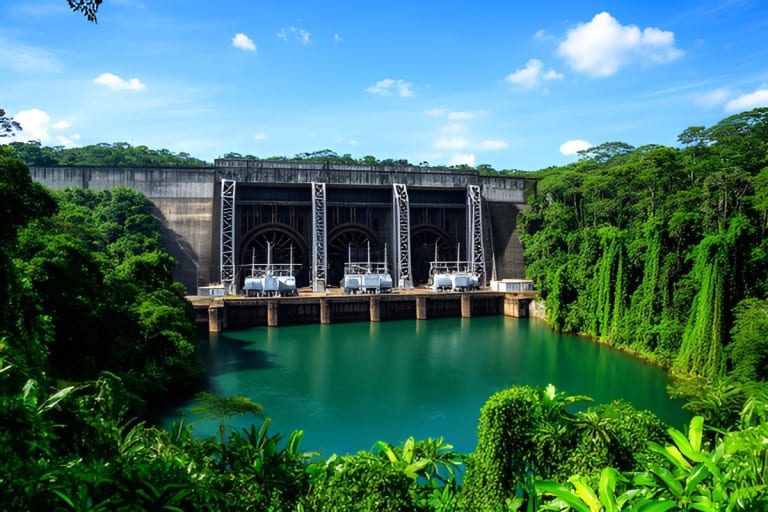
Belo Monte Hydroelectric Plant in Pará receives green light from Aneel to resume operation of turbine UG13 after undergoing complex technical repairs on its main structure.
The operation of Belo Monte Hydroelectric Plant, one of Brazil’s largest energy assets, has just received a significant boost. The National Electricity Agency (Aneel) officially announced, through the Official Gazette of the Union, the authorization to resume commercial operation of generating unit UG13, which has an installed capacity of 611.1 MW.
This decision marks an important milestone for Norte Energia, the concessionaire responsible for the plant. The unit had been offline for scheduled maintenance, but a deeper diagnosis during routine work revealed the need for more robust structural interventions to ensure operational safety and asset efficiency.
The technical challenge at UG13
The unit’s shutdown was not expected to be so extensive. Initially, the goal was to perform only general preventive maintenance. However, the technical team detected specific deformations in the stator core blades, a problem worsened by loss of axial compaction in the magnetic core of the equipment.
Given the situation, the equipment manufacturer was stringent in its technical recommendations. The guidance was that the turbine remain inoperable until all corrections were completed, to avoid larger failures that could compromise the plant’s physical integrity or the stability of the National Interconnected System (SIN).
The complexity of the repairs required meticulous operation, ensuring that the plant’s cutting‑edge technology returned to operation within the safety parameters demanded by the Brazilian electric sector.
Impact on the electric system
Resuming UG13 is strategic for Pará’s energy landscape and the entire country. In a sector that demands maximum availability to meet growing demand, having a turbine of over 600 MW ready for full generation reinforces energy security, especially during peak load periods.
A Aneel closely monitors these releases, ensuring that any generating unit—whether hydro, wind, or solar—meets strict technical requirements before being integrated into the commercial grid. The approval for Belo Monte therefore confirms that the facility is fully restored and ready for energy dispatch.
Expansion and Market
While the Pará giant returns to full load, the renewable energy market in Brazil remains hot with new projects. SPIC Brasil, for example, is advancing its wind asset portfolio. The sector as a whole shows vitality, with new authorizations for generating units in states such as Rio Grande do Norte and Goiás, as well as initiatives for the natural gas sector.
The focus now remains on the stability of the newly repaired systems. The expectation is that the turbine’s full operation will contribute to the robustness of the energy mix, allowing generated power to flow uninterrupted to consumers of the National Interconnected System, reinforcing the reliability of large-scale operations such as Belo Monte.