The Super El Niño phenomenon marks the beginning of an era of extreme weather events in Brazil, demanding urgent adaptations to the power grid and urban planning in cities.
The emergence of the intense climatic phenomenon known as Super El Niño inaugurates a new phase of severe meteorological events. Experts point out that global climate changes are making these episodes more frequent and with deeper impacts on society.
The warning was issued by renowned climatologist Paulo Nobre, researcher at the INPE (National Institute for Space Research). During a lecture at the Festival Iguassu Inova, organized by Itaipu Parquetec in Foz do Iguaçu, the scientist emphasized the need for structural readjustment of the country.
Climate instability poses a direct challenge to Brazil’s electric power sector and urban infrastructure. With changes in rainfall patterns, water security and energy distribution face unprecedented risks.
Impacts on hydropower generation and drought in the North
The advent of Super El Niño drastically alters the distribution of precipitation across the national territory. The phenomenon causes severe droughts in the North and Midwest regions, significantly reducing river levels that feed large power plants.
A clear example of this crisis was the operational adjustment at the Belo Monte plant, located on the Xingu River. The ANA (National Water and Basic Sanitation Agency) had to relax the minimum reservoir flow to preserve the region’s water resources.
Faced with the worrying outlook, the INPE researcher stresses the gravity of the scenario for the coming years:
“Super El Niño comes almost like an alert for us. And what is the alert? That it is not one, it is the first of a new class of El Niño.”
Floods in the South and energy solutions
While the North faces drought, the South of Brazil suffers from severe and heavy storms. Accumulated rainfall over short periods dramatically increases the risk of flooding, inundation, and landslides in vulnerable areas.
The specialist explains how precipitation behaves atypically during these extreme events:
“Rain more in the South doesn’t mean it rains a little more every day. It means that several days go by without rain and then, when it does rain, you turn on the tap.”
To ease pressure on hydroelectric reservoirs during dry periods, diversification of the energy mix is advocated. A strategic combination of solar, wind, and hydro sources allows water to be conserved during the day for use at night.
Vulnerability of Networks and Underground Wiring
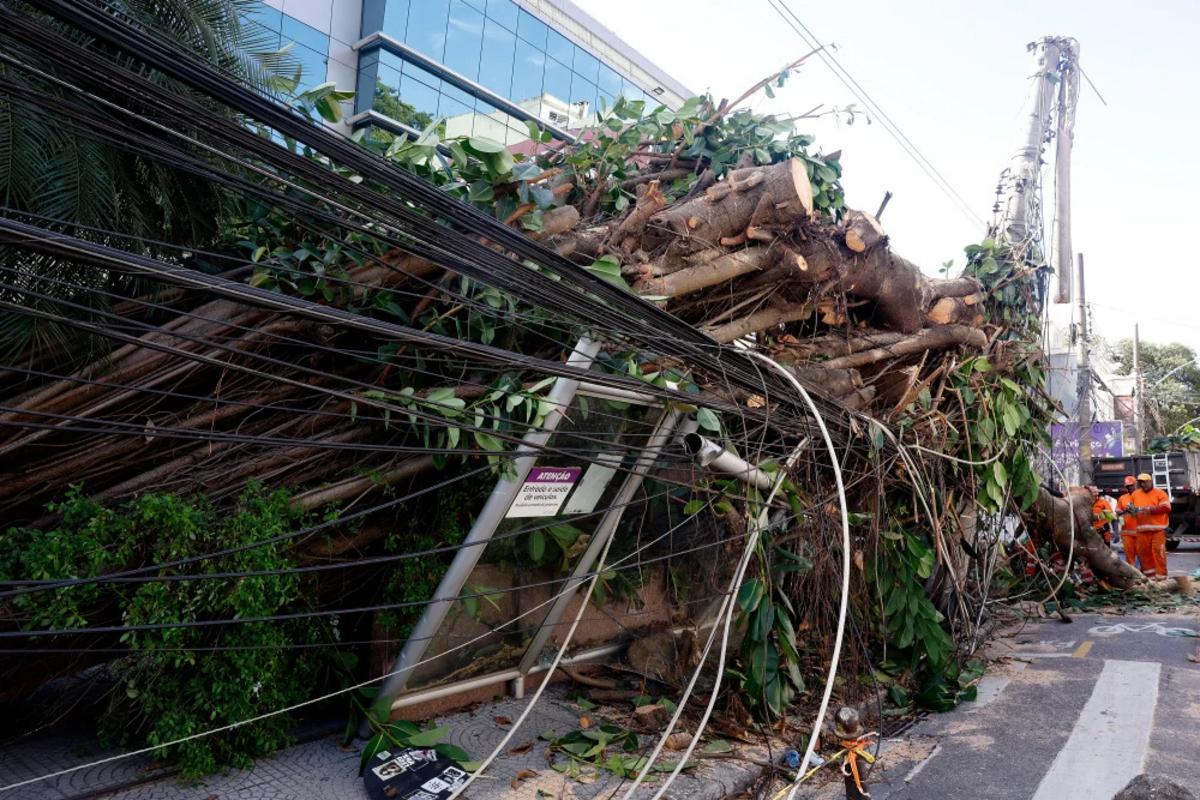
Storms with strong gusts cause massive damage to urban electrical systems. Falling trees and broken overhead lines frequently leave thousands of consumers without power for extended periods.
As a definitive measure to mitigate these recurring losses, grounding of power and telecommunications cables is suggested. This intervention can be strategically carried out alongside municipal drainage projects.
Climatologist Paulo Nobre stresses that urban vegetation should not be blamed for city blackouts:
“Ah, but there are extreme winds that topple trees and bring down the wires. Bury the wires.”
Weather Forecasting as a Management Tool
The current technology developed by INPE allows the arrival of Super El Niño to be predicted up to ten months in advance. This lead time gives public managers a critical window to plan structural interventions.
The major current challenge is converting these scientific alerts into practical actions by city councils and state governments. Strengthening Civil Defense and updating city master plans are essential steps to protect populations exposed to risk.
Consolidating intense weather events requires an immediate shift in the stance of public authorities and utilities. Predicting natural disasters is only the first step toward preventing greater damage.
The true resilience of Brazil will depend on the ability to invest proactively in infrastructure, ensuring energy security and community protection in an increasingly unpredictable climate.