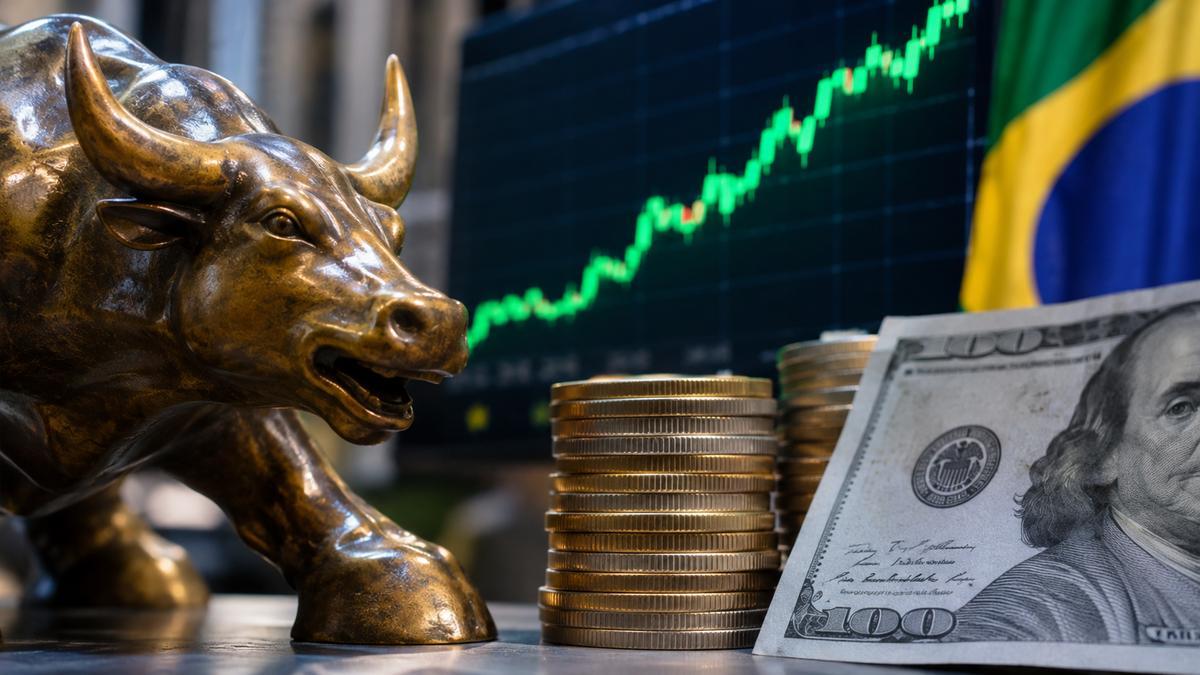
The Brazilian financial market reacted with strong optimism to the appointment of the new economy chief and inflation data, boosting the stock exchange and pushing down the U.S. dollar.
The Brazilian financial market recorded significant positive swings, driven by bold announcements on the country’s economic policy direction. The business environment immediately reflected enthusiasm for the new course set by the government.
The sharp investor activity followed confirmation that Luiz Carlos Trabuco Cappi will take command of the Ministry of Finance starting in 2027. The announcement gave new momentum to domestic assets in both the internal and external arenas.
With this signal, Brazil’s main stock index, the Ibovespa, reached 183,000 points. At the same time, the commercial dollar fell sharply, trading below R$ 5.50.
The impact of Trabuco’s appointment on markets
With a career spanning more than five decades in banking, Luiz Carlos Trabuco Cappi, former president and current board chair of Bradesco, brings strong technical credibility. The appointment was seen as a direct nod to fiscal discipline.
International markets also reacted favorably, lifting the price of Brazilian equities abroad. The move underscores the search for predictability in economic rules and public account stability.
Despite the initial euphoria, analysts note that optimism will need to be sustained by practical measures. The future minister’s challenge will be to curb spending growth and stabilize debt. Until then, Dario Durigan remains at the helm of the ministry.
Inflation relief and outlook for interest rates
Another key factor for asset appreciation was price behavior. The preliminary official inflation figure, measured by the IPCA-15 for November, came in at 0.22%, below economists’ projections.
The inflation slowdown directly contributed to lower future interest rates. The move generates expectations of credit cost relief, though the scenario still requires caution from financial authorities.
The Central Bank continues to monitor indicators before setting the next steps for the benchmark rate, the Selic Rate, which remains at 13.75% per year.
The trajectory of prices and the rigor in fiscal control will continue to be decisive in setting the pace of monetary policy in the coming months.
Benefited sectors and investment dynamics
The outlook for lower interest rates favors companies focused on the domestic market. The retail segment, construction, shopping center sector, and vehicle leasing firms are among those most benefited by the changing scenario.
Financial institutions and real‑estate investment funds also find room for expansion. Additionally, highly leveraged companies now have more favorable conditions to restructure their debt and reduce financial costs.
On the other hand, export‑oriented firms tend to feel the negative impact of a stronger real. The decline in the dollar reduces the revenue converted into national currency for businesses that depend on foreign trade.
Effects on fixed income and household consumption
In the fixed‑income market, the retreat of future rates has boosted fixed‑rate bonds and previously issued Tesouro IPCA+ securities. This price adjustment occurs through the market‑value marking of existing bonds.
For those seeking new investments, however, the rates offered on new bonds tend to fall. Post‑fixed investments, such as Tesouro Selic and CDI‑linked securities, continue to deliver high yields while the benchmark rate remains unchanged.
In terms of consumption, a dollar below R$ 5.50 could ease pressure on the prices of imported goods, travel, and inputs. The pass‑through to final consumer prices, however, depends on companies replenishing their inventories.
Future challenges for sustaining the rally
The continuation of the equity market’s appreciation cycle will depend on the consolidation of economic proposals. Political coordination with the National Congress and global economic stability will be decisive in this process.
The indication for the Ministry of Finance has positively altered expectations, but the country’s fiscal challenges remain. If the promised targets are not met, the market may realize gains and reverse part of the accumulated profits.