

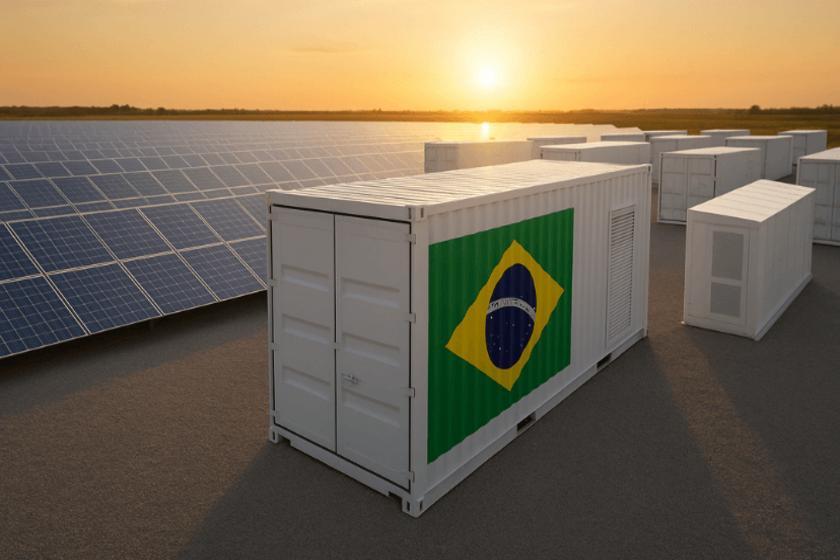
The Brazilian Energy Storage Association argues that investing in batteries is the most cost‑effective solution for the electric system, ensuring energy security and preventing unnecessary tax costs passed on to consumers.
The debate over the future of Brazil’s electric sector gained a new chapter with discussions around Bill No. 3,716/2026 and the urgent need to expand clean energy.
Recently, the Brazilian Energy Storage Association (ABSAE) took a firm stance to clarify disagreements raised by the National Energy Consumers Front (FNCE).
While the market discusses the financial impacts on the electric bill, experts emphasize that energy storage is not an additional expense but an essential pillar for the energy transition and national supply security.
The main disagreement centers on the battery auction scheduled for December. Although ABSAE and FNCE agree on the importance of maintaining the technical schedule, there is a deep debate about the economic assumptions involved in the procurement.
Data from the National System Operator (ONS) point to significant risks of power deficits in the coming years, making battery technology a strategic tool to avoid blackouts and optimize long‑term operational costs.
The Real Cost of Power and the Urgency of the Auction
The need for power in the electric system exists regardless of the chosen technology. If energy storage is not implemented, peak‑time demand will have to be met by other sources, equally funded by sectoral charges.
The major competitive advantage of batteries lies in their efficiency and rapid response capability, reducing waste and optimizing the electric mix.
ABSAE experts state:
The annual cost of batteries is set by the auction, and this value exists whether or not the bill is passed, making storage the cheapest option to meet critical consumption hours.
Technical studies show that, in addition to providing capacity, the technology reduces significant system costs, such as renewable energy curtailment and system service charges.
Maintaining the auction in December is considered non-negotiable to ensure the stability of the energy market.
Why Direct Billing Protects Consumers
One of the most sensitive points raised by ABSAE is how the charge is collected.
Currently, the model that passes costs through generators adds unnecessary layers of taxes, intermediation costs, and risk premiums, primarily penalizing the residential consumer.
Industry representatives stated:
The choice is not whether the consumer pays or not, but rather between paying costs transparently and directly or paying an inflated amount through intermediaries and cascading taxes.
Direct and uniform billing prevents the electric sector from absorbing post-reform tax residues that amount to tens of millions of reais annually.
With proper regulation, investment in BESS technology (Battery Energy Storage Systems) will have a minimal impact on the tariff, replacing much more expensive and polluting thermal solutions.
The advancement of energy storage in Brazil is becoming a watershed moment for modernizing electrical infrastructure. Rejecting intermediaries and defending transparent auctions ensure that sustainability moves hand in hand with tariff fairness.
The future of clean energy depends on sound technical decisions that prioritize efficiency, protect the consumer, and ensure the robustness needed to meet the climate and demand challenges of the coming years.