Brazilian veteran manufacturer Moura has secured a BNDES endorsement for its battery line and is preparing a multimillion‑dollar investment in Pernambuco ahead of the national energy auction scheduled for December.
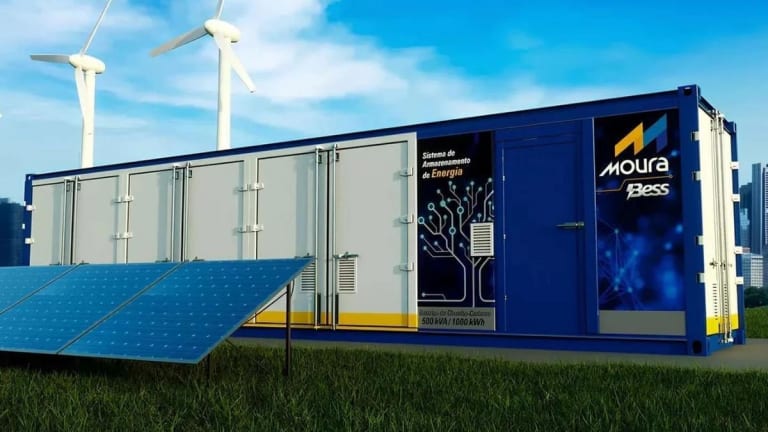
The Moura Battery has taken a decisive step in its strategy for the energy transition market by obtaining accreditation from the National Bank for Economic and Social Development. With approval tied to CFI‑Finame’s Route 2, the company is now qualified to supply battery energy storage systems, known by the acronym BESS, for the next federal government capacity‑reserve auction. The validation opens the door for interested bidders to access preferential credit terms, including full financing for eligible items through the Climate Fund.
To support the expected order volume and meet regulatory requirements, the company plans to inject R$200 million into its manufacturing complex in Belo Jardim. The industrial project features technological cooperation from the Chinese giant CATL, combining international expertise with the assembly and integration of modules, electronic systems, and thermal components on Brazilian soil.
Local Content Requirement and Industrial Strategy
The development bank’s endorsement requires strict compliance with national industrialization criteria. According to the applied methodology, the offered systems must demonstrate at least 15% local content, but Moura’s configuration exceeds 50%. This level is achieved through the execution of critical assembly stages and the incorporation of components supplied by partners based in the country.
Spartacus Pedrosa stated:
“Choosing Route 2 aims to increase Brazilian industrial participation in the systems and provide greater security for projects that will need to meet commitments over 15 years,” highlighted Spartacus Pedrosa, Director of Lithium Operations at the Pernambuco‑based company.
Adapting to Route 2, as well as Routes 3 and 4, allows future storage parks to request credit for up to 100% of the financed costs covered by the Climate Fund. However, technological accreditation does not guarantee automatic victory in the competition or direct release of funds; these steps remain subject to commercial bidding and rigorous credit analysis.
Expansion in Belo Jardim and the Competitive Landscape
The R$200 million investment in the Pernambuco plant aims to raise production capacity to levels above 8 gigawatt‑hours in stationary systems. This amount refers to the total volume of electricity the equipment can store and supply, consolidating the brand’s infrastructure to meet the growing demand for grid stability.
The company’s move in the Northeast comes at a time of intense activity in the sector. In Santa Catarina, competitor WEG also announced robust investments, planning a new factory in Itajaí focused on the same storage technology. The industrial race reflects the urgency of companies to capture slices of a market that promises to transform the national power mix.
The Capacity Auction and the Future of the Electric Sector
The Ministry of Mines and Energy structured the auction in two distinct phases, with the first round scheduled for December 2, 2026, focused exclusively on projects that use technologies with national content. A second round will take place days later for other competitors. Winners will sign long‑term contracts, lasting 15 years, with commercial operations slated to begin in mid‑2028.
The contracted systems will fall under the jurisdiction of the National System Operator, which manages charge and discharge cycles according to grid fluctuations. This operational flexibility is vital to mitigate the intermittency of renewable sources such as solar and wind, ensuring safety for the National Interconnected System during peak consumption periods.
With more than forty storage projects already implemented in its recent history, the manufacturer now awaits the auction outcome to gauge the commercial impact of its new technology. The finalization of contracts and the deployment of equipment at the winning plants will solidify storage’s strategic role in modernizing the country’s energy infrastructure.