

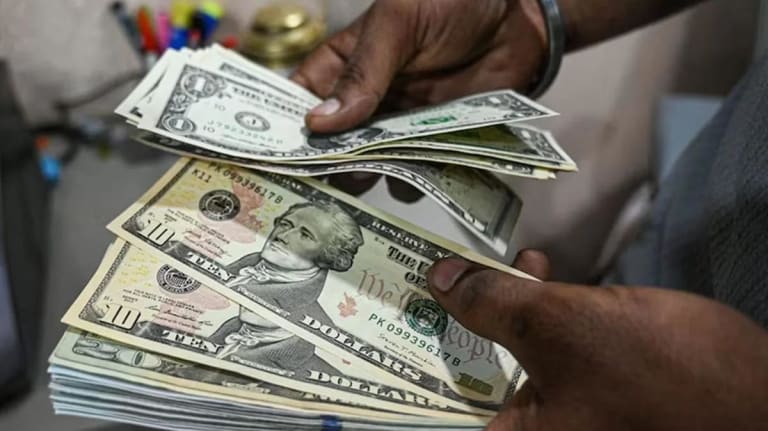
On a day of high volatility, the dollar surpassed the R$6.00 mark but then pulled back, closing with a modest 0.15% decline at R$5.9262, contrary to the international trend.
The financial market experienced a day of intense instability in the domestic currency on Monday. The U.S. dollar opened with strong momentum, breaking the symbolic R$6.00 barrier in the early hours of trading.
However, throughout the session, the move lost strength and the dollar finished the day on the spot market at R$5.9262, recording a 0.15% retreat. The swing interrupted a streak of six consecutive gains recently recorded.
The easing in the exchange rate drew attention for occurring against the international backdrop. Abroad, the U.S. currency maintained an upward trajectory against major global currencies.
Performance against the international market
While the real showed some recovery during the session, the DXY index — an indicator that measures the dollar’s performance against a basket of six major currencies, such as the euro and pound — recorded a 0.55% rise, reaching 104.3540 points around 5:05 p.m.
Experts point out that the search for higher-risk assets in the global environment helped reduce pressure on the Brazilian market. This movement allowed a respite for the national currency after successive sessions of sharp depreciation.
According to Luca Girardi, investment analyst at Nomad, the appetite of foreign investors played a crucial role in the adjustment observed in local rates throughout the afternoon.
“The increase in global risk appetite eased domestic pressures, with the real gaining some strength after the recent weeks of depreciation.”
Inflationary impact and government alerts
Despite the slight respite at the close of the day, the peak reached by the foreign currency sparked alerts within the executive branch in Brasília. The level reached renewed concerns about the economic ramifications of a devalued exchange rate.
During a press conference to unveil the Macro-Fiscal Bulletin, the Ministry of Finance’s Economic Policy Secretary, Débora Freire, stressed the government’s concern that the high exchange rate could be passed on to consumer prices.
The ministry official noted that the phenomenon, known in economic circles as the pass‑through effect, has already prompted revisions to official long‑term inflation forecasts.
“A R$ 6 exchange rate worries us because there is concern about the pass‑through of the exchange rate to inflation. No wonder we revised our 2027 inflation projection, mainly because of the potential effects of the real’s depreciation.”
Fiscal challenges and the role of the monetary authority
The sustainability of this containment and the fight against investor distrust remain at the heart of economic debates. Analysts say that targeted interventions by the Central Bank have limited reach unless accompanied by structural measures.
In an interview with Times Brasil, Alex Agostini, chief economist at Austin Rating, assessed that the monetary authority can help mitigate sharp swings, but cannot single‑handedly restore market confidence.
The economist emphasized that a lasting solution for the exchange rate depends on firm government decisions regarding public account control and strategic choices in federal administration.
Outlook for the foreign‑exchange market
Recent currency behavior exposes the extreme sensitivity of the Brazilian market to both domestic and international uncertainties. While temporary relief offers a brief breathing space, the high exchange rate keeps the economy under constant scrutiny.
In the coming days, financial actors will continue to split their focus between the federal government’s fiscal policy direction and risk appetite in the global environment.
The balance between these factors will determine whether the U.S. dollar stays below the R$ 6.00 threshold or resumes pressuring inflation and interest rates in the country.