

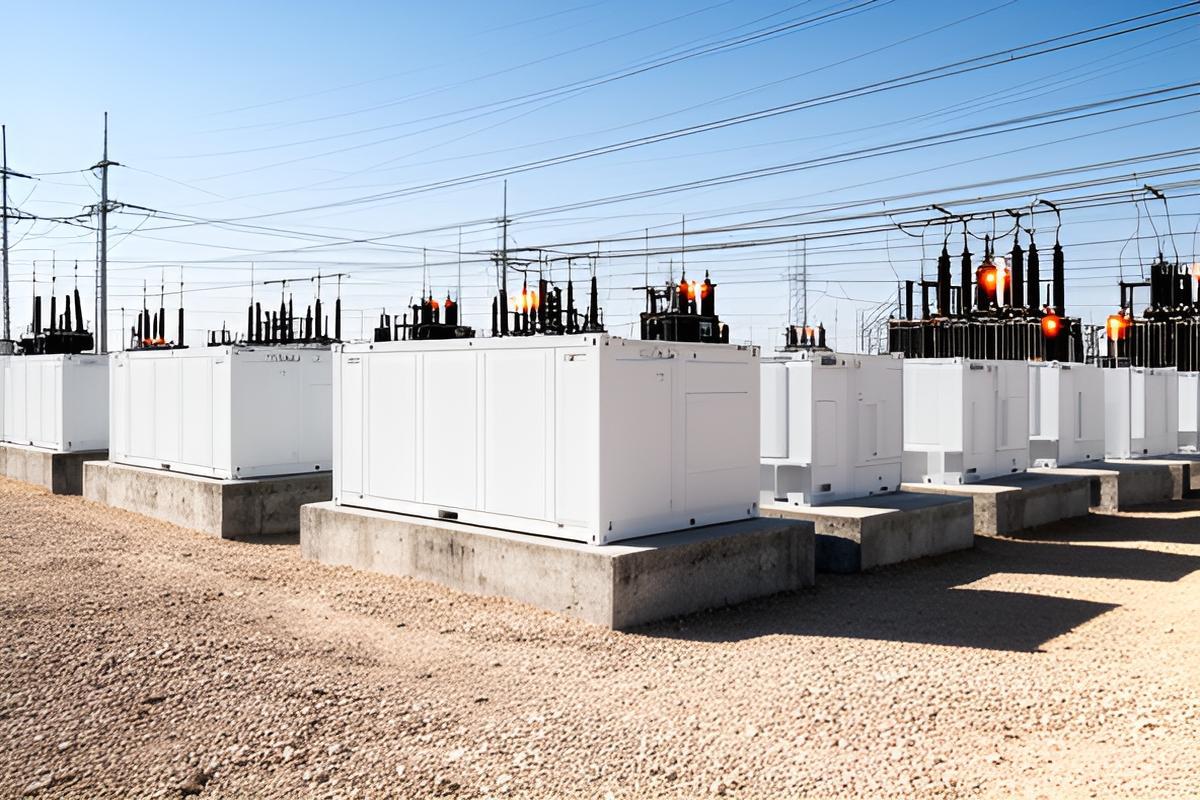
Aneel extended the deadline for energy storage auction registrations until this Monday. The measure aims to facilitate investor participation before the December contests.
The National Electricity Agency (Aneel) decided to give interested parties more time to register for the upcoming capacity reservation auctions focused on energy storage. The online registration deadline, originally set to close last Friday, has been postponed until 12:00 p.m. on Monday, November 23. The decision was formalized by the Permanent Auction Committee (CPL) of the agency, with all other dates in the official calendar unchanged.
Despite the extension, participants should remain mindful of the guarantee schedule. The deadline for submitting proposal guarantees remains unchanged, ending at 11:00 p.m. on the same Monday. This move by Aneel reflects the federal government’s strategic emphasis on maintaining national grid stability through storage technologies.
Details of the contests and technical requirements
The auction schedule is split into two distinct dates in December, each with specific guidelines to attract different types of players in the electric sector. The contest scheduled for December 2 will focus on systems that meet stringent local content requirements. The contest on December 4 will feature more open rules, with no restrictions on the origin or nationality of the equipment used in battery projects.
The notices were issued by the regulator on October 27, setting a price ceiling of R$ 1.76 million per MW per year for the national content requirement, while the second auction has a ceiling of R$ 1.58 million per MW per year. Contracts are expected to last 15 years, with actual energy supply beginning on August 1, 2028.
Uncertainty Landscape and Aneel’s Role
The electric sector is amid intense debate over the implementation of these systems. Recently, the Brazilian Association of Wind Energy (Abeeólica) filed a lawsuit with the Supreme Federal Court (STF) challenging the requirement that generators bear the full cost of these batteries, seeking to suspend the current rule’s effectiveness.
Beyond association resistance, the viability of thermal projects linked to the LRCap also faces challenges, as highlighted by the Brazilian Gas Pipeline Transporter Bolivia-Brazil (TBG), which points to tariff uncertainties as barriers to infrastructure investment.
The extension of registration deadlines underscores Aneel’s attempt to mitigate low‑adoption risks while ensuring the financial robustness of participants.
The market’s expectation is high for the approval of the results, scheduled for April 2027. By adjusting the timeline and maintaining flexibility in financial guarantees, Aneel signals that the priority is to enable the entry of these new technologies into Brazil’s energy mix, even amid the complex legal and regulatory discussions surrounding the energy transition and national supply security.