

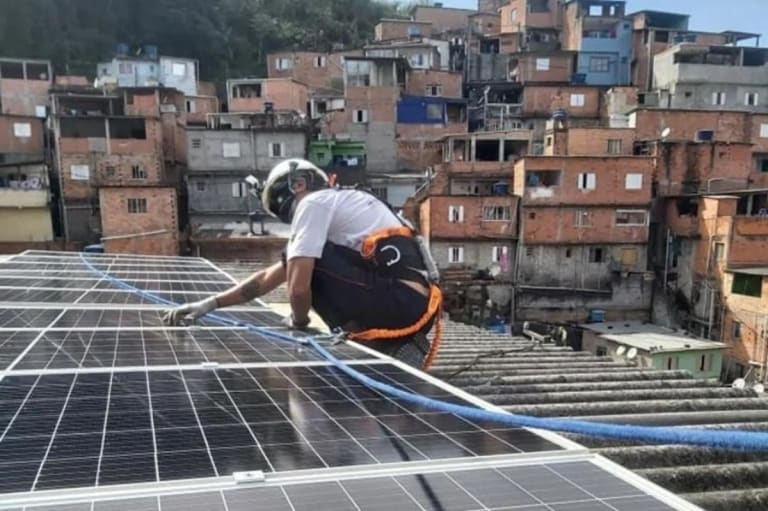
The debate over a just transition in Brazil is taking on new dimensions, expanding beyond the electric sector to include concrete measures for social inclusion, regional equity, and labor protection across seven strategic sectors.
The narrative surrounding the just transition, historically confined to the challenges faced by workers directly tied to fossil fuels, is undergoing a necessary metamorphosis in Brazil. The country now seeks to embed this premise as a transversal pillar in the decarbonization of its entire economy, preventing the essential climate shift from exacerbating the deep-rooted socioeconomic inequalities already entrenched in the nation.
The challenge is monumental: without public policies designed with a careful eye toward redistributing costs and benefits, decarbonization risks further marginalizing vulnerable groups. This includes everything from independent truck drivers, who lack credit lines to modernize their fleets, to recyclable material collectors and local communities adjacent to large energy parks that, ironically, do not have access to the electricity produced on their own property.
Mapping pathways to an inclusive green economy
To structure this complex agenda, the Centro Brasil no Clima (CBC), in partnership with the Iniciativa para a Transparência na Ação Climática (ICAT), has produced seven sectoral documents that serve as the backbone for the Plano Clima. The work was carried out under the guidance of the Ministério do Meio Ambiente e Mudança do Clima and aims to translate theoretical concepts into pragmatic, actionable goals for key sectors.
In the energy sector, for example, the landscape reveals severe contradictions. The Amazônia Legal contributes more than a quarter of the country’s electricity, yet it maintains a contingent of over one million underserved citizens. Moreover, the predominance of foreign capital in renewable projects rarely translates into local development.
The objectives set for the sector aim to universalize access, review subsidies that penalize low‑income families, and create mechanisms for community compensation and investment around large projects.
Challenges in Agriculture, Industry, and Infrastructure
The agrarian issue emerges as a critical point. With land concentration where half of the productive area belongs to just 1% of owners, the transition to low‑carbon practices can be a tool for redistribution or a means of exclusion. The plan proposes that credit and technical assistance be directed to family farming and agroecological systems, fostering food security.
In industry, the expectation is to turn decarbonization into a driver for neo‑industrialization. With one of the cleanest energy matrices in the world, Brazil has potential in sectors such as green steel and renewable chemicals. However, to make this leap feasible, it is urgent that the government and the private sector invest in workforce qualification, addressing gender and racial disparities that still permeate leadership roles in the industrial sector.
The transport sector also demands heightened attention. Rising emissions, driven by regional transport, require a shift to electromobility and rail transport. The risk here is the vulnerability of independent professionals.
The study proposes income protection, occupational transition, and economic diversification in affected regions, as well as prior consultation for major infrastructure projects
It reinforces the document, highlighting that social protection should underpin this transformation.
The Future of the Climate Agenda
By consolidating these guidelines in its national climate plan, Brazil signals institutional maturity. Yet the success of this transition will strictly depend on the State’s ability to monitor the implementation of these goals. The next step, now that the objectives have been drawn and documented by the CBC, is to ensure that each of these measures effectively becomes long‑term public policy.
A just transition is not just a carbon‑emission target, but an ongoing exercise in social justice. If well implemented, the decarbonization strategy can serve as the necessary lever to boost national competitiveness, promote equity among Brazilian regions, and ensure that future generations inherit not only a healthier planet but also a more balanced and developed society.