

With a predominantly clean electric grid and concrete plans for storage auctions, Brazil arrives at COP31 positioned to turn its vast clean energy potential into true geopolitical sovereignty and security.
Brazil arrives at the 31st United Nations Climate Change Conference (COP31), held in Antalya, Turkey, boasting an enviable competitive edge on the international stage.
With an electric grid that is 89% clean in 2025—a figure that more than doubles the global average, according to the think tank Ember—the country demonstrates the strength of its natural resources.
Sun, wind, and water place the nation at the forefront of the global energy transition, creating a favorable environment for sustainable development.
However, Brazil’s advantage goes far beyond simply generating green electricity.
The main focus now is the consolidation of energy sovereignty, using technological innovations to mitigate external vulnerabilities.
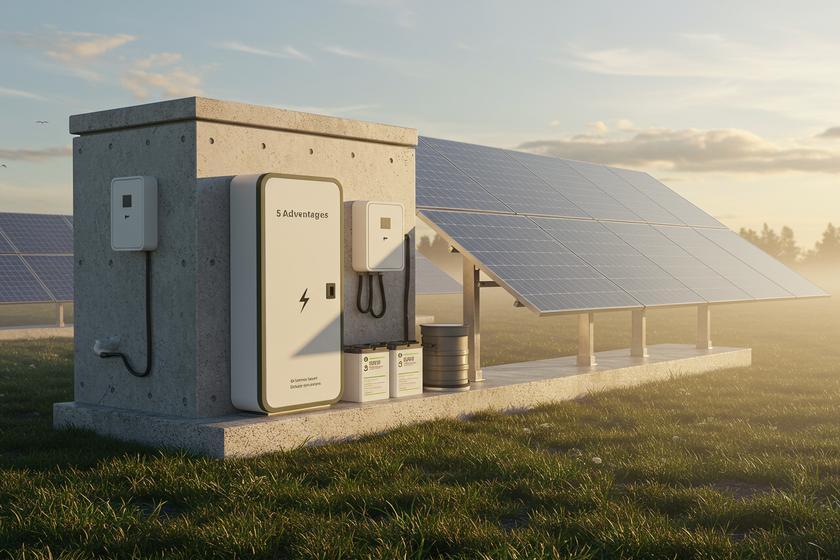
The strategic incorporation of battery storage systems emerges as the key piece to transform this vast potential into lasting autonomy and predictability for the national economy.
Practical milestones and infrastructure progress
The theory gives way to practice with the first capacity reserve auctions dedicated exclusively to storage systems, scheduled to begin in December.
With contracts set for 15 years and supply starting in August 2028, the auctions represent an essential regulatory milestone.
The first auction, in particular, includes strict national content requirements, boosting the supply chain and strengthening the solar and wind energy industry within Brazil.
Overcoming challenges with technology
The urgency of these measures becomes clear in light of recent climate challenges.
While wind and solar accounted for 27% of the national mix in 2025—well above the global average of 17%—climate instability required a 12% increase in thermal generation to compensate for dry periods in hydroelectric plants.
Additionally, between 2021 and 2025, wind farms experienced significant cuts of 28.3 TWh in production due to transmission constraints.
Battery storage is emerging as the ideal solution for holding excess power and injecting it into the grid during peak periods, ensuring stability and flexibility for the electricity system.
Rosana Santos, executive director of the Instituto E+ Transição Energética, stated:
“The auction shows that storage is now being treated as strategic infrastructure for the electricity system. But a battery does not generate energy: before it can deliver it, it must be charged with electricity from renewable generation. Moreover, it can only absorb excesses or relieve a constraint if it is connected in an appropriate location and if the system operation allows it. Therefore, storage expands the operator’s toolkit, but it does not automatically solve generation cuts, congestion, or transmission shortages. Finally, as a flexibility resource we still have other options, such as reversible units and demand response. The key is to provide flexibility without emitting greenhouse gases.”
Brazil’s participation in COP31 reinforces its commitment not only to global decarbonization but also to building a resilient economic model.
By integrating renewable sources with advanced storage technologies, the country demonstrates that environmental sustainability can run hand in hand with industrial strengthening.
The next steps, marked by the December auctions and the expansion of smart grids, pave the way for Brazil to take full leadership in the global sustainable energy market in the coming years.