

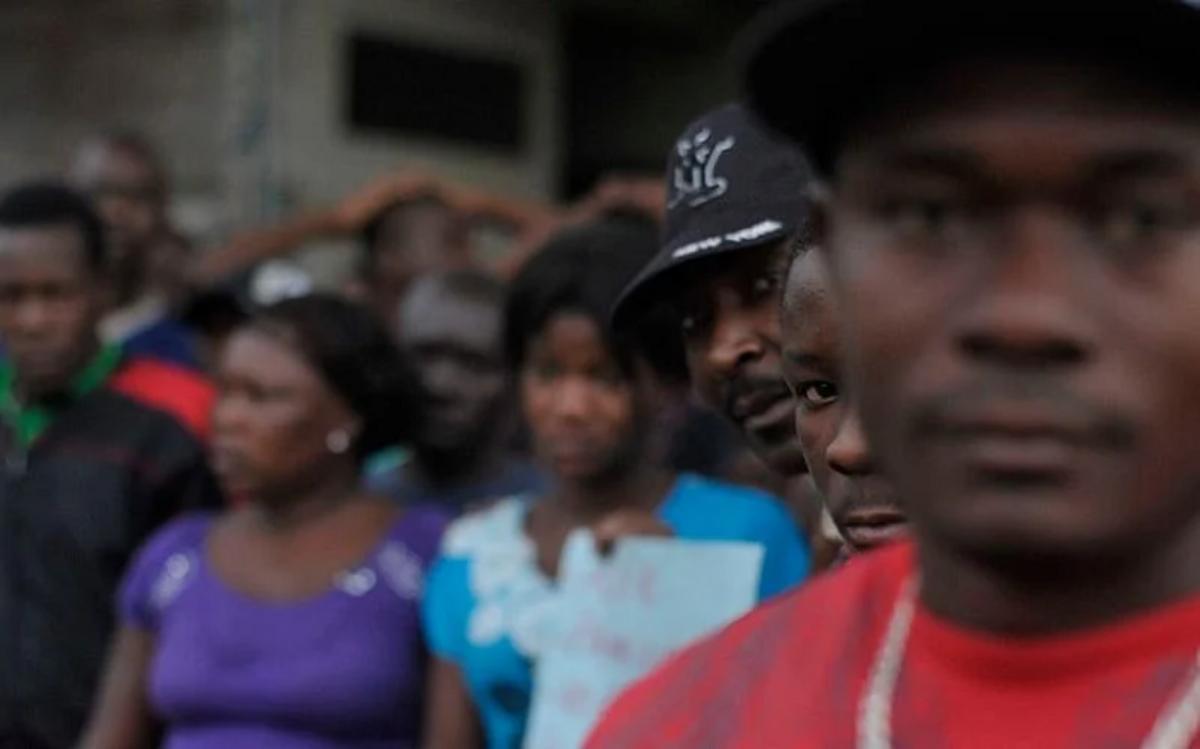
Data from IpeDF shows that Black residents make up 57.8% of the population in the Federal District, with a significant presence in peripheral regions and a predominantly young profile.
The majority of residents in the Federal District are Black. According to a recent survey released by the IpeDF (Institute of Research and Statistics of the Federal District), this demographic group accounts for 57.8% of local residents, totaling more than 1.65 million people.
The data come from the 2024 Portraits of the Federal District study, produced from information gathered by the Pdad-A 2024 (Expanded Household Sample District Survey). The document details the socioeconomic and demographic reality of the capital.
The survey provides in-depth insights into territorial distribution, age, gender, and religious affiliation, revealing stark disparities among the administrative regions that make up the DF.
Territorial distribution and regional inequality
The presence of Black residents in the district territory is not uniform. The numbers show a pronounced concentration in administrative regions located outside the central Brasília axis.
The community of Arapoanga has the highest proportion of Black residents, recording 75.4%. Following are Fercal (72.4%), Planaltina (71.2%), São Sebastião (70.9%) and Água Quente (70.8%).
Conversely, higher-income regions have the lowest percentages of this demographic group. In Lago Sul, only 21.8% of residents identify as Black. Lower indices are also seen in Sudoeste/Octogonal (32.3%), Lago Norte (34.2%), Park Way (37.2%) and Plano Piloto (37.9%).
Sociodemographic profile, age and religiosity
Of the total 1,654,127 Black individuals identified in the Federal District, 46.17% self-identify as mixed race and 11.65% as Black. Black women represent the largest single demographic group in the capital, accounting for 29.6% of all residents.
Age analysis shows a predominantly young population. About 8.3% of Black residents are between 20 and 24 years old, with a proportional decline in those over 65 compared to other color or race categories.
Regarding religious beliefs, 45.6% of Black residents in the DF identify as Catholic. Evangelical faith practitioners account for 30.8%, while 17.7% report having no religion.
Subsidy for public policies and social development
Beyond demographic aspects, the Pdad-A 2024 examines economic indicators, housing conditions, and the level of access to education and health services in both urban and rural areas.
The data collected by IpeDF aim to guide public managers, academics, and civil society organizations in planning targeted social actions. The information is part of a continuous series of thematic studies organized by the government agency.
Identifying these geographic and social differences helps shape projects aimed at improving urban infrastructure and reducing the social vulnerabilities identified in the areas farthest from the center.
Urban perspectives and planning
The diagnosis presented in the survey underscores the importance of statistical analyses for public management. Detailed population mapping is essential to guide the equitable distribution of government resources.
In the coming years, the expectation is that these indicators will drive programs focused on social inclusion, mobility, and the expansion of essential services, promoting greater equity among the various administrative regions of the Distrito Federal.