

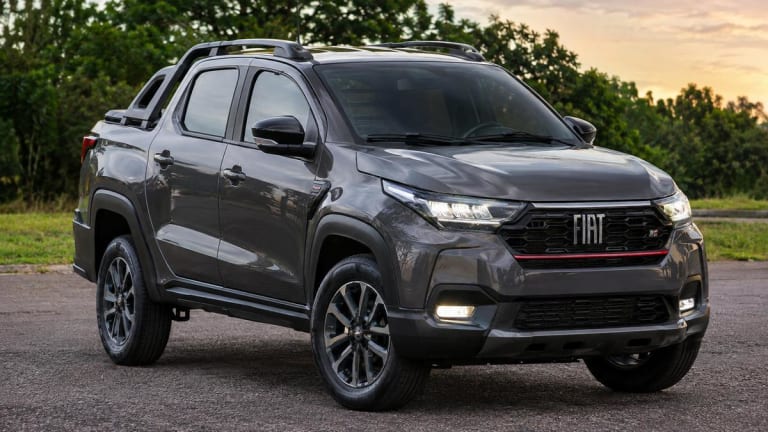
The next generation of the Fiat Strada, identified by the code XBP, is already on the road in stealth tests, foreshadowing a deep technological and structural overhaul slated for the 2029 model year.
The Fiat company has officially begun the road‑testing phase of the third generation of its compact pickup, the market‑leading Strada. The project, internally referred to as XBP, is more than a cosmetic facelift; it represents a paradigm shift for Brazil’s best‑selling vehicle. With a projected launch in 2028, arriving as the 2029 line, the automaker aims to cement its commercial dominance amid increasingly aggressive competition in the coming years.
The current landscape is one of unquestioned hegemony. In October 2026, Fenabrave recorded 14,566 registered sales of the Strada, keeping it at the top of the national ranking. Yet Stellantis engineering is already mapping the future to meet the challenge posed by the German rival’s factories. The confirmed arrival of the Volkswagen Tukan, expected in the first half of 2027, puts pressure on Fiat to deliver a product that balances tradition, work‑horse durability, and the technological sophistication demanded by today’s consumers.
A new architecture for the leading pickup
The backbone of the future Fiat Strada will undergo a metamorphosis. While the current model derives from a platform based on projects like the Mobi, the next generation will adopt concepts from the CMP platform, the same foundation for new Stellantis launches. The development strategy calls for a modular architecture: the front will feature newer components to improve handling and safety, while the rear will retain the suspension geometry with a beam of springs, preserving the payload capacity that made the Strada a phenomenon among fleet operators and rural workers.
This new platform will bring not only mechanical gains but also enable the implementation of advanced safety packages. Six standard airbags and driving assistants (ADAS) are expected to be adopted, features that are now prerequisites for buyers of top‑trim models. Visually, the pickup should shed the overly rounded lines of the current generation. Projections indicate a strategic sharing of parts with the successor of the Argo, such as the hood and fenders, resulting in a more squared, robust identity aligned with the global design of the Italian brand.
Electrification and turbocharging
Under the hood, modernization is the central focus. Fiat is set to integrate the 1.0 Turbo 200 Flex engine paired with a lightweight 12‑volt hybrid system (MHEV). While it does not allow for pure electric driving, the technology optimizes fuel consumption and reduces emissions, making the pickup more efficient in urban cycles.
“The transition to 12‑volt hybrid systems is the natural step to maintain the Strada range’s efficiency without sacrificing the robustness the market demands,” experts in the automotive sector say.
For customers who use the vehicle as a work tool, the manufacturer will keep the naturally aspirated 1.3 Firefly engine in entry‑level models, ensuring lower maintenance costs and operational simplicity. The automatic CVT with a seven‑gear simulation remains the ideal choice for comfort in the more equipped versions.
The competitive horizon: the battle with the VW Tukan
The launch of the Volkswagen Tukan, scheduled for 2027, serves as a catalyst for Fiat‘s strategy. VW’s new model will be built on a variant of the MQB platform and aims to occupy a market segment that bridges traditional compact cars and larger models, such as the Fiat Toro. Volkswagen is betting on early entry and the strength of its network to capture territory before the Strada 2029 reaches dealerships.
The pricing, though still uncertain, will be a critical point. With current models exceeding the R$150,000 mark in their most complete versions, the market speculates that the new generation could reach levels between R$150,000 and R$170,000 in top configurations, depending on the embedded technology. The success of this transition will depend on how Fiat can justify this investment to an audience that values, above all, resale value and the durability of the model that built the brand’s reputation over recent decades.